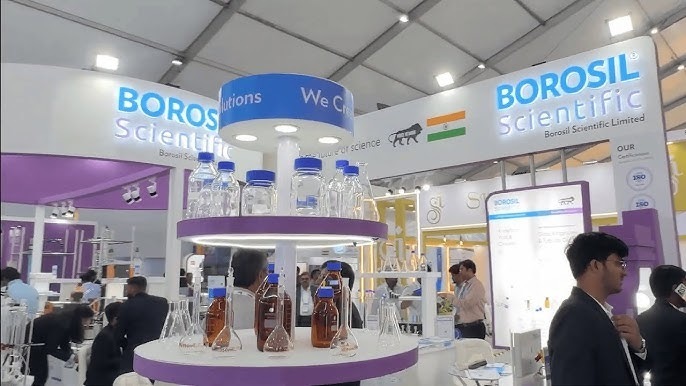
Borosil Scientific Ltd FY26: The ₹250 Crore Capital Gamble and the Packaging Slump
Section 1 — At a Glance
Borosil Scientific Ltd closed out the fiscal year 2026 with a topline of ₹467.34 crore, printing an 7.63% annual growth rate that reflects resilient core product lines but highlights localized pressure points. Net profit for the fiscal year landed at ₹34.61 crore. This structural earnings expansion was driven heavily by a blowout final quarter where revenue jumped to ₹143.17 crore and net profit surged to ₹27.21 crore, fueled by a sharp reduction in raw material consumption ratios and cyclically concentrated institutional off-take. Investor attention is squarely fixed on this operational velocity, alongside an institutional pivot towards domestic import substitution.
However, a deeper diagnostic reveals structural friction. Operating margins remain heavily restricted by chronic execution delays within the primary pharmaceutical packaging and laboratory process equipment divisions, forcing management to push back operational breakeven timelines out as far as fiscal year 2028. A company cannot sustain high-multiple market valuations solely on its historical reputation when its capital-intensive expansion vehicles face protracted gestational cycles. The market is currently processing this divergence, balancing the undisputed leadership of the core laboratory glassware business against a newly announced, dilutive ₹250 crore fund-raising mandate that introduces fresh capital-allocation risks.
Section 2 — Introduction
Borosil Scientific Ltd established its corporate independence following its formal demerger from Borosil Ltd in late 2023, subsequently listing on the domestic bourses in June 2024 to serve as a pure-play vehicle for scientific consumables and process architecture. The entity functions as the institutional backbone for domestic research laboratories, tracking the capital expenditure cycles of the pharmaceutical sector, testing laboratories, and academic institutions.
The publication of the audited fiscal year 2026 financial results has altered the corporate narrative. Alongside a sharp recovery in fourth-quarter operating leverage, the board has authorized an enabling resolution to raise up to ₹250 crore via Qualified Institutional Placements (QIP), Further Public Offers (FPO), or Foreign Currency Convertible Bonds (FCCB). This capital call, representing over 20% of the company’s current market capitalization, lands at a time when its secondary segments are drawing down corporate returns, shifting the investment thesis from an organic optimization play to an aggressive, capital-heavy consolidation strategy.
Section 3 — Business Model: WTF Do They Even Do?
Borosil Scientific manufactures the physical infrastructure of Indian scientific research. If a domestic scientist pours a chemical compound or automates a process, they are likely interacting with a Borosil asset. The business operates a split model spanning across two core divisions:
1. Scientific Segment
This is the institutional cash cow, commanding an absolute 75% market share in the domestic laboratory glassware space. Under the core laboratory consumables brand and the “LabQuest” equipment banner, the company produces calibrated glass apparatus, laboratory bottles, nitrogen estimation systems, and automated bench reactors.
2. Glassware Segment
The high-volume growth engine that is currently misfiring. This includes primary pharmaceutical packaging—specifically tubular glass vials and USP Type 1 glass ampoules destined for life-saving injectables—alongside a legacy line of consumer borosilicate serve-ware.
The underlying economic mechanism relies on extreme brand stickiness. Pharmaceutical quality control managers rarely switch glassware vendors over minor price differentials because the regulatory cost of a contaminated sample far outweighs any marginal procurement savings.