Goel Construction Company Ltd FY2026: The SME Infrastructure Play Standing Tall on a ₹1,291 Crore Cash-Backed Order Book
Section 1 — At a Glance
Goel Construction Company Limited (GCCL) wrapped up the financial year ended March 31, 2026, delivering an operational revenue of ₹657.30 crore, translating into an 11.41% year-on-year expansion from the ₹589.98 crore recorded in the preceding fiscal period. The bottom-line performance mirrored this steady trajectory, with Net Profit after tax scaling by 20.72% to hit ₹46.26 crore, compared to ₹38.32 crore in the prior year. This financial performance marks an important transition point for the specialized industrial contractor, which achieved public listing on the BSE SME platform on September 9, 2025, after mobilizing ₹95 crore via its initial public offering.
The corporate narrative is currently defined by a sharp pivot in its operational pipeline. Investor attention has been captured by a massive order backlog that expanded to ₹1,291 crore by the close of the fiscal year. This provides deep revenue visibility that scales up to nearly twice its current annual run-rate. Furthermore, the complete deleveraging of its balance sheet—where total bank borrowings plummeted from ₹28.71 crore to just ₹7.97 crore—signals a debt-averse operating framework.
However, professional capital allocators are scanning two clear operational pressures. The company’s trade receivables surged significantly from ₹27.77 crore to ₹70.29 crore within twelve months, locking up liquidity in uncollected invoices. Simultaneously, the complete absence of a dividend payout despite consecutive years of compounding net profits highlights a management philosophy that prioritizes heavy cash retention over minority shareholder distribution.
In cyclical industrial sectors, an expanding order book is a vanity metric unless backed by an equally aggressive billing cycle that liquidates raw working capital before inflation erodes project margins.
As the macro infrastructure environment accelerates, the critical structural query remains: can GCCL successfully convert its mega-order backlog into actual cash flows, or will its working capital cycle choke under the weight of its own execution ambitions?
Section 2 — Introduction
Goel Construction Company Limited is a specialized engineering, procurement, and construction (EPC) entity established in 1997, focusing heavily on executing complex civil structural and architectural mandates for heavy industrial installations. The firm has intentionally distanced itself from highly commoditized, low-margin highway or residential building projects, focusing instead on high-elevation structures, bulk material handling infrastructure, and heavy factory foundations.
The publication of these audited results serves as a major checkpoints for public market investors. For nearly three decades, GCCL operated under private ownership, scaling its execution footprint quietly across a selective cluster of core industrial clients. Its recent IPO completely alters its corporate status, giving it the necessary institutional equity base to bid for larger project sizes that were previously out of its financial reach. This deep-dive analysis is designed to dissect whether the company’s recent operational scale-up is structurally sound, or if the financial plumbing is beginning to crack post-listing.
Section 3 — Business Model: WTF Do They Even Do?
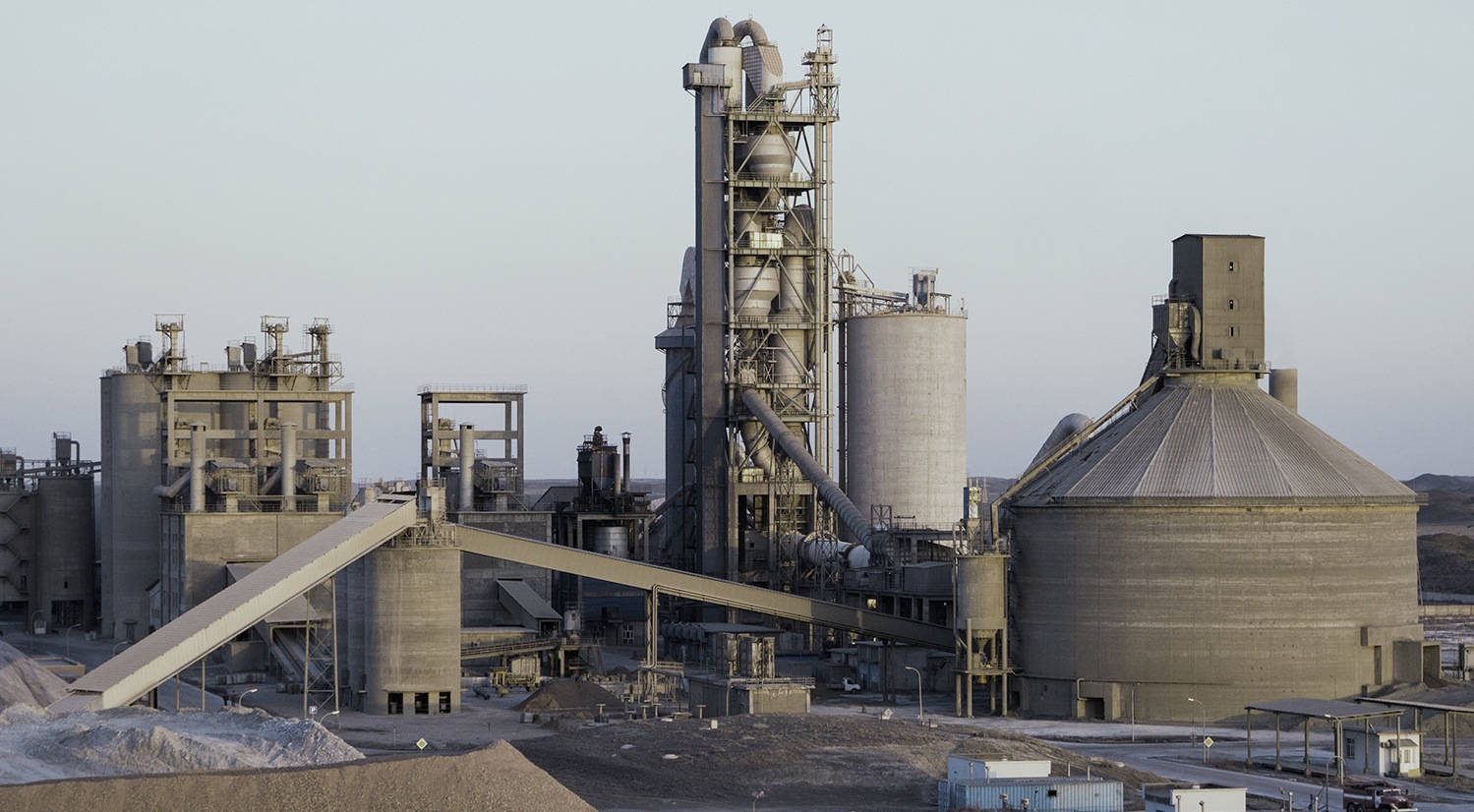
GCCL acts as an outsourced engineering execution engine for asset-heavy industrial conglomerates. They do not buy land, nor do they speculate on real estate. Instead, they are the boots-on-the-ground execution force that constructs clinkerization facilities, pre-heaters, gigantic storage silos, and automated packing plants for cement giants. They also step in to build the complex Balance of Plant (BOP) frameworks for thermal power projects—handling the civil architecture for coal processing systems, cooling towers, and ash management structures.
The operational core of the company relies on three distinct revenue pillars:
Cement Plants: The historical anchor of the company, generating 76% of total revenue in FY2026, down from an extreme concentration of 96% in FY2022.
Power Plants: The primary diversification engine, representing 21% of the closing order book, driven by a massive strategic breakthrough order from the Adani Group.
Dairy and Feed Plants: A niche technical segment making up 3% of the portfolio, building food-grade processing infrastructure and massive cattle feed milling facilities.
The operational secret weapon here is an asset-heavy execution setup consisting of over 270 owned heavy machines and transport fleets. By owning their batching plants, transit mixers, and towering cranes rather than renting them, they retain absolute control over project timelines. This allows them to systematically underbid asset-light competitors while maintaining healthy double-digit margins.
Section 4 — Financials Overview
Figures are standalone, in ₹ crore.
The company’s statutory filings and financial data indicate that it reports on a