Solex Energy FY26: Solar Rocketship or Capital-Guzzling Mirage?
Section 1 — At a Glance
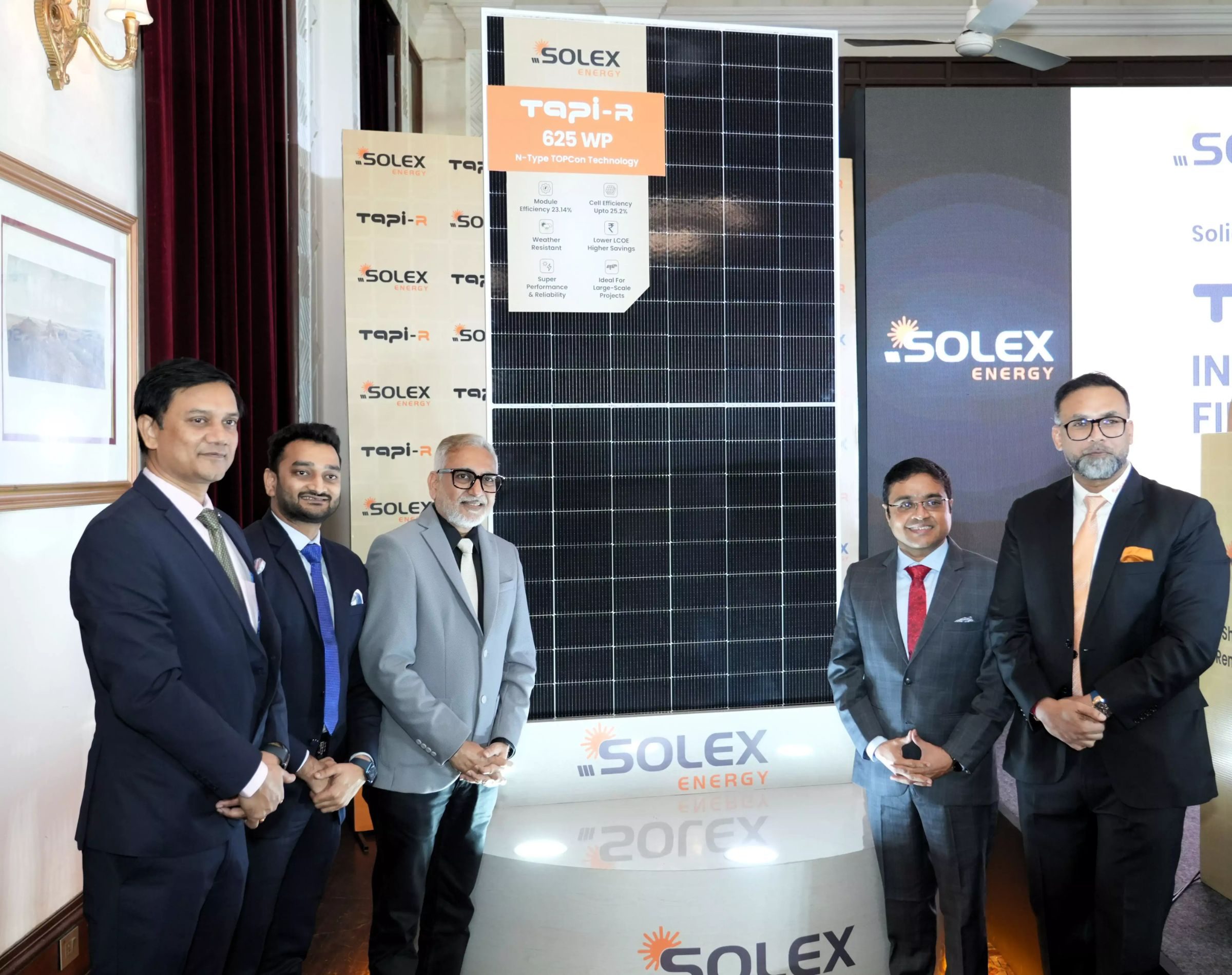
Solex Energy Limited has delivered an astronomical 143.9% year-on-year surge in total revenue, clocking in at ₹16,211 million for FY26 compared to ₹6,648 million in the previous fiscal year. Profit after tax (PAT) followed a similar explosive trajectory, compounding by 132.7% to land at ₹983 million, up from ₹422.3 million in FY25. This hyper-growth was catalyzed by the commercialization of its 2.2 GW solar PV module facility at Tadkeshwar in November 2025, which catapulted the company’s total module capacity to a massive 4 GW. The operational scale-up is visible in the execution of over 200 Engineering, Procurement, and Construction (EPC) projects across diverse sectors during the year.
However, beneath the blinding glare of these headline growth metrics, the balance sheet reveals a rapid accumulation of capital intensity. Total borrowings spiked from ₹1,475 million in FY25 to ₹3,236 million in FY26 to fund this relentless capacity expansion. This heavy debt layer, combined with an intense raw material cost structure of ₹13,447 million, has kept operating cash generation under strategic pressure during execution phases. While management managed to streamline its working capital cycle to approximately 35 days in FY26 from 61 days in FY25, severe input cost volatility—particularly cell price inflation of 110% to 120%—remains a structural threat to forward margin stability. Explosive top-line scale-up is an effective valuation driver only until raw material inflation or delayed client offtake bottlenecks the cash conversion pipeline. Investors are closely monitoring whether this massive volume expansion can yield stable long-term cash flows or if it will simply turn into a low-margin asset-heavy treadmill.
Section 2 — Introduction
Solex Energy Limited, incorporated in 1995, has spent nearly three decades navigating the volatile currents of India’s solar manufacturing landscape. Originally establishing its footing under the moniker “Sun Energy Systems,” the company transitioned into a corporate entity, eventually executing a public listing on the NSE Emerge platform in 2018. The real turning point arrived in 2019 when seasoned industry operator Chetan Shah joined as promoter, injecting institutional scale and engineering expertise accumulated from his previous ventures.
The company has successfully orchestrated a strategic pivot from a tiny, localized module assembler into a multi-gigawatt, technologically advanced clean tech player. This article evaluates Solex at an absolute structural inflection point. With its recent migration to the NSE Main Board and the operationalization of massive production lines in Gujarat, the company is no longer an agile small-cap underdog. It is stepping directly into the high-stakes arena of industrial scale, heavy capital expenditure, and intense global supply-chain friction.
Section 3 — Business Model: WTF Do They Even Do?
At its core, Solex Energy is an industrial manufacturer that converts raw solar cells and components into high-efficiency solar photovoltaic (PV) modules. It operates across two primary business verticals: pure-play solar module manufacturing and turnkey Engineering, Procurement, and Construction (EPC) solar rooftop and utility projects. The company also operates as an Original Equipment Manufacturer (OEM) and Original Design Manufacturer (ODM) for dominant international brands, running production lines to feed global client allocation programs.
The current asset engine is built around premium technology, utilizing Mono PERC and advanced N-Type TOPCon rectangular cells to produce modules that achieve up to 24.60% efficiency profiles. Operationally, the business is highly dependent on continuous factory throughput. Its state-of-the-art Surat facility leverages a fully automated Manufacturing Execution System (MES) that achieves cycle times of under 16 seconds per module. The target audience spans utility-scale Independent Power Producers (IPPs), commercial complexes, and industrial installations.
Section 4 — Financials Overview
Figures are consolidated, in ₹ crore.
Performance Tracker
Metric
Latest Quarter (Mar 2026)
YoY (%)
QoQ (%)
Revenue
885.53
248.1%
178.6%
EBITDA / Operating Profit
98.62
246.1%
262.7%
PAT
58.89
289.4%
563.8%
EPS (₹)
53.61
304.6%
564.3%
The final quarter of the fiscal year witnessed a massive catch-up effect, driven by intense factory dispatches following a heavily disrupted third quarter. Revenue and profitability grew multiple fold as operating leverage finally kicked in post-commissioning. The volatile swing across sequential quarters is a stark reminder that quarterly earnings quality in large-scale EPC execution is highly back-ended and dependent on project milestone sign-offs.
Did Management Walk the Talk?
Reviewing the older guidance provided in February 2026 reveals an interesting operational trajectory. Management had originally targeted commissioning lines 3 and 4 early in October, but an extended monsoon delayed commercial stabilization until late November and December. This execution lag created a temporary mismatch where fixed costs (depreciation and interest) hit the P&L ahead of commercial dispatches, resulting in compressed margins during Q3.
However, management walked the talk regarding volume recovery. In February, they confidently asserted that they were operating 24/7 and marching swiftly toward their full-year expectations. The subsequent blowout Q4 numbers prove that the inventory built up