GEE Limited March 2026: Restructuring Sparks Rebound as 400 Crore Thane Real Estate Safety Net Limits Downside
Section 1 — At a Glance
GEE Limited has engineered a notable financial turnaround for the fiscal year ended March 31, 2026, recovering from a structural decline in the previous year. Revenue from operations increased by 10.57% to reach ₹369.14 crore, supported by a recovery in domestic industrial demand. Operating profit (EBITDA) recovered from ₹0.83 crore in FY25 to ₹33.40 crore in FY26. Net profit reached ₹13.00 crore, reversing the net loss of ₹9.24 crore recorded during the prior fiscal period.
Metric
FY25
FY26
YoY Growth
Revenue
₹333.84 cr
₹369.14 cr
10.57%
EBITDA
₹0.83 cr
₹33.40 cr
3924.10%
PAT
-₹9.24 cr
₹13.00 cr
240.69%
Investor attention has focused on GEE’s post-restructuring strategy. Following a promoter realignment in May 2025 that resolved internal disputes, the management team has focused on specialized lines such as defense, nuclear power, and import substitution. Momentum is further supported by a land development agreement for its Thane property, which is expected to bring over ₹400 crore of cash flow over the next five years. However, risk factors remain. Promoters have pledged 43.4% of their equity shares, and the company remains exposed to intense unorganized competition and price volatility in steel and chemical inputs.
Financial Wisdom Drop: Operational turnarounds are highly lucrative but inherently fragile; when execution risks are high, a non-core asset cushion can provide the structural safety net required to protect minority shareholders from compounding downside.
While top-line growth and specialized public sector unit approvals support higher capacity utilization, working capital stretch remains a persistent challenge. Can this lean manufacturing framework sustain run-rate execution without diluting capital efficiency?
Section 2 — Introduction
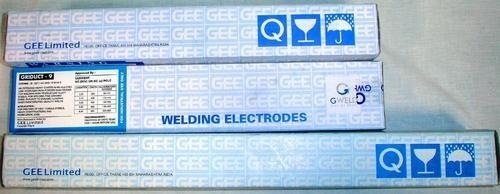
GEE Limited, established in 1960 under technical collaboration with Germany’s Griesheim GmbH, operates as a manufacturer of welding consumables, including covered electrodes, copper-coated wires, flux-cored wires, and welding fluxes. Over its six-decade history, ownership shifted to the current promoter family in 1996. The company maintains production footprints in Kalyan, Maharashtra, and Kolkata, West Bengal, aggregating an installed manufacturing capacity of approximately 59,000 metric tonnes per annum.
This analytical review evaluates two material corporate updates: the operational and financial recovery achieved in the full fiscal year 2026, and the formal execution of a joint development agreement for its 13,391 square meter commercial land parcel in Wagle Industrial Estate, Thane. This real estate monetization alters GEE’s balance sheet trajectory, providing liquidity to clear debt obligations and fund inorganic capacity additions without relying on dilutive capital raises or high-interest bank facilities.
Section 3 — Business Model: WTF Do They Even Do?
GEE Limited operates an industrial model focused on consumables. They do not build major infrastructure or heavy transport equipment directly; instead, they manufacture the specialized chemical and metallurgical material required to weld them together. Their product library spans over 500 stock keeping units categorized into core segments: shielded metal arc welding covered electrodes, gas metal arc welding solid MIG wires, precise TIG filler wires, heavy-duty submerged arc welding fluxes, and premium low-heat-input maintenance electrodes.
The enterprise splits its revenue generation fairly evenly. Roughly 50% flows through institutional B2B tenders and direct engineering procurement contracts, while the remaining 50% moves through a retail B2C dealer network encompassing over 500 domestic distributors across India. While high-volume retail wires compete primarily on price with unorganized local fabricators, GEE’s focus relies on proprietary flux formulations led by its internal technical specialists. These formulations allow the company to cross strict qualification barriers set by defense, public sector energy entities, and international classification societies, creating a sticky B2B customer base.
How effectively can the company leverage its retail dealer network to cross-sell higher-margin specialty products without expanding credit terms?
Section 4 — Financials Overview
Figures are consolidated, in ₹ crore.
Performance Comparison
Metric
Latest Quarter (Mar 2026)
YoY (%)
QoQ (%)
Revenue
112.16
22.02%
21.45%
EBITDA / Operating Profit
11.13
158.84%
27.35%
PAT
3.54
321.43%
-17.10%
EPS (₹)
0.68
325.00%
-17.07%
Financial Trajectory Commentary
The final quarter of fiscal 2026 showcased strong top-line velocity, with operational revenues rising to ₹112.16 crore, up 22.02% over the corresponding quarter of the previous year. Operating profit margins for the quarter settled at 9.92%, an improvement over the negative margins seen during the FY25 bottoming-out phase. This sequential expansion is attributed to improved capacity utilization and a shift toward high-margin specialty alloys. However, quarterly net profit dropped sequentially from ₹4.27 crore to ₹3.54 crore due to a non-recurring exceptional cost charge of ₹3.34 crore booked in Q4 FY26.
Financial Wisdom Drop: Headline revenue spikes can often mask underlying margin strain; evaluating corporate performance requires isolating core operational cash run-rates from non-operating variables or raw material cost pass-through lags.
What is Management Promising in the Coming Quarters?
During the May 2026 earnings presentation, management outlined a growth plan following the resolution of family governance issues:
Top-Line Guidance: Management is targeting a revenue runway of ₹500 crore plus for fiscal year 2027, driven by ordering activity across core PSU clients.
EBITDA Margin Targets: Operational margins are projected to expand into the 10% to 13% band by FY29. This is expected to be supported by a 3% to 4% reduction in material costs via backward integration into stainless steel wire drawing, alongside energy cost savings from a planned commercial solar installation.
New Product Monetization: Production lines for domestic flux-cored wires are scheduled to commence in July 2026. This shift responds to mandatory Bureau of Indian Standards (BIS) regulations, with management forecasting an incremental annual revenue contribution exceeding ₹50 crore from this category alone.
Defense Revenue Expansion: Having delivered approximately ₹10–12 crore in specialized defense consumables during FY26, management expects to expand this volume to ₹25 crore in FY27, backed by exclusive Navy product codes.