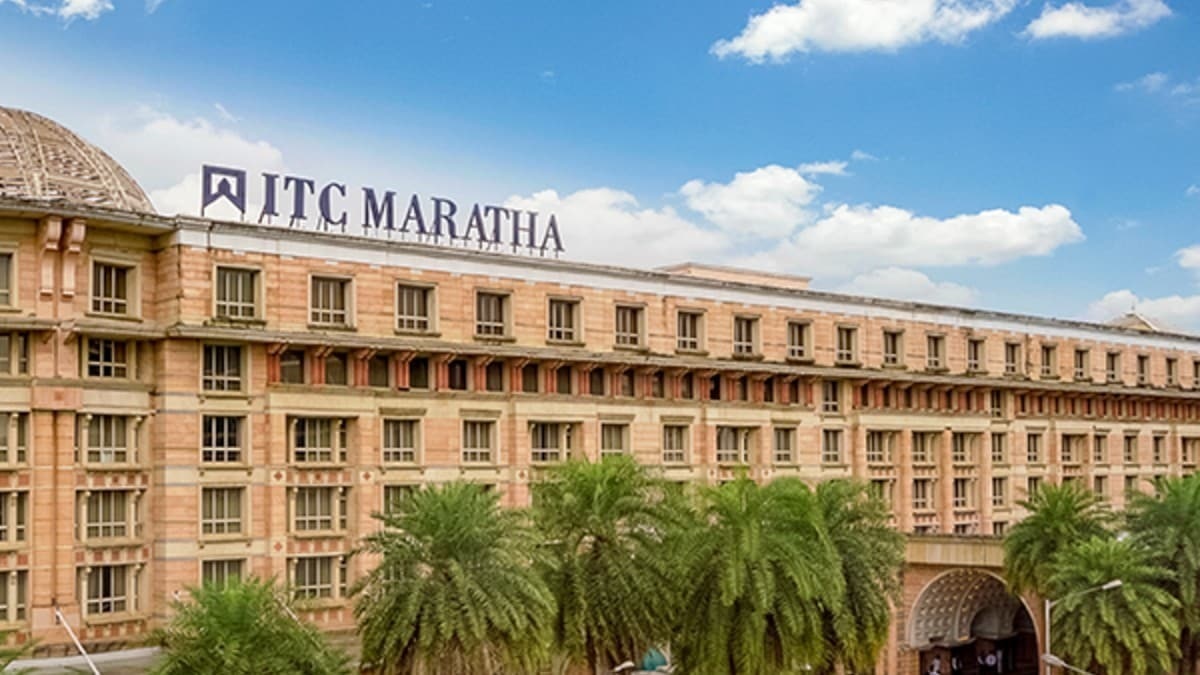
ITC Hotels Ltd Q4 FY26: Consolidated Revenue Grosses ₹ 4,139 Crore as Smart Yield Management Triggers 39% Surge in Annual PAT
1. At a Glance
The Indian luxury hospitality landscape is undergoing a structural shift where demand growth consistently outpaces branded room supply. Within this environment, the newly independent market player, ITC Hotels Ltd, has reported its audited financial performance for the quarter and full financial year ended March 31, 2026. This period marks a critical milestone as the company completes its first full financial year as a separately listed corporate entity following its multi-stage corporate restructuring from its parent conglomerate.
The headline financial disclosures present a picture of strong top-line momentum and expanding operational scale. For the full financial year 2025-26, the company recorded a consolidated revenue from operations of ₹ 4,139.40 crore, representing a 16% growth over the ₹ 3,559.81 crore reported in the preceding fiscal year. Operating profits, measured via Earnings Before Interest, Taxes, Depreciation, and Amortization (EBITDA), climbed to ₹ 1,424 crore, registering an 18% absolute growth on a consolidated basis and a 21% expansion when adjusted on a comparable basis.
The net corporate bottom line achieved substantial acceleration, with Profit After Tax (PAT) before exceptional items rising 39% to ₹ 888 crore. Even after accounting for regulatory exceptional provisions, the statutory reported consolidated PAT reached ₹ 821.26 crore, up from ₹ 637.64 crore in the previous fiscal year. This expansion was structurally driven by a 10% growth in overall Revenue per Available Room (RevPAR), a 6% appreciation in Average Daily Rates (ADR) to ₹ 13,200, and a 229 basis point expansion in system-wide occupancy levels to 73%.
However, a deeper cross-sectional look at the consolidated financial statements reveals distinct underlying operational dynamics that warrant rigorous analysis. While the standalone hotel operations remained a highly stable cash engine, the consolidated financial matrix was heavily influenced by the progressive financial integration of its international real estate and hospitality venture in Sri Lanka. The company’s consolidated revenue structure includes a ₹ 210.89 crore top-line contribution from its non-hotel real estate segment, specifically from the progressive handover of luxury residential units.
Concurrently, the international hotel operations experienced material physical and geopolitical headwinds. The Sri Lankan subsidiary had to absorb a net exceptional charge of ₹ 25.98 crore during the year due to inventory and capital work-in-progress damage inflicted by Cyclone Ditwah, net of estimated insurance recoveries. Furthermore, domestic margin structures faced localized pressure in the final quarter of the fiscal year. Q4 FY26 consolidated EBITDA margins contracted by 168 basis points to 37%, down from 39% in Q4 FY25, driven by higher input operational costs, volatile aviation fuel supplies, and localized disruptions in high-yielding inbound international travel circuits across southern states due to ongoing West Asia geopolitical tensions.
2. Introduction
Corporate structures often obscure operational reality until a complete separation forces each business unit to face the open market independently. For decades, the hospitality division of ITC Limited operated within a massive consumer goods conglomerate, utilizing internal cash allocations to build a premium real estate and hospitality footprint. The formal structural transition began with a board-approved scheme of arrangement in August 2023, which was systematically processed through regulatory channels until the National Company Law Tribunal (NCLT) Kolkata Bench issued its final sanction order in late 2024.
The demerger became officially operational on January 1, 2025, culminating in the formal listing of ITC Hotels Ltd on the National Stock Exchange (NSE) and Bombay Stock Exchange (BSE) on January 29, 2025. Under this structural arrangement, the parent company retained a 40% strategic promoter stake to maintain corporate governance continuity, while the remaining 60% equity was directly distributed to the shareholders of the parent entity in proportion to their historical holdings.
From a structural standpoint, this corporate split created a well-capitalized, debt-free hospitality stock with an initial net worth exceeding ₹ 11,000 crore. As an independent corporate entity, the management can now deploy capital, sign management agreements, and initiate inorganic acquisitions without competing for internal capital allocations against high-margin consumer products.
However, independent listing also shifts full accountability onto management. The company can no longer mask cyclical hospitality margins or long-gestation international real estate outlays within a massive corporate balance sheet. Every capital deployment, asset-refurbishment cycle, and subsidiary loss is now fully visible to public investors.
3. Business Model – WTF Do They Even Do?
At its core, ITC Hotels Ltd operates a multi-tiered hospitality network across the Indian subcontinent, encompassing 155 operational properties containing 14,294 rooms as of March 31, 2026. The company’s brand architecture is segmented to capture varied consumer price points and travel intents. The absolute premium tier is commanded by the core ITC Hotels brand, which operates primarily via long-standing franchise arrangements with Marriott International’s “The Luxury Collection” to secure international distribution access.
The upper-upscale and upscale corporate travel demand is serviced via Welcomhotel, while lifestyle leisure, boutique destinations, and heritage assets are funneled through specialized brands like Mementos, Storii, and WelcomHeritage. Mass-market corporate and mid-scale urban demand is managed under the Fortune brand wrapper.
To analyze how the company actually generates its cash, one must look at the structural shift in its asset utilization strategy. Historically, the business model was heavily capital-intensive, relying on building massive, multi-hundred-key luxury properties in major metropolitan areas. The current business model relies on an “Asset-Right” bifurcation. The company maintains an owned core of 41% of its room keys, which acts as a heavy real estate anchor on the balance sheet, while targeting 59% of its operational footprint through third-party asset management contracts and franchise fees.
The revenue mix reflects this operational duality: room revenues contribute approximately 51% of gross operational turnover, followed closely by food, beverage, and banqueting services at 40%. Pure management and operating fees from third-party owners represent a small but high-margin 4% slice, while membership fees and ancillary services comprise the remaining 5%.
The structural risk here is clear. While management fees grew by 28% year-on-year to ₹ 173 crore due to the stabilization of managed properties, 91% of the company’s core revenue remains directly tethered to the physical management of rooms and culinary services. This means the corporate cost structure remains exposed to rising food inflation, employee retention expenses, and energy bills.
4. Financials Overview
A comprehensive review of the audited consolidated financial performance reveals a distinct variance between long-term operational expansion and short-term quarterly cost pressures.