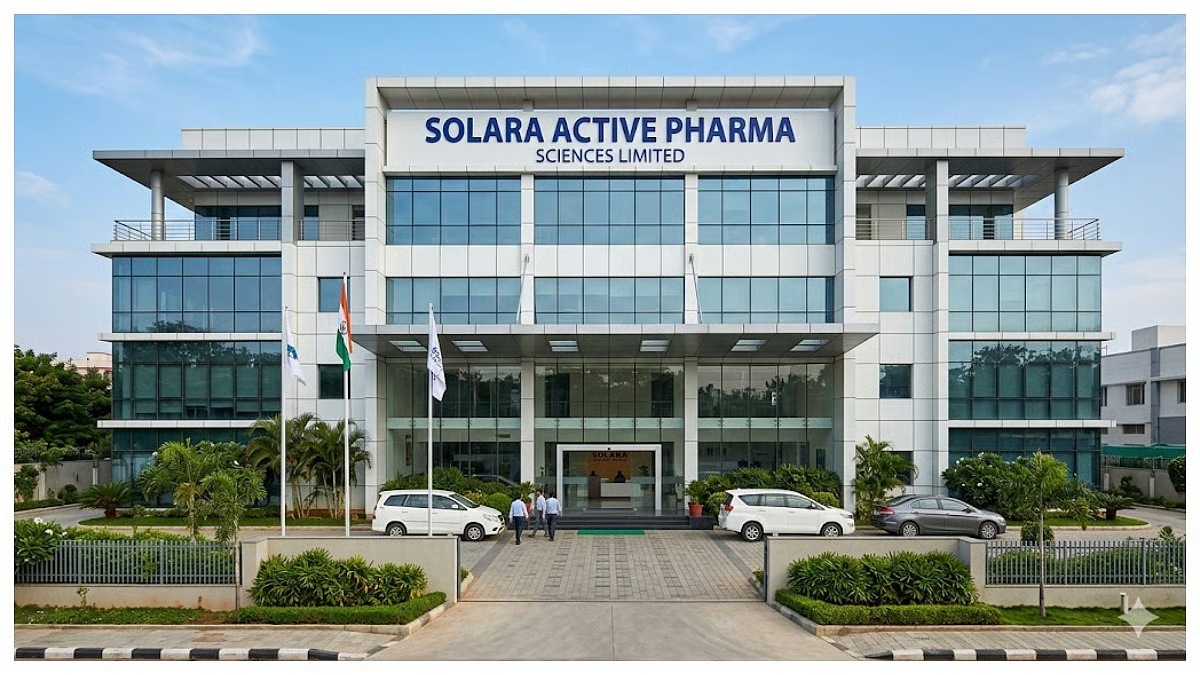
Solara Active Pharma Sciences Ltd Q4 FY26: Righting the Ship via Rights Issue but Ibuprofen Bloodshed Drags Consolidated PAT to ₹-7.41 Crore
1. At a Glance
The financial ledger does not lie, no matter how much cosmetic narrative a management team tries to apply during an earnings call. Solara Active Pharma Sciences Ltd presents a classic, high-stakes operational puzzle. On one hand, the newly minted management team is aggressively banging the drum about a step-change execution cycle. They are calling the latest quarter their finest operational performance in two full years. On the other hand, the corporate entity is still recovering from a devastating sequence of events, headlined by a whopping net loss of ₹567 crore in FY24 due to structural asset and inventory write-offs.
The absolute core of the tension lies right here: while the company’s base growth API portfolio is functioning like an absolute cash-printing machine, boasting premium margins, its massive commodity bet on Ibuprofen has turned into an absolute corporate disaster. Price wars and intense dumping from un-integrated global players have turned this legacy cash cow into a blood-stained engine of cash destruction, generating deep negative operating margins that continuously dilute everything the rest of the business achieves.
The balance sheet is currently surviving on an emergency respiratory line provided by retail and institutional shareholders. The company has aggressively raised capital through a massive ₹450 crore rights issue to keep its head above water, using the application and subsequent call monies to cut down an alarming pile of external debt. Yet, look below the surface, and the scars of a rough multi-year cycle stand exposed. For the full financial year ended March 31, 2026, the consolidated operations still landed in the red, reporting a net loss of ₹7.41 crore. Even more concerning is the underlying accounting reality: the company’s net current liabilities currently exceed its net current assets by ₹35.81 crore, and its total accumulated losses have ballooned to a stunning ₹319.33 crores.
Are we looking at an unmissable turnaround opportunity where the market is entirely blind to a high-margin base business, or is this a value trap whose internal cash flows are being structurally consumed by underutilized plants and toxic commodity assets? Let us break down the unvarnished mathematical reality.
2. Introduction
Solara Active Pharma Sciences Ltd was not born out of an organic, slow-brewed business plan. It was forged rapidly in October 2017 via corporate engineering, specifically through the demerger of the active pharmaceutical ingredient business of Strides Shasun Ltd (now known as Strides Pharma Sciences Ltd). To immediately achieve global scale, the architects of this deal simultaneously integrated the human API operations of Sequent Scientific Ltd. The strategic goal was unmistakable: create a pure-play, globally compliant, top-tier Indian API powerhouse completely isolated from the distinct operational pressures of finished dosage formulations.
The company is listed on both the Bombay Stock Exchange and the National Stock Exchange, carrying a modest market capitalization of ₹2,094 crore. It runs its operational engine through six regulatory-compliant manufacturing plants, backed by a massive technical infrastructure that includes global regulatory clearances from the USFDA, EU GMP, and Japan’s PMDA. The operations are spread across a wide international canvas, delivering active ingredients to over 73 countries.
Yet, despite this massive manufacturing footprint and deep institutional pedigree, the equity has struggled over longer horizons, delivering a disappointing five-year return of -19.0%. This long-term underperformance is a direct consequence of structural mistakes, volatile asset utilization, severe pricing vulnerability in mass-market molecules, and a highly leveraged balance sheet that required an emergency structural reset over the last twenty-four months.
3. Business Model – WTF Do They Even Do?
To put it plainly for a smart but lazy investor: Solara Active Pharma Sciences Ltd acts as a heavy industrial laboratory for global pharmaceutical brands. They do not formulate the colorful pills, syrups, or capsules that you buy at your local pharmacy. Instead, they manufacture the actual raw, biologically active chemical powders—the Active Pharmaceutical Ingredients—that make those medicines function inside the human body. If a medicine cures an infection or reduces your inflammation, Solara’s factories are the ones synthesizing the core molecules responsible for that therapeutic effect.
The business model is split cleanly into two very different product families:
The Commodity Portfolio (Ibuprofen): This is the legacy mass-volume play. Solara is a major global supplier of Ibuprofen. However, unlike integrated mega-factories, Solara is not backward-integrated. They have to purchase their primary starting material, IBAP, from external third-party suppliers. When global supply chains shift or competitors drop prices, Solara gets squeezed tightly from both ends, turning a volume driver into a margin pit.
The Growth API Portfolio: This covers over 60 commercialized molecules across premium therapeutic lines such as anthelmintics, anti-malarials, and specialized anti-infectives. This segment enjoys massive structural strength, operating at stellar EBITDA margins of 26% and selling directly into heavily regulated Western markets like Europe and North America.
Additionally, the company has an unscalable Contract Research and Manufacturing Services wing that contributes a tiny ₹10 to ₹12 crore annually. The commercial reality is highly concentrated: out of approximately 70 commercialized products, the top 15 to 20 molecules generate up to 80% of total corporate revenues. If those top chemical structures face price erosion, the entire corporate P&L feels the pain.
4. Financials Overview
Let us examine the performance of Solara Active Pharma Sciences Ltd by looking directly at the consolidated financial results for the quarter and financial year ended March 31, 2026.
Consolidated Financial Performance Matrix
(Reporting Unit: ₹ in Crores)
Metric
Latest Quarter (Mar 2026)
Previous Quarter (Dec 2025)
Same Quarter Last Year (Mar 2025)
Full Year Ended (FY26)
Full Year Ended (FY25)
Revenue from Operations
349.00
387.29
273.01
1,368.98
1,283.76
EBITDA
56.49
61.31
19.10
193.68
214.60
EBITDA Margin (%)
16.19%
15.83%
6.99%
14.15%
16.72%
Profit After Tax (PAT)
9.60
-17.43
-2.10
-7.41
0.54
Annualised EPS (₹)
38.40
-69.72
-8.40
-1.68
0.14
Recalculated P/E Ratio
15.08x
Negative
Negative
Negative
4,135.71x
Financial Analysis & Commentary
A forensic look at these numbers reveals exactly where the operational shifts are taking place. While the headline news highlights a strong recovery in the latest quarter with a net profit of ₹9.60 crore compared to a loss of ₹17.43 crore in the sequential quarter, the underlying