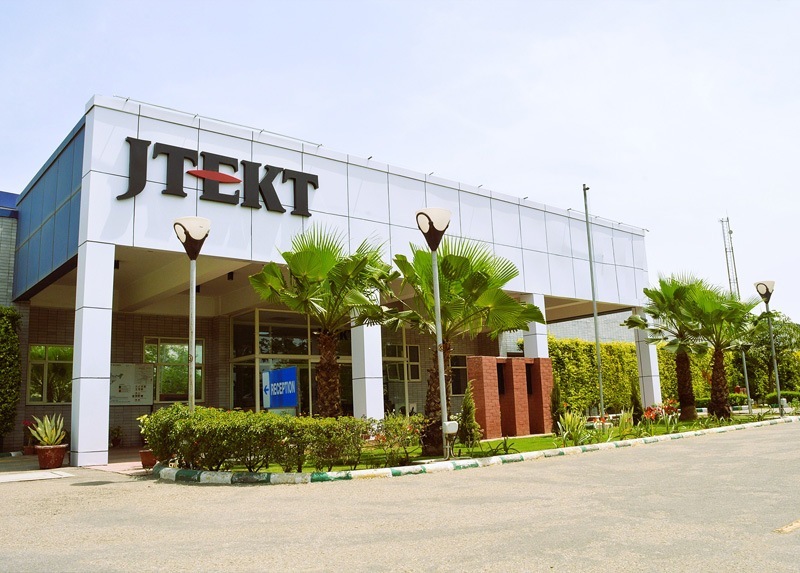
JTEKT India Q4 FY26: The Illusion of Steerage and the Cold Reality of Capital Expansion Ratios
1. At a Glance
The automotive ancillary sector thrives on the illusion of structural dominance. When a component manufacturer secures a commanding market share with the country’s largest passenger vehicle original equipment manufacturer (OEM), retail investors view it as an unassailable economic moat.
JTEKT India Limited presents exactly this picture on the surface. It commands a 55% share of the business with Maruti Suzuki India Limited and a 100% share of business with Toyota Kirloskar Motor. This is due to its global parent, JTEKT Corporation Japan, being an integral part of the Toyota Group.
When you look closely at the audited financial numbers for the year ended March 31, 2026, the structural cracks in this automotive narrative become highly apparent.
The company’s annual revenue reached ₹2,666 crore, which represents an 11.1% growth over the previous year. Yet, net profit for the full year stood at a modest ₹77 crore, dropping from the previous year’s level of ₹75 crore. This absolute flattening of net earnings occurred during a period when the company completed a ₹249.88 crore rights issue in August 2025. This issue expanded its equity share capital base from 25.43 crore shares to 27.74 crore shares.
The dilution of the capital base combined with stagnant net profit margins reveals a clear operational truth: the company is consuming massive amounts of capital to generate diminishing incremental returns.
The core problem lies in the structural breakdown of its operational leverage. While the top-line expanded, the operating profit margin (OPM) remained pinned down at 8% for the full year. This is a severe contraction from the 10% operating margins recorded in FY24.
The company is currently executing a heavy capital expenditure program. It spent ₹118 crore on capex in H1 FY26 alone and has total medium-term capex guidance of ₹700 crore to ₹750 crore spanning FY26 to FY28. This program is being deployed against an asset turnover profile that is fundamentally unappealing.
Management’s internal calculations reveal that while its Column type Electric Power Steering (CPS) lines can achieve a fixed asset turnover of up to 5x, its newer expansion focus—Constant Velocity Joints (CVJ)—achieves a asset turnover ratio of just 1.5x.
This shifting product mix means the company is building out heavy, capital-intensive capacities that require massive volumes just to break even on fixed overhead absorption. Meanwhile, domestic passenger vehicle volume momentum has shown clear signs of structural cooling over the last two financial years.
Furthermore, the company’s reliance on a single customer segment is absolute: 95% of its total revenue is tightly bound to passenger vehicle OEMs. Any volume deceleration across the primary domestic car manufacturing ecosystem immediately triggers a fixed-cost under-absorption crisis inside JTEKT’s manufacturing facilities at Dharuhera, Gurgaon, Chennai, and Bawal.
Behind the security of its Japanese parentage lies a business model that is currently trapped in a high-capex, low-margin cycle.
2. Introduction
JTEKT India Limited operates as a classic tier-1 auto ancillary supplier within the Indian manufacturing ecosystem. The corporate identity of the entity has undergone significant evolutionary transformations. It originally began operations as Sona Steering Systems, a joint venture with the Indian promoter group Sona Autocomp Holding.
The structural architecture of the company shifted permanently in FY17 when its global technology partner, JTEKT Corporation Japan, bought out a 25.12% stake from the Indian partner. This transaction elevated the Japanese parent’s holding to 45.4%. A subsequent open offer executed in Q1 FY18 consolidated the multinational’s control. Today, the Japanese promoter group maintains a firm 75.0% stake in the equity capital of the company.
Operating six manufacturing facilities strategically positioned near major automotive manufacturing clusters—including four lines in Haryana and specialized facilities in Chennai—JTEKT India specializes in directional control mechanisms.
The operational dependency between JTEKT India and its clients is bidirectional but highly unequal. The company’s financial survival depends on its ability to secure continuous programmatic inclusion in the high-volume vehicle platforms of its primary anchors: Maruti Suzuki, Toyota, Mahindra & Mahindra, and Honda Cars India.
The auto component sector demands continuous technical updates. As vehicle architectures migrate toward electronic platforms and electric vehicle (EV) drivetrains, the traditional mechanical steering gears and hydraulic power steering setups lose relevance. JTEKT relies heavily on technology transfers from its Japanese parent to maintain its position against aggressive domestic and international competitors.
However, technology transfers come with fixed financial trade-offs. These appear as continuous engineering costs, specific equipment import mandates, and structural rigidities in procurement pipelines.
Are retail investors paying attention to the structural shifts in auto component margins, or are they simply buying into the generic theme of automotive electrification without analyzing the underlying asset-turnover economics?
3. Business Model – WTF Do They Even Do?
To understand JTEKT India, you must understand that they control the literal direction of the vehicles you drive, yet they have remarkably little control over the financial direction of their own margins. The company’s core product architecture is split into two disproportionate buckets: Steering Systems and Driveline Products.
The Steering and Columns division is the absolute heavy lifter of the business, accounting for approximately 95% of total sales. Within this bucket, the star product is the Column type Electric Power Steering (CPS), which single-handedly accounts for 46% of total corporate revenues.
The company also manufactures high-performance rack and pinion manual steering gears (which bring in about 27% of revenue), hydraulic power steering systems, tilt and telescopic columns, and intermediate shafts. If a vehicle requires physical steering inputs to be translated to the asphalt, JTEKT manufactures the sub-assembly.
JTEKT India Revenue Split
├── Steering & Columns (~95%)
│ ├── Column type Electric Power Steering (CPS): 46%
│ ├── Rack and Pinion Manual Steering Gear: 27%
│ └── Columns, Hydraulic Power Steering, Others: 22%
└── Driveline Products (~5%)
└── Constant Velocity Joints (CVJ) & Case Differentials: 5%
The remaining 5% of the business belongs to the Driveline division. This unit produces axle assemblies, case differentials, propeller shafts, and Constant Velocity Joints (CVJ).
The CVJ segment is the core focus of the management’s current growth strategy. They are attempting to scale this business from an internal capacity of 3.7 lakh units up to 8.0 lakh units through an aggressive capacity expansion at their Dharuhera plant.
The strategic goal here is backward integration—moving from outsourced components to in-house forging of critical CVJ parts like JF outers and JPLs to save on costs and control quality.
The central issue with this business model is its extreme concentration. JTEKT India generates nearly 96% of its sales within the geographic boundaries of India. Its international export exposure is a tiny 4% sliver of the top-line.
Furthermore, its customer roster is dominated by a single player: Maruti Suzuki accounts for a staggering 56% of JTEKT’s entire order book. Toyota accounts for 12%, Mahindra & Mahindra commands 8%, and Honda sits at 5%.
The business model functions essentially as a dedicated captive workshop for a handful of mega-OEMs. When Maruti Suzuki scales production of its high-volume lines like the Wagon R, Swift, Brezza, or Ertiga, JTEKT’s factories run hot. If those specific platforms face a consumer slowdown, JTEKT is left with highly specific, non-fungible machinery that cannot easily be repurposed for another client.
4. Financials Overview
The financial performance of JTEKT India over the recent quarters demonstrates how quickly fixed cost structures can penalize a business when revenue growth drops below internal operational projections.
The table below provides a structural view of the company’s financial trajectory over the last quarter, comparing it with the immediate sequential quarter and the corresponding quarter of the previous financial year.
Financial Performance Comparison (₹ in Crores)
Metric
Latest Quarter (Mar 2026)
Previous Quarter (Dec 2025)
Same Quarter Last Year (Mar 2025)
YoY Change (%)
QoQ Change (%)
Revenue
780.00
680.00
632.00
+23.42%
+14.71%
EBITDA
71.00
52.00
47.00
+51.06%
+36.54%
PAT
27.00
20.00
25.00
+8.00%
+35.00%
EPS (₹)
0.99
0.73
0.89
+11.24%
+35.62%
Annualized EPS (₹)
2.77
—
—
—
—
Export to Sheets
Note: In accordance with the official financial declarations, the figures represent Standalone Quarterly Results. The Annualized EPS for March 2026 matches the full-year reported audited EPS of ₹2.77 per share.
Financial and Management Analysis
The sequential recovery from December 2025 to March 2026 shows an improvement in top-line execution, with revenues climbing from ₹680 crore to ₹780 crore. This sequential jump