Vishal Mega Mart Q4 FY26 & FY26: Hyper-Growth Retailer Posts ₹129,063 Million Full-Year Revenue as PAT Surges 45.9% in Q4 with 74.1% Private Brand Dominance
1. At a Glance
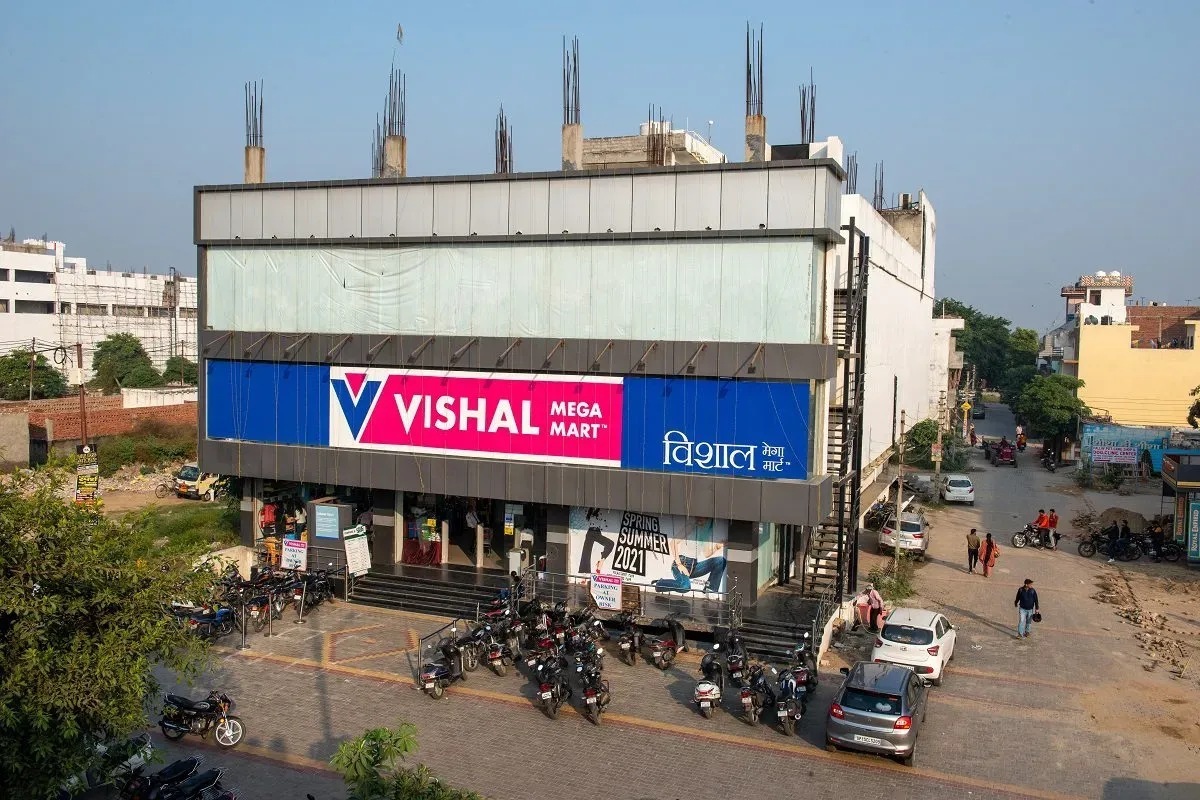
The Indian retail space is witnessing a massive, silent consolidation, and right at the center of this structural shift sits Vishal Mega Mart Limited. With a massive footprint spanning 795 stores across 535 cities, this corporate behemoth is rapidly scaling its operations. Over the last fiscal year, the company clocked a massive revenue of ₹129,063 million (equivalent to ₹12,906.3 crore), showing a steady 20.4% year-on-year growth. For the final quarter of the year (Q4 FY26), top-line growth accelerated even faster, jumping 22.2% to ₹31,141 million.
This hyper-growth asset-light model is attracting substantial investor attention. The stock currently trades at a price-to-earnings (P/E) ratio of 66.3, commanding a market capitalization of ₹55,607 crore. However, a deeper look under the hood reveals a complex operating model that isn’t entirely without friction.
While sales are climbing, gross profit margins face distinct seasonal pressures. In Q4 FY26, the gross margin compressed slightly to 27.8%, down from 28.3% in the same quarter last year. This highlights the cost of pushing intense promotions and clearing out winter stock to make room for fresh inventory.
At the same time, structural operational risks continue to mount. A serious fire incident at a subsidiary store in Delhi resulted in two tragic fatalities, triggering deep regulatory and compliance oversight. The company is also dealing with numerous tax disputes across different states. These include an income tax demand of ₹32.88 million and a substantial CGST demand under Section 74 hitting ₹134.8 million for legacy filings.
Furthermore, the promoter shareholding has seen a sharp, sudden reduction. It plunged from 54.09% to 40.12% in just one quarter, marking a 14% drop. This massive secondary offloading raises important questions about long-term equity stability. Can an organization that serves the value-conscious middle-income bracket protect its bottom line while dealing with rising raw material costs, regulatory fines, and a shifting management structure? Let us look at the core numbers.
2. Introduction
Vishal Mega Mart Limited has evolved far beyond its humble origins. Today, it stands as one of India’s top three offline-first diversified retailers by total trading space, managing an expansive 1.34 crore square feet across the nation. The business model targets lower-middle and middle-income demographics, positioning its retail network across Tier I, Tier II, and Tier III locations.
The corporate structure operates via a network of subsidiaries. The core retail execution is driven by its 100% owned arm, Airplaza Retail Holdings Private Limited, alongside Vishal E-Commerce Private Limited. This setup lets the company scale via an asset-light, lease-heavy structure that avoids heavy capital lock-ins on real estate.
Over the last few years, the business has grown aggressively. The store count increased steadily from 611 at the end of FY24 to 696 in FY25, before reaching 795 stores by the close of March 2026. This rapid rollout has been matched by strong Same-Store Sales Growth (SSSG). The adjusted SSSG stood at 11.0% for the full year and hit an impressive 13.2% in Q4 FY26, showing robust volume expansion inside the stores.
The company has also built a massive digital ecosystem. Its mobile-first customer loyalty program has registered 169 million users, providing a steady stream of customer data. Meanwhile, its quick commerce vertical now delivers hyperlocal fulfillment out of 745 stores across 505 cities. This setup allows the company to defend its territory against digital-native rapid delivery platforms.
3. Business Model – WTF Do They Even Do?
To the casual observer, Vishal Mega Mart looks like a massive warehouse packed with clothing, snacks, and cheap home appliances. But underneath the surface, it operates like a highly optimized manufacturing brand that happens to own its retail real estate. Instead of relying on expensive national brands, the company acts as a direct-to-consumer factory outlet.
The company splits its product offerings into three main verticals:
Apparel (44.2% of FY26 Revenue): The high-margin powerhouse of the business, selling in-house fast-fashion clothing across all age brackets.
General Merchandise (28.5% of FY26 Revenue): Selling home appliances, kitchenware, bedding, and toys.
FMCG (27.0% of FY26 Revenue): Providing daily staples, packaged foods, and personal care products.
The real core of their strategy is private brand labels. A staggering 74.1% of all revenue comes from their 26 in-house developed brands. This includes two massive private labels that pull in over ₹1,000 crore each in annual gross sales, and another six that clear the ₹500 crore mark.
By avoiding external brands, the company completely cuts out the middleman’s margin. This gives them the cushion to price their apparel 30% to 50% lower than standard market leaders.
They don’t own a single factory floor. Instead, they outsource 100% of production to a network of more than 850 third-party contract manufacturers under non-exclusive agreements. The company handles trend forecasting, product engineering, and quality checks in-house, while the vendors absorb the direct manufacturing risks.
Everything runs through a tightly managed hub-and-spoke logistics network. This supply chain connects a mega central distribution center in Haryana to 17 regional distribution centers. This ensures continuous stock replenishment across hundreds of cities, keeping inventory moving fast while minimizing shelf waste.
4. Financials Overview
The financial performance of the company shows clear operational leverage at scale, alongside seasonal margin compression. Let us look at the core comparative financial performance across consecutive reporting timelines.
Consolidated Financial Performance Matrix
Metric (Figures in ₹ Millions)
Latest Quarter (Q4 FY26)
Same Quarter Last Year (Q4 FY25)
Previous Quarter (Q3 FY26)
YoY Change (%)
Revenue from Operations
31,141
25,479
36,700
+22.2%
Operating EBITDA
4,248
3,571
6,050
+18.9%
Profit After Tax (PAT)
1,679
1,151
3,130
+45.9%
Reported Quarter EPS (₹)
0.36
0.25
0.67
+44.0%
Looking at the full fiscal year, total revenue from operations hit ₹129,063 million, up 20.4% from ₹107,163 million in FY25. Full-year net profit rose to ₹8,392 million against ₹6,320 million in the previous year.
However, looking at the quarter-on-quarter changes reveals a sharp drop in performance compared to Q3

One Response
the numbers qoq and yoy could not been seen clearly