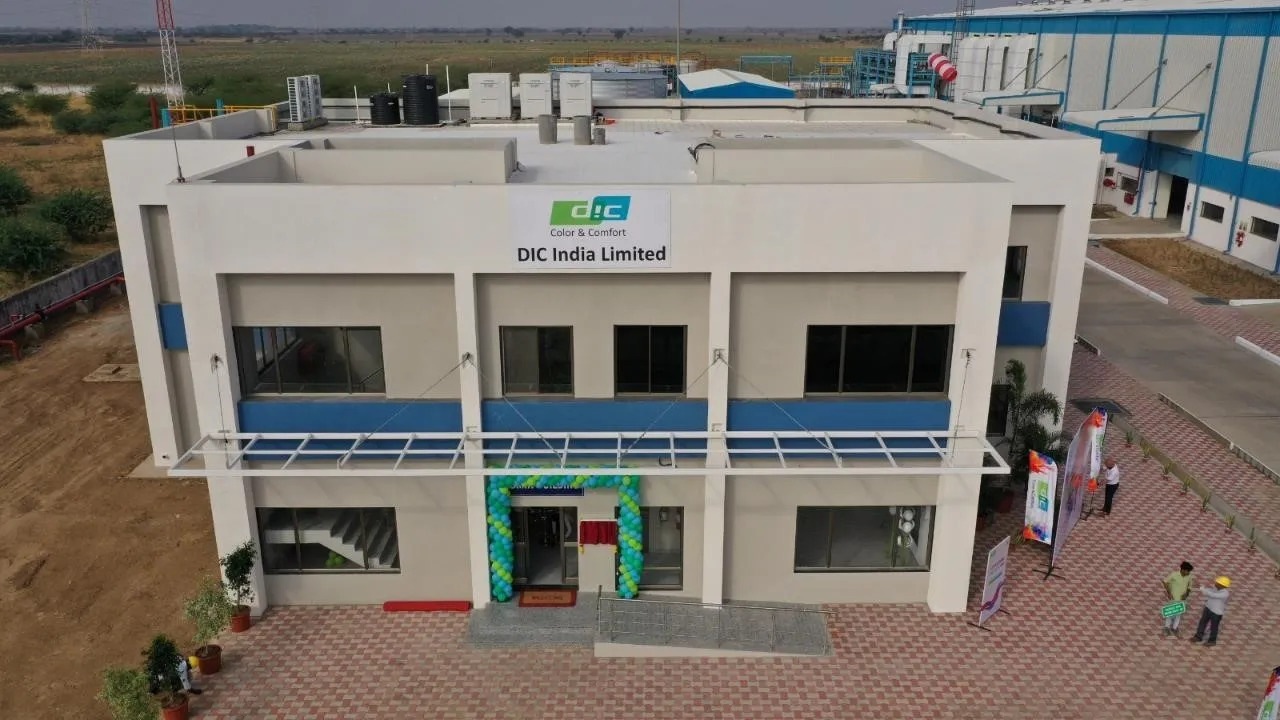
The ink is drying on a story of radical transformation. DIC India Ltd, a subsidiary of the Japanese giant DIC Corporation, is currently in the midst of a high-stakes pivot from the dying world of newsprint to the booming high-margin packaging sector. The latest numbers for the quarter ended March 31, 2026, reveal a company that is finally finding its footing after years of stagnation and a painful restructuring that saw the closure of its legacy Kolkata plant.
While the broader equity markets often overlook slow-moving chemical stocks, the numbers here are shouting. Net Profit for Q4 FY26 stood at ₹4.24 crore, a massive 63.7% jump compared to the ₹2.59 crore reported in the same period last year. This isn’t just a fluke of low base effect; it is a reflection of improved Operating Profit Margins (OPM), which have crawled up from the sub-2% levels of 2022-23 to a more respectable 3.60% this quarter, and even touching 5% in the trailing twelve months.
However, the road ahead isn’t paved with gold. The company is battling a structural decline in its traditional newsprint ink business—a sector that has shrunk from 33% of its revenue in 2017 to roughly 23% today. Investors are watching a race: can the growth in toluene-free packaging inks and lamination adhesives outrun the vanishing demand for physical newspapers? With a Market Cap of ₹474 crore and a Price-to-Earnings (P/E) ratio of 22.8, the market is pricing in a successful transition, but the margin for error is razor-thin.
1. At a Glance
The financial profile of DIC India is a study in contrasts. On one hand, you have a debt-free balance sheet (Debt-to-Equity of 0.01) and the backing of a global leader, DIC Japan, which holds a 71.75% stake. On the other, you have a business that has struggled to deliver meaningful returns to shareholders for a decade. The 5-year stock price CAGR is a measly 5.73%, barely beating a savings account, while the Return on Equity (ROE) has languished at a pathetic 3% average over the last three years.
But something shifted in 2024. The closure of the loss-making Kolkata unit was a “tear off the band-aid” moment. By eliminating fixed costs from an inefficient legacy plant, the company has cleared the deck for its newer, high-efficiency plants in Saykha, Noida, and Bengaluru. The results are visible: TTM Profit Growth is at 19%, even as sales growth remains a modest 3%. This tells you that the company is getting “leaner,” not necessarily “larger.”
The real intrigue lies in the Toluene-Free Ink segment introduced in FY23. This is a higher-margin product driven by stricter safety regulations in food packaging. As global brands demand safer packaging, DIC India’s tech-transfer from its Japanese parent gives it a moat that local “mom-and-pop” ink makers can’t replicate. Yet, there is a looming shadow—the Income Tax Department recently slapped a draft order for a ₹3.84 crore addition, and the company is constantly fighting GST demand orders across multiple states.
Is this a sleeping giant awakening, or just a legacy business managing its own decline? The company’s Enterprise Value (EV) of ₹413 crore is actually lower than its Market Cap because of the cash sitting on the books. This suggests the market isn’t even giving credit for the business operations in the way it would for a high-growth specialty chemical play. The teaser for the skeptical investor: if margins continue to climb toward the 9% levels seen by its Japanese parent, the current valuation will look like a relic of the past.
2. Introduction
DIC India is one of the oldest players in the Indian printing industry, incorporated way back in 1947. For decades, it was known as Coates of India, the undisputed king of newspaper ink. If you held a newspaper in India twenty years ago, there was a high probability your fingers were stained with DIC ink.
But the digital revolution turned that dominance into a liability. As readers migrated to screens, the newsprint ink market began a slow, agonizing descent. The company had to reinvent itself or face irrelevance. Today, it classifies itself as a packaging and printing solutions provider.
The management’s focus has shifted entirely toward Flexible Packaging, Lamination Adhesives, and Specialty Chemicals. This is where the “real” money is. Packaging is tied to consumption—every time you buy a bag of chips or a pouch of milk, DIC India’s products are likely involved in the branding and protection of that product.
With four manufacturing facilities strategically located across India, the company maintains the second-largest ink manufacturing capacity in the country at 60,648 tonnes per annum. This scale is its greatest defense against competitors.
However, being a subsidiary of a global giant is a double-edged sword. While it gets world-class tech, it also operates under the strict, sometimes slow, corporate governance of a Japanese multinational. The story of DIC India is about whether this old-school giant can move fast enough to capture the modern Indian consumer boom.
3. Business Model – WTF Do They Even Do?
Think of DIC India as the “skin” of the consumer goods industry. They don’t make the food, the soap, or the electronics—they make the stuff that makes those products look good and stay protected.
- Printing Inks: This is the core. They produce everything from offset inks for magazines to liquid inks for flexible packaging. Their toluene-free range is the current “cool kid” in the portfolio, catering to health-conscious brands.
- Lamination Adhesives: When you see a multilayered snack pouch, those layers need to be stuck together. DIC provides the “glue” that ensures your chips stay crispy and the ink doesn’t leak into your food.
- Geographic Reach: While 90% of revenue is domestic, they export about 10%, mostly leveraging the global network of DIC Japan.
The business model is essentially “B2B Specialty Chemicals.” They sell to massive packaging converters who in turn supply the likes of HUL, ITC, and Britannia. It’s a