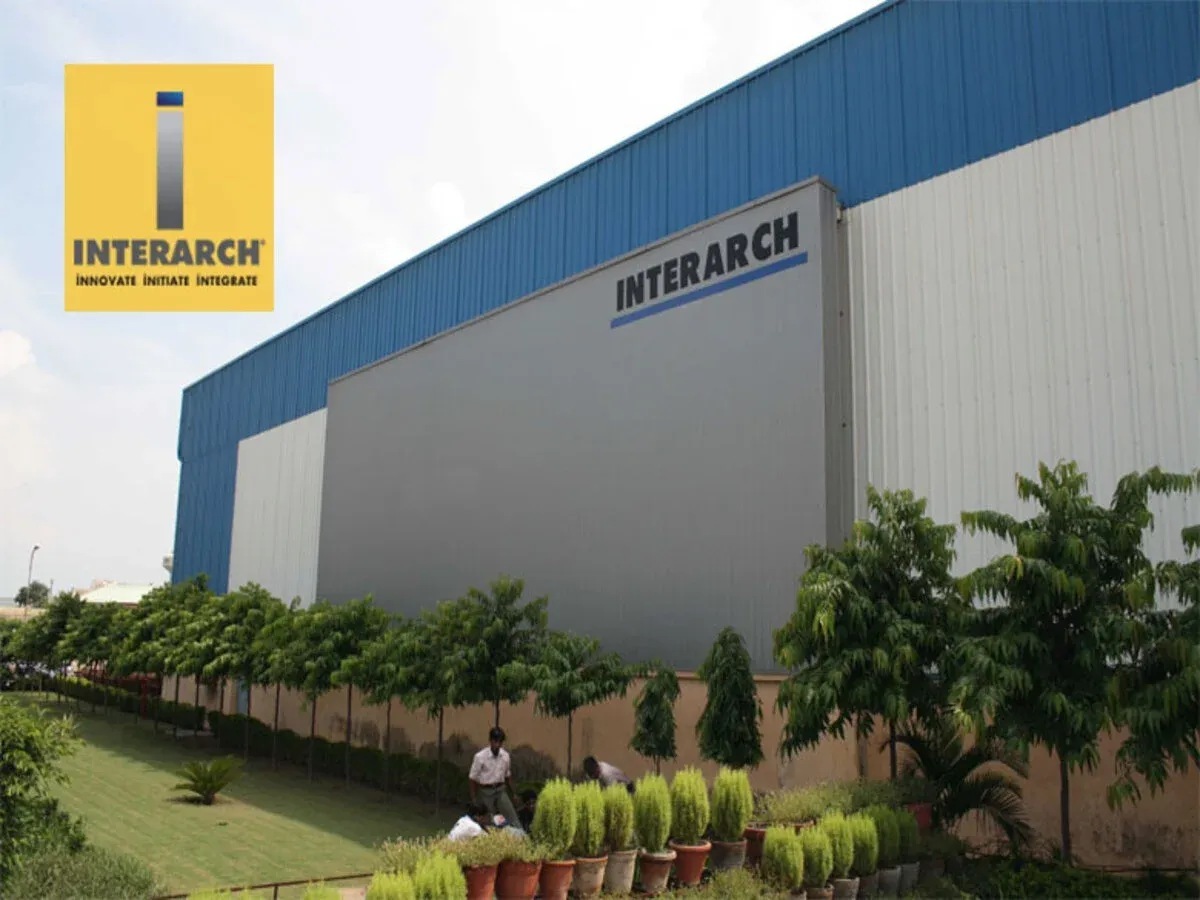
Interarch Building Solutions has just dropped its full-year and fourth-quarter results for FY26, and the numbers are screaming for attention. In a year where private sector capex finally woke up from its slumber, Interarch didn’t just participate—it dominated. The company clocked its highest-ever annual revenue of ₹1,898 crore, a staggering 30.6% growth over the previous fiscal.
While the top-line growth is a vanity metric for many, the quality of this growth is what separates the veterans from the fly-by-night operators. Interarch secured a mammoth order book of ₹1,703 crore as of April 2026, providing a solid nine to ten months of revenue visibility. However, as the saying goes, “Revenue is vanity, profit is sanity, but cash is reality.” Despite the explosive sales, the market is squinting at the margins. The EBITDA margin for FY26 stood at 9.3%, showing a slight compression from the 9.4% seen last year, as the company aggressively spent on “front-loading” its human capital—hiring engineers and project managers ahead of its massive capacity expansion.
The management is playing a high-stakes game of “Capacity First, Demand Later.” With two new plants in Gujarat and Andhra Pradesh racing toward a Q2 FY27 commissioning, Interarch is betting ₹127.8 crore that the EV, semiconductor, and data center boom isn’t just a flash in the pan. But with a sudden ₹3.2 crore one-time hit due to new labor code interpretations and a quarterly PAT that actually dipped 5.4% YoY in Q4, is the company growing too fast for its own good?
1. At a Glance
Interarch Building Solutions is currently the second-largest player in India’s Pre-Engineered Building (PEB) arena, but it behaves like a company that isn’t satisfied with the silver medal. With a market share of 6.5% and an aggregate installed capacity that has now hit 201,000 MTPA, the scale is undeniable. The company transitioned from a privately held veteran to a listed entity in late 2024, and since then, the spotlight has been harsh.
The financial year 2026 was a tale of two halves. On one hand, you have the Industrial and Manufacturing sector contributing a massive 87% to the revenue, proving that Interarch is the primary beneficiary of India’s “Make in India” push. On the other hand, the PAT margin contracted from 7.4% to 7.1% annually. This isn’t just a rounding error; it’s a reflection of the intense competitive heat in the PEB industry. Management admits that competition is “very severe,” and they are choosing to protect their execution reputation rather than chasing “mathematical or exponential” growth that could lead to a fall.
The ₹1,703 crore order book is the crown jewel, but it comes with a catch. Management is explicitly refusing to book orders beyond a 10-month window. Why? Because in the world of PEB, steel price volatility can turn a “great order” into a “financial disaster” if the execution is delayed. They are holding ₹200 crore+ in cash and remain zero-debt, which is a rare feat for a company in a capital-intensive construction-adjacent sector.
However, red flags are starting to emerge in the working capital department. Debtor days have stretched to 55 days compared to 53 last year, and the Cash Conversion Cycle has jumped to 73 days. The company’s recent QIP of ₹100 crore was launched not for survival, but to “prepone” capex—a move that signals management’s urgency to capture the Gujarat market before rivals do. Will this aggressive land-grab pay off, or will the “front-loaded” costs continue to eat into the bottom line? The teaser for the year ahead: Can Interarch hit its ₹2,500 crore revenue target by FY28 without diluting its 20%+ ROCE?
2. Introduction
Interarch is not just a “shed builder.” It is an engineering powerhouse that has spent four decades convincing Indian corporates that steel is superior to the traditional “bricks and mortar” (RCC) approach. Established in 1983, the company has evolved from a simple metal ceiling brand (TRAC) into a turnkey giant that handles everything from the first blueprint to the final bolt on a G+16 steel skyscraper.
The PEB industry in India is undergoing a massive structural shift. Historically, if you wanted to build a factory, you hired a local contractor and waited 18 months. Interarch changed the game by “productizing” buildings—manufacturing them in controlled factory environments and assembling them on-site in half the time. This “speed-to-market” is why giants like Reliance, Tata, and Aditya Birla keep coming back, with repeat orders accounting for 82% of revenue.
The company’s recent listing has brought a level of transparency that reveals a hungry management team. They are moving away from simple industrial sheds and moving into “Heavy Steel Structures” for high-rise buildings and data centers. This is where the real complexity (and the real margins) lie. But entering this space means competing with global heavyweights and massive domestic steel players.
With 8 manufacturing facilities spread across the North, South, and soon the West (Gujarat), Interarch is building a pan-India moat. They aren’t just selling steel; they are selling “schedule certainty.” In a country where infrastructure projects are notorious for delays, Interarch’s 43-year history of “walking the talk” is their most valuable asset. But as they scale from a ₹1,400 crore base to a ₹3,000 crore vision, the “detective” in us asks: can they maintain the same quality of project management across 240,000 tons of capacity?
3. Business Model – WTF Do They Even Do?
Interarch operates in a niche that sits uncomfortably between manufacturing and construction. They provide Pre-Engineered Buildings (PEBs). Think of it like a giant, industrial-scale LEGO set made of high-grade steel.
They have two main ways of making money:
- PEB Contracts (The Turnkey Play): This is where they do everything—designing, engineering, manufacturing, and the actual erection on-site. This is high-stakes project management. If a bolt is missing in a remote site in Andhra Pradesh, the whole project stalls.
- PEB Sales (The Product Play): They sell the components—metal ceilings, roofing, and structural steel—under their established brands like TRACDEK.
Their “secret sauce” is their in-house design team of 155+ structural engineers. Every building is unique. You can’t just copy-paste a design for a paint factory in Tamil Nadu and use it for a data center in Noida. The engineering team uses complex software like Staad Pro and Tekla to ensure these structures don’t collapse under wind or seismic loads.
The roast? While they call themselves an “engineered product” company to get higher P/E multiples from investors, they are still at the mercy of steel prices. They buy raw steel, fabricate it, and sell it. If steel prices spike and they haven’t locked in their procurement, their margins disappear faster than a “get rich quick” scheme. They manage this by keeping 2 months of physical inventory and locking in another 8 weeks of supplier deliveries. It’s a high-wire act of supply chain management.
4. Financials Overview
Interarch’s financial performance in Q4 FY26 shows a company that is running at full throttle but feeling the wind resistance. Revenue grew nearly 9%, but profits took a slight breather.
Quarterly Performance Comparison (Consolidated)
| Particulars (₹ Cr) | Q4 FY26 (Latest) | Q4 FY25 (YoY) | Q3 FY26 (QoQ) |
| Revenue | 503.6 | 463.5 | 522.5 |
| EBITDA | 52.8 | 48.8 | 50.3 |
| PAT | 36.6 | 38.7 | 37.3 |
| EPS (₹) | 21.82 | 23.25 | 22.22 |
Audit Note: The management “walked the talk” on their revenue guidance. Earlier in the year, they targeted ₹1,720 crore, but they over-delivered by hitting ₹1,898 crore. However, the Q4 PAT dip of 5.4% YoY is a stark reminder that scale doesn’t always equal profitability in the short term.
P/E Calculation Check:
The current market price is ₹1,768.
The full-year EPS for FY26 is ₹80.21.
This puts the Trailing P/E at 22.0x, which is slightly higher than the industry median of 18.0. The market is clearly paying a premium for Interarch’s debt-free balance sheet and its leadership in the PEB niche.
5. Valuation Discussion – Fair Value Range
To find out what Interarch is actually worth, we have to look past the “growth goggles.”
Method 1: P/E Multiple
The company is trading at ~22x. Given its 27% TTM profit growth and sector leadership, a “Fair P/E” range of 20x to 24x is reasonable.
- Lower end: 80.21 × 20 = ₹1,604
- Upper end: 80.21 × 24 = ₹1,925
Method 2: EV/EBITDA
With an FY26 EBITDA of ₹176.3 Cr and an Enterprise Value (EV) of ₹2,904 Cr, the EV/EBITDA is 16.5x. High-quality capital goods companies typically trade between 15x and 18x.
- Lower end (15x): (15 × 176.3) + Cash – Debt ≈ ₹2,800 Cr MCAP
- Upper end (18x): (18 × 176.3) + Cash – Debt ≈ ₹3,320 Cr MCAP
Method 3: DCF (Back-of-the-envelope)
Assuming a 15% growth rate for the next 5 years (conservative given the 20% target) and a terminal growth of 4%, with a WACC of 12%.
The DCF intrinsic value settles around the ₹1,750 – ₹1,850 mark.
Fair Value Range: ₹1,650 — ₹1,950
Disclaimer: This fair value range is for educational purposes only and is not investment advice.
6. What’s Cooking – News, Triggers, Drama
The Interarch kitchen is spicy right now. The biggest news is the ₹100 crore QIP (Qualified Institutional Placement). Why raise money when you have ₹200 crore cash? Because management wants to “prepone” the Gujarat plant. They aren’t waiting for the market; they are trying to be the market.
The Multi-Story Mania: They recently won a G+16 hotel project. This is a huge pivot from boring warehouses. If Interarch can prove that steel is faster and cheaper for hotels and hospitals, they tap into a market that is 10x the size of industrial sheds.
The “Jindal” Factor: They have a JV with Jindal Steel & Power. This is a classic “keep your enemies close” move. By partnering with their biggest supplier, they get priority access to advanced steel and potentially better pricing.
The MSME Drama: There’s a lingering notice from a company called AGRIMA claiming ₹9.55 crore. It’s small change for Interarch, but it’s a reminder that in the construction world, legal skirmishes over “work done” are a permanent feature of the landscape.
Does a ₹1,700 crore order book make you feel safe, or does it make you worry about execution delays? Let us know in the comments.
7. Balance Sheet
Interarch’s balance sheet is as clean as a whistle, but there are signs of heavy lifting for future growth.
| Particulars (₹ Cr) | Mar 2026 | Mar 2025 | Mar 2024 |
| Total Assets | 1,301 | 1,114 | 755 |
| Net Worth | 881 | 751 | 445 |
| Borrowings | 17.5 | 17.2 | 10.2 |
| Other Liabilities | 402 | 343 | 297 |
| Total Liabilities | 1,301 | 1,114 | 755 |
- Sarcastic Observation 1: Borrowings at ₹17.5 Cr on an asset base of ₹1,301 Cr? They have more money in their office’s “petty cash” drawer than they owe the banks.
- Sarcastic Observation 2: “Capital Work in Progress” (CWIP) has jumped to ₹56.5 Cr. That’s basically the sound of concrete mixers in Gujarat and AP eating into their current cash.
- Sarcastic Observation 3: Net Worth is up significantly, thanks to the IPO and retained earnings. They are officially the “rich kids” of the PEB playground.
8. Cash Flow – Sab Number Game Hai
This is where things get “interesting.” While the P&L looks like a celebration, the Cash Flow statement looks like a workout.
| Particulars (₹ Cr) | Mar 2026 | Mar 2025 | Mar 2024 |
| Operating Cash Flow (CFO) | -19 | 53 | 82 |
| Investing Cash Flow (CFI) | -23 | -223 | -32 |
| Financing Cash Flow (CFF) | -22 | 192 | -46 |
The Reality Check:
The company had a Negative Operating Cash Flow of ₹19 Cr in FY26. Why? Because they are growing so fast that all their cash is getting sucked into “Working Capital.” They are buying massive amounts of steel (Inventory) and waiting for clients to pay (Receivables). For every ₹1 of profit, they are currently seeing negative cash. This is classic “Growth Pain.” They have plenty of cash in the bank from the IPO to fund this, but they can’t stay “CFO negative” forever.
9. Ratios – Sexy or Stressy?
The ratios tell us if the engine is overheating.
| Ratio | Mar 2026 | Mar 2025 | Mar 2024 |
| ROE (%) | 16.8 | 18.8 | 19.4 |
| ROCE (%) | 22.8 | 25.8 | 25.0 |
| Debt to Equity | 0.02 | 0.02 | 0.02 |
| PAT Margin (%) | 7.1 | 7.4 | 6.7 |
| Asset Turnover | 1.46 | 1.30 | 1.71 |
Judgement:
The ROCE of 22.8% is still “Sexy,” but the trend is downward. As they deploy more capital into new plants, the “return” on that capital takes time to show up. The Debt to Equity of 0.02 is basically a flex—they are playing the game on “Easy Mode” while their competitors struggle with high interest rates.
10. P&L Breakdown – Show Me the Money
| Particulars (₹ Cr) | FY26 | FY25 | FY24 |
| Sales | 1,898 | 1,454 | 1,293 |
| EBITDA | 176 | 136 | 113 |
| Net Profit (PAT) | 135 | 108 | 86 |
Commentary:
The revenue growth is like a Bollywood blockbuster—explosive and loud. But the “Other Income” of ₹28.6 Cr (likely from interest on IPO money) is doing some heavy lifting for the Net Profit. Without that IPO cash sitting in FDs, the PAT would look a lot leaner. It’s like a bodybuilder who looks great but is secretly taking “supplements” (Other Income) to keep the numbers up.
11. Peer Comparison
How does Interarch look next to the other guys with helmets?
| Company | Sales (₹ Cr) | PAT (₹ Cr) | P/E |
| Larsen & Toubro | 1,82,762 | 6,133 | 31.3 |
| NBCC | 3,022 | 197 | 38.2 |
| Interarch Build. | 1,898 | 135 | 21.7 |
| Rail Vikas (RVNL) | 4,684 | 324 | 51.5 |
Sarcastic Notes:
L&T is the grandfather who owns half the country, trading at a 31x P/E because, well, it’s L&T. RVNL is in a “Railway Bubble” of its own with a 51x P/E. Interarch at 21.7x looks like the “sensible middle child”—not as expensive as the rail stocks, but not as boring as a general contractor. Interarch is winning on the “Niche” factor, while the others are just playing a volume game.
12. Miscellaneous – Shareholding and Promoters
| Category | Sep 2024 (%) | Mar 2026 (%) |
| Promoters | 59.90 | 59.44 |
| FIIs | 5.52 | 5.29 |
| DIIs | 9.33 | 5.17 |
| Public | 25.26 | 30.12 |
The Roast:
The DIIs (Mutual Funds) seem to be checking out, dropping from 9.3% to 5.1%. Meanwhile, the “Public” (you and me) are piling in, with our share rising to 30.1%. Is the “smart money” leaving, or is this just standard post-IPO rebalancing?
Promoter Bio: Arvind Nanda and Gautam Suri have been at this since 1983. They’ve seen every economic cycle from the Licence Raj to the Digital India boom. They aren’t “startup bros”; they are “hard-hat veterans” who actually know how to weld a beam.
13. Corporate Governance – Angels or Devils?
Interarch generally stays out of the gossip columns, but there are a few things to watch. The Section 158BC notice received in Jan 2026 for “undisclosed income” over the 2019-2025 block period is a typical “welcome to being a big company in India” tax department hug. No demand has been made yet, so it’s a “wait and watch.”
The board meetings are frequent, and the recent appointment of Manish Kumar Garg as CEO and Executive Director brings professional “outside” experience from Everest Industries. This is a good sign—it means the founders are willing to let professionals drive the car while they sit in the back with the map. The monitoring agency reports show zero deviation in IPO proceeds, which is more than what some “New Age Tech” companies can say.
If you had to pick a CEO, would you prefer a 40-year veteran or a hotshot professional? Tell us why in the comments.
14. Industry Roast and Macro Context
The PEB industry is currently the “cool kid” in the infrastructure sector. Everyone wants to talk about data centers and EV plants, and PEB is the fastest way to build them. But let’s be real—the industry is just a fancy way of arbitraging steel prices and labor costs.
The sector is plagued by cyclicality. When the economy sneezes, the first thing companies cut is “expansion capex.” If the private sector capex cycle slows down even a little, these shiny new plants in Gujarat will be very expensive “hollow sheds.” Also, the “Heavy Steel Structure” space is getting crowded. Every civil contractor who used to pour concrete is now trying to learn how to bolt steel.
The macro context is “India’s Decade,” but the micro context is “Margin Pressure.” With China potentially dumping steel in global markets, Interarch has to be a master of procurement, not just engineering.
15. EduInvesting Verdict
Interarch Building Solutions is a classic “Picks and Shovels” play for India’s industrialization. They don’t make the EVs, the paints, or the semiconductors—they build the homes for the machines that do.
The Good:
- Zero Debt: A bulletproof balance sheet in a risky sector.
- Execution History: 40+ years and 850+ projects mean they won’t “learn on your dime.”
- Strategic Pivot: Moving into high-margin “Heavy Structures” and “Multi-Story” buildings.
- Export Potential: Recent MoUs for the North American market could be the next “margin kicker.”
The Bad:
- Negative CFO: Fast growth is currently eating their cash flow.
- Margin Compression: High competition and “front-loaded” costs are keeping a lid on PAT.
- Promoter vs Professional Transition: This is a crucial phase—can the founders truly hand over the reins?
SWOT Analysis:
- Strength: Market leadership in a niche, integrated manufacturing.
- Weakness: Sensitivity to steel prices, negative operating cash flow.
- Opportunity: Multi-story steel buildings, data center boom, exports.
- Threat: Slowdown in private capex, aggressive entry by large steel majors.
Interarch is a high-growth engine that is currently being refueled mid-air. It’s a bold bet on India’s manufacturing future, but the “detective” should keep a close eye on the next two quarters of cash flow.
Fair Value Range Disclaimer:
This fair value range is for educational purposes only and is not investment advice. Pre-engineered steel construction involves significant market risks, including steel price volatility and execution delays. Always consult a certified financial advisor before making any investment decisions.