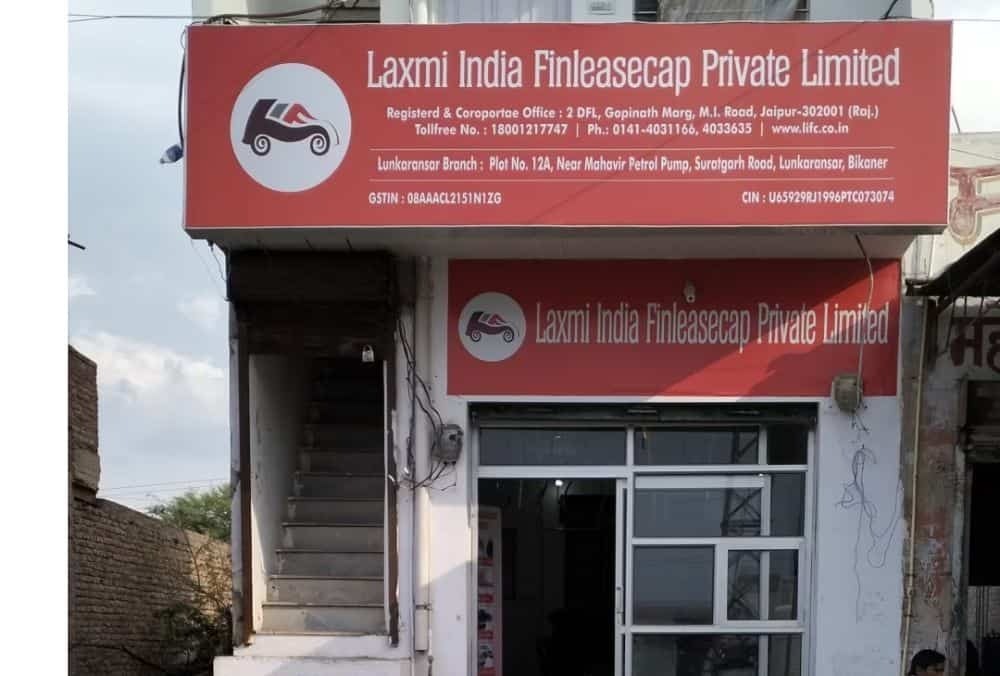
Laxmi India Finance Limited (LIFL) has closed the final chapter of its first year as a listed entity with a performance that highlights both the aggressive scaling of its branch-led model and the inevitable friction of high-growth lending. The company reported a consolidated Net Profit of ₹20.52 crore for the quarter ended March 31, 2026, marking a significant 40.8% YoY jump. While the headline numbers suggest a smooth ride, a deeper look into the P&L reveals that a sizeable portion of this quarter’s profitability was fueled by a one-off gain from a Direct Assignment (DA) pool sale.
The Non-Banking Financial Company (NBFC), which focuses on the “underbanked Bharat” across six states, saw its Assets Under Management (AUM) swell to ₹1,626.26 crore, a 27.3% increase over the previous fiscal. However, this growth has come at a cost. Gross Non-Performing Assets (GNPA) surged to 2.13%, largely attributed to a specific stressed exposure. As the company pivots from a Rajasthan-centric player to a multi-state institution, the management’s ability to “walk the talk” on risk discipline is being tested.
1. At a Glance
The financial narrative of Laxmi India Finance is currently a tug-of-war between impressive operational scaling and emerging asset quality red flags. On one hand, the company is successfully institutionalizing its operations post-IPO, with its net worth jumping to ₹465.47 crore and its credit rating receiving an upgrade to ACUITE A (Stable). On the other hand, the credit cost trajectory is starting to look volatile.
In the world of finance, high yields usually hide high risks, and Laxmi is no exception. Operating in the MSME and used vehicle segment—often without formal income proof—requires a “boots on the ground” approach that is expensive and difficult to scale. The company’s Financing Margin improved to 29% in the latest quarter, but investors must realize this was heavily aided by an ₹8.66 crore upfront profit from a pool sale. Without this one-off, the core earnings would have looked far more modest.
The most glaring concern is the jump in GNPA from 1.07% to 2.40% during the nine-month period, eventually settling at 2.13% by March 2026. Management has pointed to a specific default in a DA pool of Up Money Limited, where an exposure of ₹19 crore required an accelerated provision of ₹11 crore. While they expect a recovery through legal recourse, it serves as a stark reminder that even “secured” portfolios can face liquidity chokepoints when the counterparty fails to remit proceeds.
Can a company that still derives 82% of its AUM from a single state (Rajasthan) truly claim to be a diversified regional powerhouse? The geographic concentration remains a massive structural risk. While they are planting flags in Maharashtra and Uttar Pradesh, these new territories come with localized legal idiosyncrasies and different property documentation standards. The transition from a local champion to a systemic player is often where the most skeletons are found in the closet.
2. Introduction
Laxmi India Finance Limited (LIFL) started its journey in 1996 but effectively took its current shape in 2011 after merging with Deepak Finance & Leasing. Based out of Jaipur, it has carved a niche by lending to small traders, shop owners, and transport operators—the segments that traditional banks often shun due to lack of formal documentation.
The company’s philosophy is built on the belief that “documentary poverty” does not equal “credit unworthiness.” By conducting physical field visits to shops and assessing family-level leverage rather than just relying on CIBIL scores, Laxmi has built a book that is 98% secured. This collateral-heavy approach (with a reported average LTV of 45%) is their primary defense against the inherent volatility of their borrower base.
Post its August 2025 IPO, the company has been flush with capital, which it has used to expand its network to 176 branches. The strategy is clear: build density in clusters to maintain local underwriting knowledge. However, as the organization grows, the challenge moves from “sourcing” to “monitoring.” The latest results show that while the engine is running fast, the friction is heating up the components.
3. Business Model – WTF Do They Even Do?
Laxmi India Finance is essentially a “high-yield bridge” for the informal economy. They take money from big banks and institutional lenders and pass it on to people who buy used tractors, electric three-wheelers, or need working capital for their kirana stores.
The Product Mix
- MSME Finance: This is the bread and butter, making up the lion’s share of the AUM (₹1,298 crore). These are secured loans against property (LAP) given to micro-entrepreneurs.
- Vehicle Finance: They finance the “wheels of the economy”—used commercial vehicles, tractors, and increasingly, EVs.
- Construction Loans: Retail loans for residential property renovation or extension.
- Wholesale Lending: They also play “big brother” by lending to other smaller NBFCs.
The business model relies on local intelligence. Their Relationship Managers (RMs) don’t just sit in air-conditioned offices; they go to the borrower’s shop, count the footfall, and talk to the neighbors. It’s a field-intensive model where the branch acts as a “Hub” for sourcing, underwriting, and, most importantly, chasing payments.
Financial Wisdom: In NBFC lending, the “Sale” isn’t complete when the loan is disbursed; it’s only complete when the last EMI is collected. Laxmi’s reliance on physical collections is a double-edged sword—it builds relationships, but it makes the cost of operations (Opex) very high.
4. Financials Overview
The latest quarterly performance shows a company that is benefiting from a lower cost of funds post-IPO but is also using “accounting maneuvers” like DA sales to boost its bottom line.
Key Performance Indicators (Consolidated)
| Metric (₹ Cr) | Mar 2026 (Latest Qtr) | Mar 2025 (YoY) | Dec 2025 (QoQ) |
|---|---|---|---|
| Revenue | 92.84 | 70.00 | 79.00 |
| Interest Expense | 36.25 | 31.67 | 34.03 |
| Net Profit (PAT) | 20.52 | 14.52 | 10.04 |
| EPS (₹) | 3.93 | 2.34 | 1.92 |
Annualised EPS Calculation: Since the company has reported full-year audited results for March 2026, we look at the full-year EPS. For the trailing performance, the Mar 2026 Q4 EPS of ₹3.93 is exceptionally high due to the ₹8.66 crore DA profit.
Management Walk the Talk: In previous interactions, management guided for a reduction in the cost of borrowings. They delivered. The blended cost of borrowing dropped from 11.48% in FY25 to 10.80% in FY26. However, they also promised stable asset quality. The jump in GNPA to 2.13% suggests that while they are getting cheaper money, they are struggling to keep the “bad apples” out of the basket.
5. Valuation Discussion – Fair Value Range
To understand Laxmi’s valuation, we must weigh its high growth against its rising risk profile.
Method 1: P/E Multiple
The stock is trading at a P/E of 13.3. Given the industry median is 18.6, Laxmi looks “cheap” on paper. However, the Industry PE includes giants like Bajaj Finance. For a small-cap NBFC with geographic concentration, a discount is warranted. Using a conservative P/E range of 11x to 14x on the FY26 EPS of ₹9.52:
- Lower Bound: 9.52×11=₹104.72
- Upper Bound: 9.52×14=₹133.28
Method 2: Price to Book (P/B)
Laxmi’s Book Value is ₹89.0. At a CMP of ₹126, it trades at 1.41x P/B. For an NBFC with a RoE of 13.8%, a P/B range of 1.3x to 1.6x is reasonable.
- Lower Bound: 89.0×1.3=₹115.70
- Upper Bound: 89.0×1.6=₹142.40
Method 3: Adjusted DCF (Discounted Cash Flow)
Considering a 30% growth for 3 years followed by a 15% terminal growth, and a high discount rate of 14% (due to geographic and asset quality risks), the DCF fair value settles in the range of ₹118 to ₹135.
Fair Value Range Summary: Based on the above, the estimated fair value range for Laxmi India Finance is ₹112 – ₹138.
This fair value range is for educational purposes only and is not investment advice.
6. What’s Cooking – News, Triggers, Drama
The big drama this year was the Up Money Limited default. Laxmi had an exposure of ₹19 crore in a DA pool which turned sour because the entity didn’t remit the collections. Management had to scramble and create an ₹11 crore provision, which took the wind out of their sails in Q3. They are now in “healthy talks” and legal proceedings to become the direct servicer of that pool. If they recover this, a fat provision write-back will hit the P&L, making the numbers look “miraculously” good in a future quarter.
On the positive side, Acuité upgraded their credit rating to ‘A’ in March 2026. This is a massive “street cred” boost. It allows them to tap into cheaper bank funding. They’ve already onboarded 47 lenders, including heavyweights like Bank of Baroda and SBI.
Is the recent DA pool sale of ₹41 crore a sign of strength or a desperate attempt to meet year-end profit targets?
7. Balance Sheet
Laxmi’s balance sheet has transformed into a much larger animal post-listing.
| Row (₹ Cr) | Mar 2026 (Latest) | Mar 2025 | Mar 2024 |
|---|---|---|---|
| Total Assets | 1,818 | 1,413 | 985 |
| Net Worth | 465 | 258 | 202 |
| Borrowings | 1,337 | 1,137 | 767 |
| Other Liabilities | 15 | 18 | 16 |
| Total Liabilities | 1,818 | 1,413 | 985 |
Audit Commentary:
- Leverage Check: Debt to Equity has dropped from 4.41x to 2.87x, thanks to the IPO infusion. They have plenty of “dry powder” to lend now.
- Asset Growth: Assets have grown by 28.6%, keeping pace with their AUM expansion.
- Reserves: The reserves have ballooned to ₹439 crore, giving them a solid cushion against potential shocks.
8. Cash Flow – Sab Number Game Hai
In the lending business, Operating Cash Flow is almost always negative because “outflow” is your “product.”
| Particulars (₹ Cr) | Mar 2026 | Mar 2025 | Mar 2024 |
|---|---|---|---|
| Operating Cash Flow | -280 | -311 | -224 |
| Investing Cash Flow | -134 | -18 | -7 |
| Financing Cash Flow | 354 | 390 | 178 |
The company is in a continuous capital-raising mode. They raised ₹354 crore through financing to fund the ₹365 crore in new loans (Receivables). The negative Free Cash Flow of -₹286 crore is standard for a growing NBFC—they are burning cash to build a book. The real question is: will the interest coming back in the future be enough to cover the principal they are borrowing today?
9. Ratios – Sexy or Stressy?
| Ratio | Mar 2026 | Mar 2025 | Commentary |
|---|---|---|---|
| ROE (%) | 13.73% | 15.67% | Moderated due to higher equity base post-IPO. |
| ROCE (%) | 12.72% | 12.7% | Flat; efficiency isn’t improving as fast as scale. |
| Net Margin (%) | 15.54% | 14.6% | Slight improvement due to lower cost of funds. |
| Debt to Equity | 2.87 | 4.41 | Very “sexy” and comfortable post-IPO. |
| GNPA (%) | 2.13% | 1.07% | Definitely “stressy”; asset quality is deteriorating. |
The Interest Coverage Ratio of 1.48 is low. In a scenario where credit costs spike, this thin margin of safety could be problematic.
10. P&L Breakdown – Show Me the Money
| Component (₹ Cr) | Mar 2026 | Mar 2025 | Mar 2024 |
|---|---|---|---|
| Revenue | 317 | 246 | 173 |
| Interest Exp | 137 | 115 | 83 |
| Financing Profit | 66 | 47 | 29 |
| Net Profit | 50 | 36 | 22 |
Comedy Commentary: The revenue grew by 29%, but the financing profit grew by 40%. How? By keeping the lenders happy with 10.8% interest while charging the borrowers 21.3%. That “spread” is where the magic happens. It’s like buying a samosa for ₹10 and selling it for ₹21.3, except sometimes the guy who ate the samosa forgets to pay you back.
11. Peer Comparison
| Company | Sales (Qtr) | PAT (Qtr) | P/E | ROCE (%) |
|---|---|---|---|---|
| Bajaj Finance | 21,605 | 5,553 | 29.5 | 10.8 |
| Muthoot Finance | 9,288 | 3,397 | 12.5 | 15.7 |
| Laxmi India Fin. | 92.8 | 20.5 | 13.3 | 12.7 |
Laxmi is a “nano-particle” compared to Bajaj. While Bajaj is a tech-giant disguised as a bank, Laxmi is a local money-lender disguised as a tech-NBFC. Muthoot is winning on ROCE, while Laxmi is crying about its 2.13% NPA.
12. Miscellaneous – Shareholding and Promoters
The Baid family holds a tight grip with 60.31% stake. Notable names like Mukul Agrawal (3.83%) are on the bus, which usually attracts the retail crowd.
Promoter Roast: Mr. Deepak Baid has been at this for two decades. He knows Rajasthan like the back of his hand. But the IPO has made him answerable to analysts who ask annoying questions about “Stage 3 movements” and “PCR.” The transition from a family business to a “transparently governed institution” is like a teenager getting his first haircut for a corporate job—it’s uncomfortable but necessary.
13. Corporate Governance – Angels or Devils?
The company has 4 independent directors and a dedicated compliance team. However, the Up Money DA issue suggests that their due diligence on partnership models needs a major upgrade. You can’t just lend your money to another entity and hope they pay you back; that’s not banking, that’s optimism.
The board approved an NCD issuance limit of ₹400 crore, showing they are hungry for more debt. The IPO monitoring agency (CARE) says the funds were fully utilized for “onward lending”—no diversions found. So far, they look like “angels,” but the rising NPAs suggest the halo might be slipping.
14. Industry Roast and Macro Context
The NBFC sector in India is currently a “growth party” where everyone is invited until the music (liquidity) stops. With banks becoming cautious about unsecured retail, NBFCs like Laxmi are picking up the crumbs. The “Make in India” and “Vocal for Local” themes are great for MSME lenders, but the macro environment of fluctuating interest rates is a constant threat.
The industry is obsessed with “digitization,” but in rural Bharat, a digital app is useless if the borrower’s buffalo dies and he can’t pay the EMI. Laxmi’s strength is its physical presence, but that’s an expensive moat to maintain when the big banks finally decide to use AI to reach the same villages.
15. EduInvesting Verdict
Laxmi India Finance is a classic high-growth, high-risk play. It has successfully navigated its first year as a public company, leveraging its IPO capital to scale operations and improve its funding profile. The rating upgrade to ‘A’ is a significant milestone that should keep interest costs low in FY27.
SWOT Analysis:
- Strengths: Deep domain expertise in Rajasthan, 98% secured portfolio, diversified lender base (47+ partners).
- Weaknesses: Massive geographic concentration (82% AUM in one state), low interest coverage ratio.
- Opportunities: Expansion into UP and Maharashtra, potential recovery/write-back from the Up Money provision.
- Threats: Rising GNPA trends, increasing competition from SFBs and fintechs, potential for regional economic slowdowns.
The company is entering a “transformation phase.” If they can manage the asset quality and successfully replicate the Rajasthan model in other states, the operating leverage will be massive. However, the recent jump in NPAs and the reliance on one-off DA gains are warning signs that shouldn’t be ignored.
Disclaimer: This analysis is for educational purposes only. The fair value range provided is based on historical data and specific assumptions. It does not constitute a buy, sell, or hold recommendation.