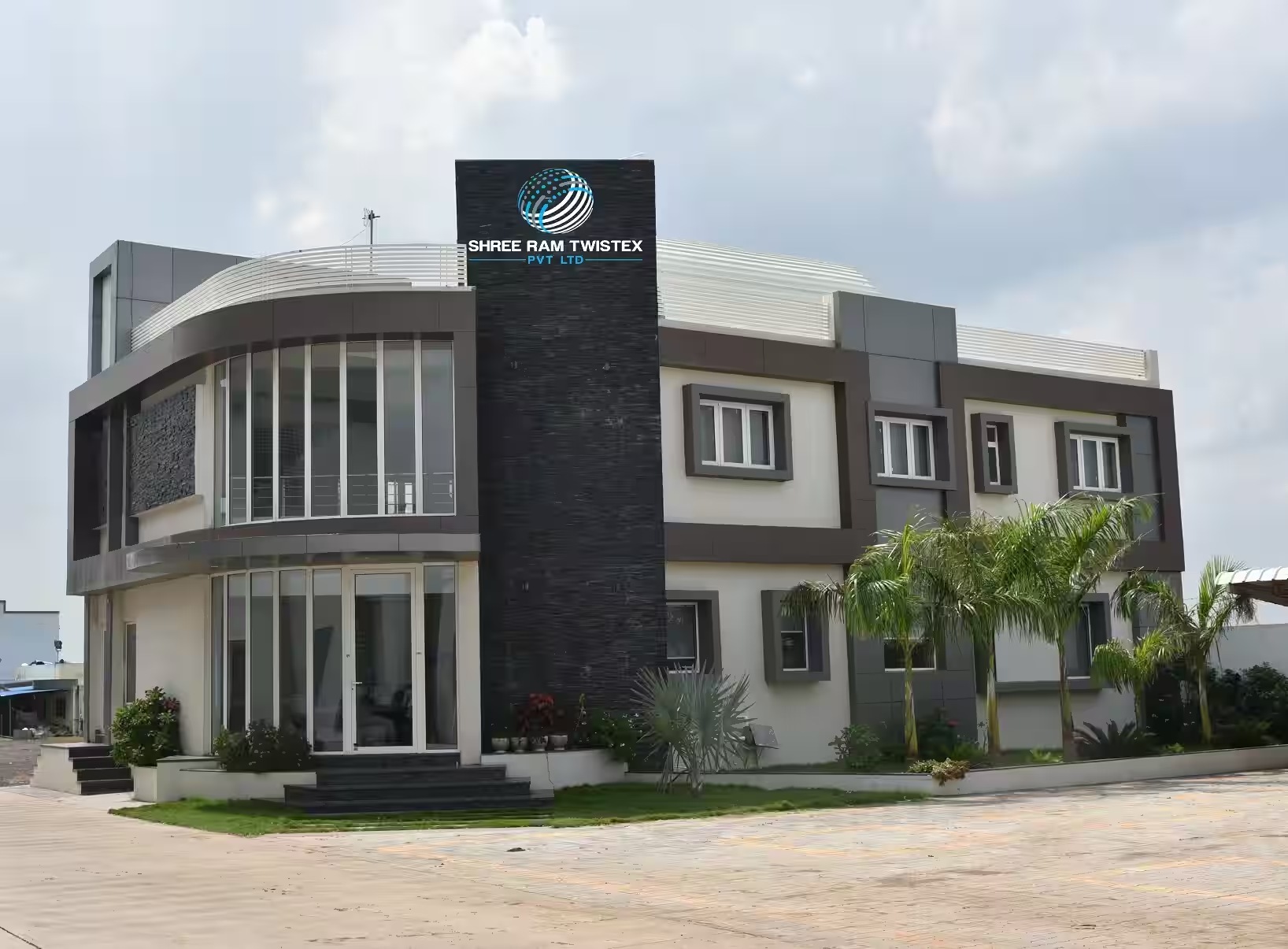
1. At a Glance
Cotton yarn manufacturing is often perceived as a boring, low-margin commodity business. However, the numbers emerging from Shree Ram Twistex Ltd in their latest audited results for the year ended March 31, 2026, are anything but boring. The company recently completed a ₹110.24 crore (₹1,102.40 million) IPO, and the capital infusion has drastically reshaped the balance sheet overnight.
While the market cap sits at a modest ₹185 crore, the scale of operations and the sudden surge in net profit—up a massive 233% YoY for the quarter—demands a closer look. But behind the celebratory headlines of profit growth lies a web of rising working capital requirements and a massive spike in inventory.
The company reported a PAT of ₹3.43 crore for Q4 FY26, compared to just ₹1.03 crore in the same quarter last year. However, revenue for the quarter actually dropped by 53.2% YoY, falling to ₹47.90 crore. How does a company lose half its revenue yet triple its profit? This divergence is the first major red flag that suggests a shift in product mix or a significant change in operational accounting that every serious investor should investigate.
Furthermore, the promoter holding is a concerningly low 34.6%. In a small-cap entity where the “skin in the game” is the only thing keeping the ship steady, such a low stake combined with a sudden IPO-led expansion plan creates a volatile cocktail. With ₹34 crore in unutilized IPO proceeds still sitting in the bank and a delayed wind power project, the management’s execution speed is already under the scanner.
Are we looking at a lean, mean spinning machine ready to conquer the Gujarat textile belt, or an asset-heavy operation struggling to turn its massive inventory into actual cash? The following deep dive into the audited financials and the monitoring agency reports will reveal the truth.
2. Introduction
Shree Ram Twistex Ltd (SRTL) is a B2B player in the cotton yarn space, operating out of the heart of India’s cotton hub—Gondal, Gujarat. The company specializes in compact ring-spun and carded yarns, which are the fundamental building blocks for everything from denim and terry towels to high-end shirting.
The company’s journey from a private player to a listed entity on March 2, 2026, marks a pivotal shift. The IPO was primarily a “Fresh Issue,” meaning the money didn’t go to the promoters’ pockets but into the company’s coffers for capital expenditure. Specifically, they are betting big on renewable energy (solar and wind) to slash their power costs, which currently eat into their margins.
However, the textile industry is notoriously cyclical. Cotton prices fluctuate like a heartbeat monitor in an ICU, and SRTL is not immune. With 93.5% of their revenue coming from Gujarat alone, they are heavily concentrated in one geography. Any localized disruption could be catastrophic.
In this article, we will break down the FY26 audited results, analyze the deployment of IPO funds via the CRISIL Monitoring Agency Report, and evaluate whether the current valuation of 13x P/E is a bargain or a trap.
3. Business Model – WTF Do They Even Do?
At its core, Shree Ram Twistex takes raw cotton bales and puts them through a high-speed mechanical torture chamber known as a spinning mill. They operate 17 compact ring-spinning machines with a total capacity of 27,744 spindles.
The Revenue Mix:
- Carded Yarn (28.5%): The bread and butter. Standard quality.
- ELI Twist Yarn (25.5%): The premium stuff.
- Organic Yarn (21.5%): For the eco-conscious brands.
- Cotton Waste & Bales (16%): Selling the leftovers.
They are essentially a middleman in the textile value chain. They buy cotton from farmers/traders and sell yarn to giants like Welspun Living and Jindal Worldwide.
The “moat” here—if you can call it that—is their strategic location in Gondal. Being surrounded by cotton fields saves on logistics, and their massive warehouse capacity (9,855 MT) allows them to hoard raw materials when prices are low. But hoarding is a double-edged sword; if cotton prices crash, that “valuable” inventory becomes a liability.
4. Financials Overview
The Q4 FY26 results show a company in transition. While the annual numbers look healthy, the quarterly volatility is staggering.
| Metric (₹ in Crore) | Q4 FY26 | Q4 FY25 (YoY) | Q3 FY26 (QoQ) |
| Revenue | 47.90 | 102.45 | 92.91 |
| EBITDA | 9.56 | 3.15 | 6.46 |
| PAT | 3.43 | 1.03 | 3.73 |
| EPS (Annualized) | 3.54* | 0.35 | 1.27 |
*Note: Q4 EPS is the actual full-year reported figure as per the annualization rules.
Witty Commentary: Revenue dropped by half compared to the previous quarter, yet Operating Profit (EBITDA) went up. This suggests the company stopped selling low-margin “FP Bales” and focused on high-margin “ELI Twist” or “Organic Yarn.” Or, they just didn’t sell much at all and kept the inventory on the books. Management “walked the talk” on debt reduction by using IPO proceeds to repay ₹14.89 crore to SIDBI immediately.
5. Valuation Discussion – Fair Value Range
To find the value, we have to strip away the IPO hype and look at the earning power.
Method 1: P/E Ratio
- FY26 EPS: ₹3.54
- Industry Median P/E: 18.2x
- Applied P/E (Conservative): 12x – 15x
- Value: $3.54 \times 12 = 42.48$ to $3.54 \times 15 = 53.10$
Method 2: EV/EBITDA
- FY26 EBITDA: ₹33 Crore
- Enterprise Value (EV): ₹181 Crore
- EV/EBITDA: 5.48x
- Peer Average: ~8x – 10x
- Estimated Value: ₹65 – ₹75 (assuming peer catch-up)
Method 3: DCF (Simplified)
Given the high working capital intensity and the sudden shift in assets, a DCF with a 12% discount rate and 3% terminal growth suggests a range between ₹48 and ₹58.
Fair Value Range: ₹45 – ₹55
Disclaimer: This fair value range is for educational purposes only and is not investment advice.
6. What’s Cooking – News, Triggers, Drama
The biggest “drama” is the CRISIL Monitoring Agency Report dated May 13, 2026.
The company raised ₹110.24 crore, but they’ve hit a snag. The 4.2 MW Wind Power Project is delayed. They were supposed to spend ₹39 crore on it by FY26, but have only deployed ₹5 crore as an advance to Suzlon Energy.
Why the delay? The report is vague, but the money is currently parked in a public offer account with Axis Bank. On the bright side, they’ve already finished the 6.1 MW Solar Plant, which should start reflecting in lower power costs in the coming quarters.
Can they actually execute the wind project, or will the funds just “chill” in the bank account while interest costs on other debts tick away?
7. Balance Sheet
The balance sheet has exploded in size due to the IPO proceeds and the subsequent asset additions.
| Metric (₹ in Crore) | Mar 2026 (Consol) | Mar 2025 | Mar 2024 |
| Total Assets | 308.65 | 194.20 | 154.00 |
| Net Worth | 198.48 | 74.03 | 66.00 |
| Borrowings | 30.20 | 62.48 | 67.00 |
| Other Liabilities | 80.00 | 58.00 | 21.00 |
| Total Liabilities | 308.65 | 194.20 | 154.00 |
- Debt is down: They used the IPO cash to pay off high-cost loans. Neat.
- Net worth is up: Thanks to the fresh equity infusion at a premium.
- Inventory is a beast: Current assets jumped from ₹108 cr to ₹216 cr. They are sitting on a mountain of cotton.
8. Cash Flow – Sab Number Game Hai
Cash flow is the truth serum of finance. And for SRTL, the serum is looking a bit bitter.
| (₹ in Crore) | Mar 2026 | Mar 2025 | Mar 2024 |
| Operating Cash Flow (CFO) | -22.65 | 24.14 | -5.22 |
| Investing Cash Flow | -10.86 | -12.42 | -2.28 |
| Financing Cash Flow | 67.37 | -11.39 | 7.00 |
The company had a negative CFO of ₹22.65 crore. Why? Because they pumped ₹82 crore into inventory. They are essentially buying cotton and not yet turning it into cash. The entire survival this year was funded by the IPO (Financing Cash Flow).
9. Ratios – Sexy or Stressy?
| Ratio | FY26 | FY25 |
| ROE | 10.4% | 10.8% |
| ROCE | 14.0% | 14.0% |
| Debt to Equity | 0.15 | 0.84 |
| Inventory Days | 235 | 206 |
| Cash Conv. Cycle | 226 | 115 |
Witty Judgement: The debt-to-equity looks “sexy” now because of the IPO cash, but the 235 Inventory Days is pure “stress.” They are holding cotton for nearly 8 months! If cotton prices drop 10%, their entire profit for next year could vanish in a single write-down.
10. P&L Breakdown – Show Me the Money
| (₹ in Crore) | Mar 2026 | Mar 2025 | Mar 2024 |
| Revenue | 273 | 255 | 232 |
| EBITDA | 33 | 21 | 20 |
| PAT | 14 | 8 | 7 |
Revenue grew by a measly 7%, but PAT jumped significantly. This is largely due to lower interest costs (post-IPO debt repayment) and a suspiciously low tax rate of 14%. It’s like the company went on a diet but only lost weight in its interest payments.
11. Peer Comparison
| Company | Revenue (Cr) | PAT (Cr) | P/E |
| K P R Mill | 6178 | 227 | 36.0 |
| Vardhman Textile | 2497 | 189 | 23.5 |
| Welspun Living | 2262 | 2.5 | 56.0 |
| Shree Ram Twist. | 273 | 14 | 13.0 |
Sarcastic Notes: K P R Mill is the king of the jungle, while SRTL is the tiny cub trying to roar. However, SRTL’s P/E of 13x looks cheap compared to Welspun’s 56x, but Welspun has a global brand. SRTL is just a local spinner in Gondal.
12. Miscellaneous – Shareholding and Promoters
| Category | Mar 2026 (%) |
| Promoters | 34.6 |
| FIIs | 3.2 |
| DIIs | 11.9 |
| Public | 50.3 |
Promoter Roast: Bhaveshbhai Ramani and the Tilala family are the main guys. With only 34.6% holding, they have more “outsiders” in the company than family members. It’s almost like they invited the whole village to the party and are now only holding 1/3rd of the cake. Goldman Sachs and Neomile Growth Fund are the sophisticated guests at this wedding.
13. Corporate Governance – Angels or Devils?
The Board recently appointed Vishal Mehta as Internal Auditor and Niketan Tadhani as Cost Auditor. This is standard post-listing hygiene. However, the Related Party Transactions show the company is still very “family-oriented.” They paid salaries and bonuses to a long list of relatives (Bina, Atulbhai, Bhavnaben, etc.). While these are reported as “arm’s length,” it’s a classic small-cap trait that requires a watchful eye.
14. Industry Roast and Macro Context
The textile industry is essentially a giant gamble on the monsoon and global apparel demand. When the US stops buying towels, Gondal stops spinning. The sector is plagued by high power costs and thin margins. Everyone is rushing to install solar panels because the grid is too expensive—it’s like everyone in a race suddenly realizing they need to carry their own fuel.
15. EduInvesting Verdict
Shree Ram Twistex is in a “make or break” phase. The IPO has given them the lungs to breathe, but they are currently holding their breath with a massive inventory pile-up.
SWOT Analysis:
- Strengths: Zero net debt (post-IPO), captive solar power, strategic location.
- Weaknesses: Low promoter holding, massive geographical concentration, negative operating cash flow.
- Opportunities: Scale-up in value-added yarns (Organic, ELI Twist), power cost savings from the delayed wind project.
- Threats: Cotton price volatility, inventory write-downs, slowing export demand via merchant exporters.
The core question for any observer is: can they convert that ₹146 crore of inventory into cash before the interest on their “Other Liabilities” catches up?
Do you think a 34% promoter holding is enough to keep management motivated in a tough textile cycle? Let us know in the comments.