1. At a Glance
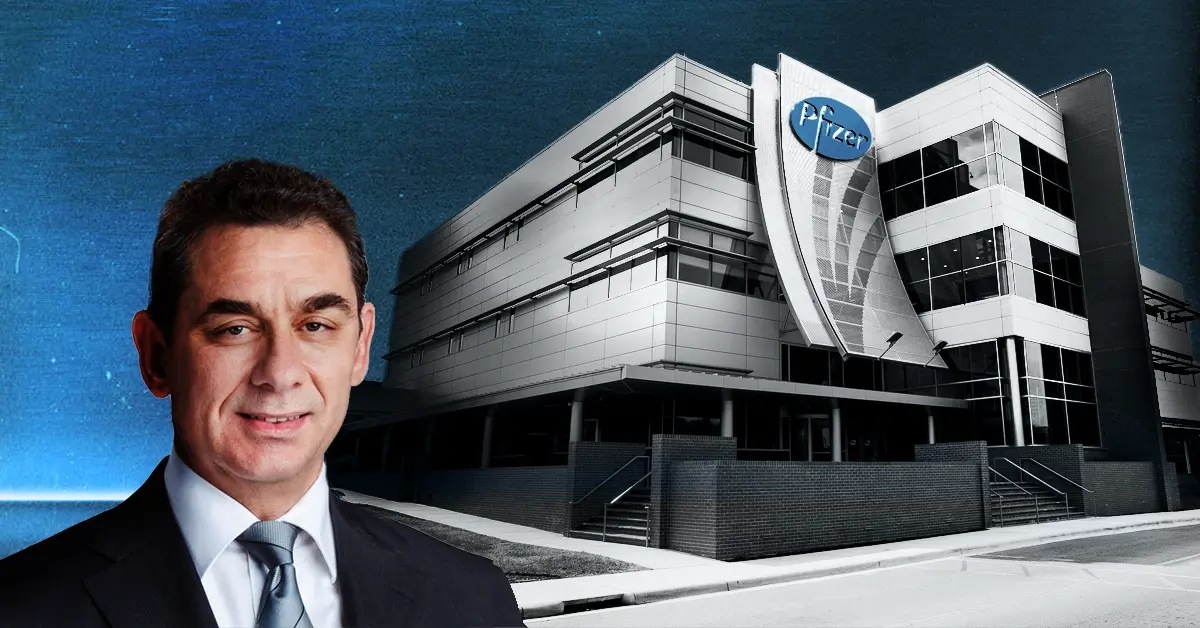
The pharmaceutical landscape in India is often perceived as a steady, defensive play, but Pfizer Ltd is currently proving that even the giants must undergo painful skin-shedding to survive. On the surface, the numbers look like a classic case of a multinational corporation (MNC) coasting on past glory. The company reported a Revenue from Operations of ₹2,519.65 Crore for the full year ended March 31, 2026. While the topline grew by roughly 10% compared to the previous year’s ₹2,281.35 Crore, the bottom line tells a story of structural upheaval.
Net Profit for FY26 stood at ₹722.43 Crore, down from ₹767.60 Crore in the prior year. This decline isn’t a result of poor drug sales; it is the price of a massive strategic pivot. Pfizer is effectively outsourcing its feet on the street. In a bold and perhaps risky move, the company signed an exclusive Supply and Marketing Agreement with Cipla Limited for four of its bread-and-butter brands: Corex Dx, Corex LS, Dolonex, and Neksium.
This decision didn’t come cheap. The company took a massive Exceptional Charge of ₹49.16 Crore during the year. A significant chunk of this—₹41.73 Crore—was burned on “personnel separation costs.” In plain English: Pfizer laid off its field force and marketing teams for these brands because it no longer wants to manage the headache of domestic distribution for these specific labels. When a company pays tens of crores to let go of its people, it is either desperate for efficiency or admitted that local players like Cipla can hunt better in the Indian jungle than they can.
Furthermore, the taxman is knocking. The company recently received an Income Tax demand of ₹85.74 Crore for FY23, accompanied by penalty show-cause notices. Add to this the GST demands and penalties totaling over ₹8 Crore received in late 2025, and you have a corporate giant fighting fires on the regulatory front while trying to remodel its house. Investors are watching a transition from a traditional manufacturing and marketing powerhouse to a leaner, perhaps more “royalty and supply” focused entity.
Is this a masterstroke of efficiency or a retreat from the difficult Indian retail market? The market seems undecided, with the stock cooling off significantly from its high of ₹5,993 to the current levels around ₹4,681. The dividend yield remains a modest 0.75%, though the board has recommended a Final Dividend of ₹75 per share.
2. Introduction
Pfizer Ltd is the Indian arm of the global biopharma titan, Pfizer Inc. In India, it holds the prestigious, yet heavy, title of being the 3rd largest multinational pharmaceutical company. It isn’t just a pill manufacturer; it’s a legacy institution that has been part of the Indian healthcare fabric for decades.
The company operates a state-of-the-art manufacturing facility in Goa, which churns out over 3.6 billion tablets annually. Think about that scale for a second. That is nearly 10 million tablets every single day. This plant is the heart of their internal medicine portfolio, producing 186 million Standard Dosage Units across 25 different SKUs.
However, being an MNC in India is a double-edged sword. You have access to world-class R&D from the parent, but you are constantly hit by the National List of Essential Medicines (NLEM) price caps. When the government decides your life-saving drug should cost less, your margins take the hit, not the government’s coffers.
The company’s portfolio is diverse, covering everything from the Prevenar 13 vaccine (a leader in the pneumococcal space) to household names like Gelusil and Becosules. Their distribution network is massive, reaching 2,50,000 retail pharmacies and servicing 300 million patients.
Despite this reach, the last few years have been a rollercoaster. Between FY22 and FY24, revenue actually declined by 16%. Why? A voluntary recall of major brands like Magnex and Zosyn in 2023 due to manufacturing environment concerns, and those pesky NLEM price revisions.
Today, Pfizer is in a “reconstruction” phase. It has divested its Thane land to Zoetis for ₹264 Crore and is now handing over the keys of its most famous respiratory brands to Cipla. It’s a transition from being a “do-it-all” pharma company to a “specialized innovator” that lets others handle the “selling” part.
3. Business Model – WTF Do They Even Do?
If you think Pfizer just sells “blue pills” or “Covid shots,” you’re looking at the global parent, not the Indian entity. Pfizer Ltd in India is essentially a high-end pharmacy and vaccine distributor with a manufacturing backbone.
The Vaccine King
The crown jewel is Prevenar 13. This is the vaccine that prevents pneumonia. In the private market, Pfizer owns a staggering 64.8% value market share. They don’t just sell the vaccine; they create the market. Their “Duty50” initiative targets adults over 50, effectively telling them that aging is fine, but pneumonia isn’t.
The “Legacy” Cabinet
Then there are the brands your parents know: Gelusil for acidity, Becosules for vitamins, and Corex for coughs. These are high-volume, “cash cow” products. However, the business model here is shifting. By entering a 5-year agreement with Cipla, Pfizer is saying: “We will make the drug, but you go deal with the lakhs of chemists and the thousands of medical reps.” The Asset-Light Strategy?
Pfizer operates a “Hybrid” model. They have their own Goa plant, but they also use 18 Contract Manufacturing Organizations (CMOs). They aren’t interested in owning every brick and mortar. They sold their Thane land. They are shrinking their physical footprint and their employee headcount to focus on “Global Innovative Products.”
In short, they are trying to become a “Brain” company (R&D and IP) while using others as the “Brawn” (Sales and Distribution). It sounds smart on paper, but it effectively caps their upside if the partner (Cipla) does a better job than expected.
Question for the reader: Do you think an MNC giving away its sales force to a local competitor like Cipla is a sign of strength or a sign of “giving up” on the Indian retail market?
4. Financials Overview
The numbers for the quarter ended March 31, 2026 (Q4), show a company that is growing its top line but struggling with the “noise” of its restructuring.
Key Performance Indicators (₹ in Crore)
| Metric | Q4 FY26 (Latest) | Q4 FY25 (YoY) | Q3 FY26 (QoQ) | YoY Change |
| Revenue | 629.23 | 591.91 | 645.03 | +6.31% |
| EBITDA | 236.00 | 182.00 | 228.00 | +29.67% |
| PAT | 199.82 | 330.94 | 141.84 | -39.62% |
| EPS (₹) | 43.68* | 72.34* | 31.00* | -39.62% |
*Quarterly EPS figures. Annualized EPS for FY26 is ₹157.92.
Witty Commentary:
Wait, how can EBITDA grow by 29% while PAT (Profit After Tax) drops by nearly 40%? Welcome to the world of “Exceptional Items.” Last year’s Q4 was boosted by the ₹172 Crore gain from selling land to Zoetis. This year’s profit is “cleaner” from operations but weighed down by the ₹49 Crore spent on firing people.
Management “walked the talk” on cost-cutting. Employee benefit expenses dropped from ₹100 Crore in Q3 to ₹77 Crore in Q4. Firing people is expensive today, but it saves money tomorrow. Brutal, but that’s the corporate math.
5. Valuation Discussion – Fair Value Range
Valuing an MNC like Pfizer is tricky because you aren’t just buying the Indian cash flow; you are buying the safety of the Pfizer brand and the potential for the parent to dump more innovative drugs into the Indian subsidiary.
Method 1: P/E Ratio (Price to Earnings)
The current TTM (Trailing Twelve Months) EPS is ₹157.92.
The industry median P/E for high-quality pharma is around 30x to 35x.
$$157.92 \times 30 = ₹4,737$$
$$157.92 \times 35 = ₹5,527$$
Method 2: EV/EBITDA
With an Enterprise Value (EV) of ₹18,407 Crore and an EBITDA of approximately ₹904 Crore for FY26:
Current EV/EBITDA is roughly 20.3x.
For a cash-rich, debt-free MNC, a fair multiple is often 18x to 22x.
$$904 \times 18 = ₹16,272 \text{ Cr (EV)}$$
$$904 \times 22 = ₹19,888 \text{ Cr (EV)}$$
Adding back the massive cash pile of ~₹3,100 Crore and dividing by 4.57 Crore shares:
Range: ₹4,238 to ₹5,030.
Method 3: DCF (Discounted Cash Flow)
Assuming a conservative 8% growth rate (given the poor historical 2.39% growth) and a discount rate of 11%:
The DCF value settles roughly between ₹4,400 and ₹4,900.
Fair Value Range:
₹4,450 — ₹5,150
Disclaimer: This fair value range is for educational purposes only and is not investment advice.
6. What’s Cooking – News, Triggers, Drama
The “Drama” at Pfizer right now is enough to keep a soap opera writer busy.
- The Cipla Marriage: Pfizer has essentially broken up with its sales reps and started a 5-year relationship with Cipla. They are handing over the “Corex” legacy. If Cipla manages to grow these brands significantly, Pfizer gets the supply margin without the “sales rep” headache. If it fails, the brands might die a slow death.
- The Taxman Cometh: Receiving a ₹85 Crore tax demand is like getting a surprise bill after an expensive dinner. It hurts. They are contesting it, but it’s a hanging sword.
- Mass Resignations: The “Change in Management” section is lit up like a Christmas tree. From Category Leads for Vaccines to Executive Directors, people are leaving or being moved. This usually happens when a company is radically changing its culture from “Sales-first” to “Product-first.”
- The Cash Hoard: Pfizer is sitting on over ₹3,000 Crore in Bank Balances. They are basically a bank that happens to sell medicine. With interest income of ₹165 Crore this year, they are making more money from “Interest” than many small pharma companies make from selling drugs.
7. Balance Sheet
The Balance Sheet is the fortress that keeps Pfizer investors sleeping at night. It is “cleaner” than a sterilized lab.
Latest Financial Position (₹ in Crore)
| Particulars | Mar 2026 (Consol.) | Mar 2025 | Mar 2024 |
| Total Assets | 4,922 | 4,911 | 4,229 |
| Net Worth | 4,203 | 4,217 | 3,596 |
| Borrowings | 2.50 | 2.50 | 3.00 |
| Other Liabilities | 716 | 691 | 630 |
| Total Liabilities | 4,922 | 4,911 | 4,229 |
Sarcastic Bullet Points on the Balance Sheet:
- Debt? What Debt?: With borrowings of ₹2.5 Crore against a net worth of ₹4,203 Crore, the company’s debt-to-equity ratio is basically a rounding error. They owe less than the cost of a luxury apartment in South Bombay.
- The Cash King: Out of ₹4,922 Crore in assets, ₹3,110 Crore is just sitting in the bank (Cash + Bank Balances). 63% of the company is just a pile of cash.
- Goodwill Hunting: They have ₹527 Crore in “Goodwill.” In pharma, that’s basically paying for the “Pfizer” name and the legacy of acquisitions that happened years ago.
8. Cash Flow – Sab Number Game Hai
This is where you see if the profit is “Real” or just “Accounting Magic.”
Three-Year Cash Flow Summary (₹ in Crore)
| Activity | Mar 2026 | Mar 2025 | Mar 2024 |
| Operating (CFO) | 967.57 | 659.75 | 576.00 |
| Investing (CFI) | -561.67 | -71.34 | -36.00 |
| Financing (CFF) | -798.31 | -205.34 | -346.00 |
Where did the money go?
The company generated a massive ₹967 Crore from operations. Where did it go? Mostly back to shareholders. They paid out ₹751 Crore in Dividends in FY26. Pfizer is effectively a cash-collecting machine that ships the money back to its parent and the Indian public shareholders. The negative Investing Cash Flow is mostly them parking their extra cash into Fixed Deposits.
9. Ratios – Sexy or Stressy?
Ratios help us see through the smoke and mirrors of the P&L.
| Ratio | Value | Judgement |
| ROE | 18.0% | Respectable, but not “MNC levels” of amazing. |
| ROCE | 24.2% | High efficiency in capital usage; the Goa plant is working hard. |
| P/E | 28.3 | Cheaper than peers like Mankind (54x) but you get what you pay for. |
| Debt/Equity | 0.02 | This is “I don’t need the bank’s help” territory. |
| PAT Margin | 28.6% | Sexy. For every ₹100 of medicine, ₹28 stays in the pocket. |
Witty Commentary:
The ROCE is healthy, but the P/E of 28.3 suggests the market isn’t exactly “hyped” about Pfizer’s 2% historical sales growth. It’s like a luxury car that only goes 40 km/h—it’s safe and beautiful, but it won’t win any races.
10. P&L Breakdown – Show Me the Money
Let’s look at the trajectory over the last three years to see the “Recovery.”
| Particulars | Mar 2026 | Mar 2025 | Mar 2024 |
| Revenue | 2,520 | 2,281 | 2,193 |
| EBITDA | 904 | 742 | 638 |
| Net Profit | 722 | 768 | 552 |
Stand-up Comedy Commentary:
Pfizer’s revenue growth is like a turtle on a treadmill—moving, but barely. They grew from ₹2,193 Cr to ₹2,520 Cr over two years. That’s roughly 7% CAGR. In a country with 1.4 billion people and rising health issues, that’s almost like trying to lose weight by only skipping one biscuit a day. However, their EBITDA is skyrocketing because they are cutting costs (read: people) faster than a budget airline.
Question for the reader: Would you rather invest in a company with 20% revenue growth and 5% margins, or Pfizer’s 7% growth and 30% margins?
11. Peer Comparison
How does the American giant stack up against the Indian “Desi” powerhouses?
| Company | Sales Qtr (₹ Cr) | PAT Qtr (₹ Cr) | P/E | ROCE % |
| Sun Pharma | 15,520 | 3,381 | 36.8 | 20.2 |
| Torrent Pharma | 3,303 | 635 | 64.6 | 27.0 |
| Mankind Pharma | 3,567 | 414 | 54.7 | 15.9 |
| Pfizer | 629 | 199 | 28.3 | 24.2 |
Sarcastic Notes:
Sun Pharma is the elephant in the room, making more profit in a quarter than Pfizer makes in five years. Torrent is the “Expensive Boutique,” trading at a 64 P/E because it knows how to grow. Pfizer is the “Grumpy Uncle”—very rich, very safe, but not really doing much at the family party.
12. Miscellaneous – Shareholding and Promoters
Shareholding Pattern (Mar 2026):
- Promoters: 63.92% (Steady as a rock)
- DIIs (Mutual Funds/LIC): 16.89% (Slightly decreasing)
- FIIs (Foreign Investors): 2.81% (They don’t seem to care much)
- Public: 16.36% (The hopeful retail crowd)
Promoter Roast:
The promoter group is a confusing list of entities: Pfizer East India B.V., Wyeth LLC, Warner-Lambert, etc. It’s like a family tree where everyone has three last names. Essentially, the global Pfizer Inc. holds the strings. They are disciplined—they don’t pledge shares, and they don’t change their holding. They treat the Indian subsidiary like a high-yield savings account.
13. Corporate Governance – Angels or Devils?
Pfizer is generally seen as an “Angel” in the dark world of corporate governance. Being a US-listed MNC subsidiary, they have to follow FCPA (Foreign Corrupt Practices Act) rules. If a Pfizer manager in Goa breathes incorrectly, an auditor in New York probably hears about it.
However, the “Devil” is in the details of Related Party Transactions. Pfizer India buys a lot of its “raw materials” and “stock-in-trade” from its global parents. In FY26, “Purchases of stock-in-trade” jumped to ₹608 Crore from ₹512 Crore. Investors always need to watch if the parent is charging the Indian arm too much for these drugs, effectively moving profit from India to a lower-tax jurisdiction abroad.
The resignation of key personnel in the vaccine and marketing divisions is a red flag on internal stability, though it might just be the “creative destruction” needed for their new strategy.
14. Industry Roast and Macro Context
The Indian Pharma industry is currently in a state of “Identity Crisis.” For years, we were the “Pharmacy of the World,” making cheap generics. Now, everyone wants to be an “Innovator.”
But “Innovation” is expensive. It’s like trying to cook a 5-course French meal in a roadside dhaba. The government wants low prices (NLEM), the patients want American quality, and the shareholders want 25% returns. You can only pick two.
The sector is currently facing heat from the Uniform Code of Pharmaceutical Marketing Practices (UCPMP), which makes it harder to “incentivize” doctors. This is exactly why Pfizer is running away from direct marketing and handing the headache to Cipla. They are essentially saying, “The regulatory environment for selling drugs is too annoying; we’ll just be the manufacturer.”
15. EduInvesting Verdict
Pfizer Ltd is a “Tale of Two Cities.”
On one hand, you have a Cash-Rich, Debt-Free MNC with legendary brands and a dominant position in vaccines. It has a fortress balance sheet and pays out a healthy chunk of its earnings as dividends (₹75 per share recommended this year). It’s a “Safe Haven” stock.
On the other hand, it’s a company that has struggled to grow its top line. A 2.39% 5-year sales growth is lower than the interest rate on a savings account. The recent decision to outsource marketing to Cipla is a “High Stakes” gamble. If they lose touch with the doctors and the market, they become just another CMO (Contract Manufacturer).
SWOT Analysis:
- Strengths: Zero debt, ₹3,100 Cr cash, High PAT margins (28%), Strong parentage.
- Weaknesses: Abysmal sales growth, high dependence on a few brands like Prevenar 13, vulnerability to NLEM price caps.
- Opportunities: The Cipla tie-up could drastically reduce operational costs and improve reach for Corex and Neksium.
- Threats: Regulatory tax demands (₹85 Cr+), attrition of top management, and the risk of becoming irrelevant in the fast-growing Indian domestic market.
Final Thought: If you are looking for a “multibagger” that will triple your money in two years, you are in the wrong place. Pfizer is for the investor who values Capital Preservation and Steady Dividends over aggressive growth. It is a transition story—it’s moving from a cluttered past to a leaner, more focused future. Whether that future has room for massive growth remains a ₹21,448 Crore question.
Fair Value Range Disclaimer
The fair value range provided in this article (₹4,450 — ₹5,150) is based on historical data, current financial statements, and standard valuation multiples. This is intended for educational purposes only. Investing in the stock market involves significant risk. Please consult with a SEBI-registered investment advisor before making any financial decisions. EduInvesting.in does not provide buy, sell, or hold recommendations.