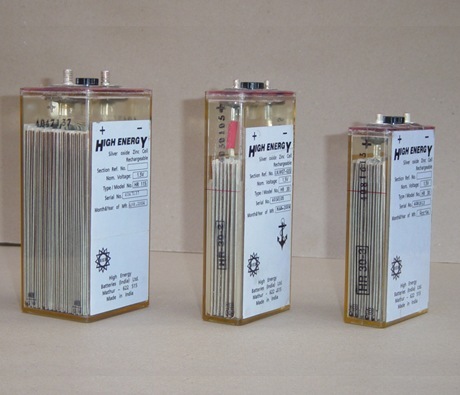
The world of defense electronics is a high-stakes game of precision, where a single failure can mean the difference between a successful mission and a catastrophic loss. High Energy Batteries (India) Ltd (HEB) operates in this unforgiving niche, yet its latest financial performance presents a paradox that should make any serious analyst squint. While the company has managed to maintain a “Stable” credit rating upgrade to IND BBB, the underlying numbers suggest a business that is sprinting just to stand still.
1. At a Glance
High Energy Batteries is essentially a specialized laboratory masquerading as a manufacturing company. With 96% of its revenue tied to silver-zinc batteries, it is a classic case of extreme specialization. On the surface, the numbers look enticing: an Operating Profit Margin (OPM) that spiked to 39.59% in the latest quarter (Mar 2026). But look closer, and the cracks begin to show.
The company is grappling with a modest sales growth of just 1.42% over the last five years. In an era where Indian defense spending is supposedly hitting the stratosphere, HEB’s revenue has remained stubbornly flat, moving from ₹78 crore in 2024 to ₹84 crore in 2026. This isn’t just a slow crawl; it is a stagnation that raises serious questions about scalability.
Investors are currently paying a P/E of 29.4, which is a premium price for a company whose three-year sales growth is actually negative at -3.46%. The market seems to be betting on the “Defense” tag rather than the actual delivery of top-line expansion. Furthermore, the company’s heavy reliance on the Indian Navy—which accounts for 60% of its revenue—creates a precarious monopsony risk. If the budgetary allocation for specific naval programs shifts, HEB has nowhere else to go.
The most glaring red flag is the working capital cycle. We are looking at a business where money stays trapped for 685 days. That is nearly two years of cash sitting in inventory and receivables before it sees the light of day. While management justifies this by holding 4 tonnes of silver as a hedge, it effectively turns a battery manufacturer into a commodity warehouse. Can a company truly innovate when its balance sheet is weighed down by nearly two years’ worth of silver and unpaid bills?
2. Introduction
High Energy Batteries (India) Ltd is a veteran in the Indian defense landscape, having been incorporated back in 1979. It occupies a space where entry barriers are not just high; they are fortified with complex chemical formulations and stringent military certifications. The company doesn’t just make “batteries”; it builds power sources for torpedoes, missiles, and supersonic aircraft.
Based in Tamil Nadu, the company has historically been the go-to partner for the DRDO and the Indian Navy. However, being a veteran comes with the baggage of legacy. The Lead Acid division has been a ghost town since 2019, suspended because the company simply couldn’t compete on price. This leaves them as a “one-trick pony” in the high-tech silver-zinc space.
The financial year 2026 has been a year of mixed signals. On one hand, the board is recommending a dividend of ₹3 per share, signaling some confidence. On the other hand, the quarterly revenue volatility is enough to give an analyst whiplash—swinging from ₹13.27 crore in June 2025 to ₹29.50 crore in March 2026. This lumpy revenue model is the hallmark of a company tied to government tender cycles.
As we peel back the layers of HEB, we must ask: Is this a hidden gem protected by a deep moat, or a stagnant legacy player being bypassed by newer, more agile energy storage technologies?
3. Business Model – WTF Do They Even Do?
If you think HEB makes the batteries in your remote control, you are in the wrong room. They deal in “Reserve” and “Specialty” batteries. Think of a torpedo sitting in a tube for years—it needs a battery that remains completely inert for a decade but can wake up and provide massive underwater propulsion power in milliseconds. That is HEB’s playground.
- Silver-Zinc (The Cash Cow): These are the elite of the battery world. They offer high energy density but come with a literal silver price tag. 96% of the company’s lifeblood depends on this.
- Nickel-Cadmium: Used in aircraft starting and emergency loads for legends like the Sukhoi and Mirage. It’s a stable but small part of the pie (4%).
- The “Wait and See” Tech: They are talking about Vanadium Redox Flow Batteries (VRFB) and Fuel Cells. Everyone is talking about these, but for HEB, they remain in the “R&D” phase, which is code for “not making money yet.”
The business model is a textbook example of high-margin, low-volume government contracting. They are one of only two domestic suppliers of silver-zinc batteries to the Indian Navy. That sounds like a monopoly until you realize the customer (the Government) holds all the cards on pricing and timing.
4. Financials Overview
The latest quarter (Q4 FY26) shows a massive jump in OPM, but a decline in YoY top-line performance. The “lumpy” nature of defense orders is visible here.
| Metric | Latest Quarter (Mar 26) | Same Qtr Last Year (Mar 25) | Previous Qtr (Dec 25) | YoY Change | QoQ Change |
|---|---|---|---|---|---|
| Revenue (₹ Cr) | 29.50 | 36.08 | 23.45 | -18.23% | +25.79% |
| EBITDA (₹ Cr) | 11.68 | 12.52 | 7.38 | -6.71% | +58.26% |
| PAT (₹ Cr) | 7.59 | 9.99 | 5.00 | -24.02% | +51.80% |
| EPS (₹) | 8.47 | 11.14 | 5.58 | -23.97% | +51.79% |
Annualised EPS Calculation: Since the latest result is Q4 (March 2026), we use the full-year EPS reported for FY26. Full Year FY26 EPS = ₹17.17
Witty Commentary: Management spent the last year talking about “Government thrust” and “Indigenisation,” but the revenue actually dropped by 18% compared to the same quarter last year. The margins look “sexy” at 39%, but you can’t eat margins if the sales volume is shrinking. It seems the “thrust” hasn’t reached the bank account yet.
5. Valuation Discussion – Fair Value Range
Valuing a company with stagnant sales but massive margins and a high-security moat requires a balance of skepticism and hope.
Method 1: P/E Multiple
- Annualised EPS: ₹17.17
- Industry P/E: 26.9
- HEB Current P/E: 29.4
- Implied Value: 17.17×26.9=₹461.87
Method 2: EV/EBITDA
- FY26 EBITDA: ₹19.04 Cr (Total for 4 quarters: 0.74−0.74+7.38+11.68)
- Enterprise Value (EV): Market Cap (₹479 Cr) + Debt (₹11.6 Cr) – Cash (₹0.01 Cr) = ₹490.59 Cr
- Current EV/EBITDA: 490.59/19.04=25.7x
- Fair EV/EBITDA (Assumed 20x for slow growth): 20×19.04=₹380.8 Cr (Enterprise Value)
- Fair Price: (380.8−11.6)/0.896 (shares) = ₹412.05
Method 3: DCF (Simplified)
- Free Cash Flow (FY26): ₹11 Cr
- Growth Rate: 5% (Generous given historicals)
- Discount Rate: 12%
- Terminal Value Implied Fair Value: ₹395 – ₹420
Fair Value Range: ₹410 – ₹475
Disclaimer: This fair value range is for educational purposes only and is not investment advice.
6. What’s Cooking – News, Triggers, Drama
The big drama here isn’t a corporate raid; it’s the Labour Code hit. The company had to take an exceptional loss of ₹1.24 Crore in Q4 because the government changed the rules on gratuity and leave benefits. It’s a classic “welcome to India” moment for the balance sheet.
On the tech side, HEB is desperately trying to be more than a “Silver-Zinc guy.” They are developing “One Shot Batteries” for strategic underwater applications. In defense parlance, “Strategic” usually means something that goes “boom” or carries something that does.
They also had a leadership shuffle. Dr. G.A. Pathanjali was reappointed as MD until 2029. Consistency is good, but when sales growth is flat, one wonders if a fresh pair of eyes wouldn’t hurt.
Question for the readers: Would you trust a company that has been trying to diversify away from its 96% dependency for years but still hasn’t moved the needle?
7. Balance Sheet
The balance sheet is as heavy as the lead batteries they used to make.
| Row | Mar 2026 (Consol) | Mar 2025 (Consol) | Mar 2024 (Consol) |
|---|---|---|---|
| Total Assets | 138 | 126 | 109 |
| Net Worth | 112 | 100 | 88 |
| Borrowings | 12 | 11 | 5 |
| Other Liabilities | 15 | 15 | 17 |
| Total Liabilities | 138 | 126 | 109 |
- The silver lining here is literally silver—inventory is up because they are hoarding raw materials like a prepper in a bunker.
- Borrowings are low, which is the only thing keeping this ship from sinking under the weight of its own working capital.
- The “Other Assets” category is growing faster than their sales, which is a polite way of saying money is stuck in “other places.”
8. Cash Flow – Sab Number Game Hai
The cash flow statement is where the “detective” finds the body.
| Figures in ₹ Cr | Mar 2026 | Mar 2025 | Mar 2024 |
|---|---|---|---|
| Operating Cash Flow (CFO) | 14 | 4 | 9 |
| Investing Cash Flow (CFI) | -10 | -7 | -2 |
| Financing Cash Flow (CFF) | -4 | 2 | -10 |
In FY25, they generated ₹4 Cr but spent ₹7 Cr on “investing.” Where did the money go? Fixed assets and “other investing items.” In FY26, they finally managed to squeeze ₹14 Cr out of operations, mostly by finally collecting some of those ancient receivables. It’s a “hand-to-mouth” existence for a high-tech firm.
9. Ratios – Sexy or Stressy?
| Ratio | Value | Commentary |
|---|---|---|
| ROE | 15.4% | Not bad, but it was 23% five years ago. Gravity is real. |
| ROCE | 20.4% | Respectable, but trending downwards as they pile into R&D. |
| Debt to Equity | 0.10 | This is the company’s superpower. They owe almost nothing. |
| Inventory Days | 610 | They keep silver for almost 2 years. Hope the price doesn’t crash. |
| CCC | 685 Days | Almost 700 days to turn a battery into cash. Patience is a virtue. |
Witty Judgement: The Debt-to-Equity ratio is the only thing “Sexy” here. The Cash Conversion Cycle is pure “Stressy.”
10. P&L Breakdown – Show Me the Money
| Figures in ₹ Cr | Mar 2026 | Mar 2025 | Mar 2024 |
|---|---|---|---|
| Revenue | 84 | 81 | 78 |
| EBITDA | 19 | 19 | 24 |
| PAT | 15 | 15 | 15 |
Looking at the PAT, you’d think the company has a “copy-paste” button. ₹15 Cr in 2024, ₹15 Cr in 2025, and ₹15 Cr in 2026. This is the financial equivalent of a flatline. While the world is talking about the “Defense Bull Run,” HEB seems to be taking a nap.
11. Peer Comparison
How does the “Battery King of the Navy” stack up against the peasants?
| Name | CMP (₹) | P/E | Sales Qtr (₹ Cr) | OPM % |
|---|---|---|---|---|
| Jyothy Labs | 221 | 24.3 | 717 | 17% |
| Eveready Inds. | 321 | 15.9 | 327 | 13% |
| High Energy Bat. | 535 | 29.4 | 29.5 | 39.6% |
HEB has the highest margins and the highest P/E, but the lowest sales. It’s like comparing a boutique Ferrari mechanic (HEB) to a Maruti service station (Eveready). One is specialized and expensive; the other actually moves volume.
12. Miscellaneous – Shareholding and Promoters
- Promoters: 43.1% (Slightly increased recently). Seshasayee Paper and Boards is the big brother here with 17.9%.
- Institutions (DIIs): 6.4% (Mostly LIC, who seems to be everywhere in Indian defense).
- Public: 50.5% (A lot of retail hope is pinned here).
Promoter Roast: The promoter group includes paper mills and sugar companies. It’s a strange mix—Sugar, Paper, and Torpedo batteries. Maybe they are hoping the silver-zinc business finally provides the “sweet” returns the sugar business couldn’t.
13. Corporate Governance – Angels or Devils?
With auditors like Maharaj N R Suresh and Co LLP providing an “Unmodified Opinion,” the books seem clean. However, the “Emphasis of Matter” on the Labour Code liability reminds us that administrative surprises are part of the package.
The board meetings are frequent, and the reappointment of the MD suggests a “don’t rock the boat” philosophy. There are no major pledges on shares, which is a sign of financial health. But a 400-day inventory cycle often hides inefficiencies that even the best auditors might miss.
14. Industry Roast and Macro Context
The Indian Defense sector is currently the darling of the markets. Every company with “Defense” in its name is being treated like the next Lockheed Martin. But the reality for sub-component manufacturers like HEB is harsh. They are at the mercy of “Budgetary Allocations.”
If the Navy decides to buy more ships but fewer torpedoes this year, HEB’s revenue dives. The “China Plus One” and “Atmanirbhar Bharat” themes are great for headlines, but for a company with 1% sales growth, these themes haven’t translated into actual business expansion yet.
Question for the comments: Is the “Defense Premium” in Indian stocks a bubble, or is HEB just waiting for its “big bang” moment?
15. EduInvesting Verdict
High Energy Batteries is a company that sits on a goldmine—or rather, a silver mine—of specialized knowledge. Its moat is deep, its debt is low, and its margins are the envy of the industry. However, its inability to scale is its Achilles’ heel.
SWOT Analysis:
- Strengths: 65-70% market share in Naval silver-zinc batteries; Debt-free; High technical entry barriers.
- Weaknesses: Extreme customer concentration; Abysmal sales growth; 685-day cash cycle.
- Opportunities: Export market expansion (currently 15%); New R&D in Fuel Cells and VRFB.
- Threats: Volatile silver prices; Technological obsolescence (Lithium-ion/Solid-state); Shift in government procurement priorities.
In the past, the management has “walked the talk” on maintaining margins and technical superiority. But they have failed to walk the talk on “diversification” and “growth.” Until that top-line number moves north of ₹100 Crores, HEB remains a high-margin hobby for the Esvin Group rather than a growth engine for investors.