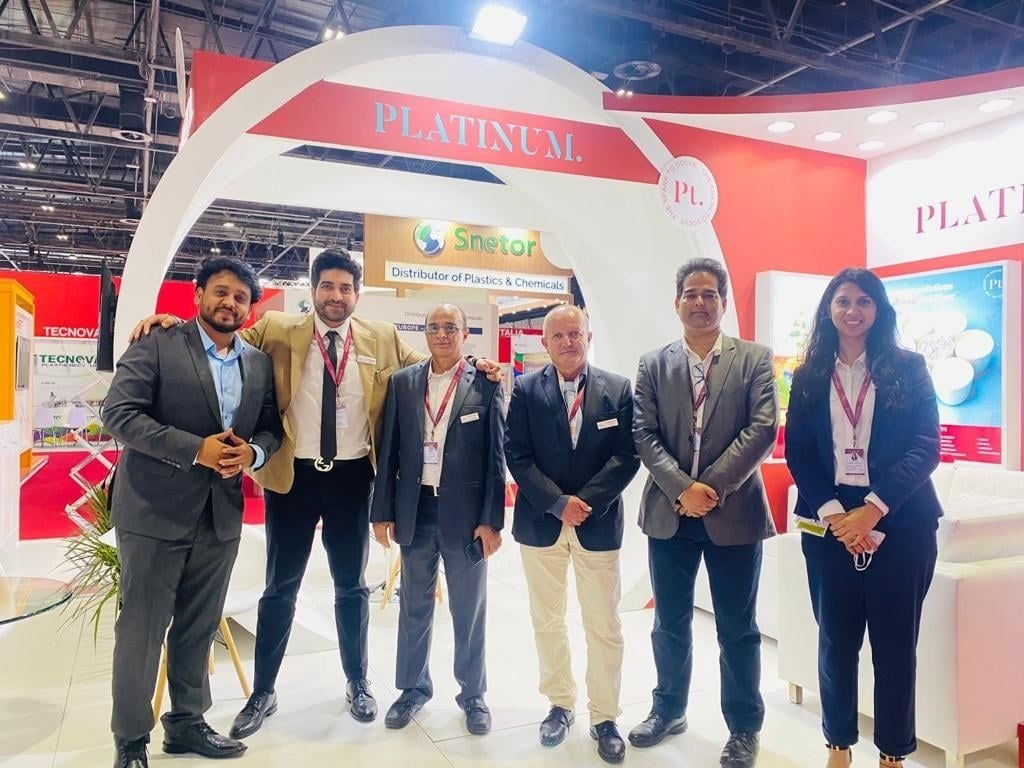
At a Glance
Platinum Industries is currently at a critical juncture where the adrenaline of high-volume growth is meeting the cold reality of margin compression. The company has reported a total revenue of ₹450 crore for FY26, marking a 14.8% growth over the previous year. However, if you look closer at the quarterly performance, the momentum is shifting. The Q4 FY26 revenue stood at ₹132 crore, a massive 36.8% jump YoY.
While the top-line numbers look like a victory lap, the “quality” of these earnings is under scrutiny. The shift towards CPVC additives—a high-volume but lower-margin segment—has acted as a double-edged sword. Management is aggressively chasing market share, but this has come at the cost of the Operating Profit Margin (OPM), which drifted to 12% in the latest quarter compared to the 20% plus levels seen in previous years.
Investors are keeping a hawk-eye on the ₹68 crore Egypt Greenfield project. This 60,000 MTPA facility is the ultimate wild card. It promises duty-free access to the US market and massive power cost arbitrage, but it also brings the baggage of geographical risk and execution delays. The project has already been pushed back by nearly a year, shifting revenue expectations further into the future.
The balance sheet is screaming for attention. Working capital days have ballooned from 92 days to 149 days, and debtor days have stretched to 101 days. This means Platinum is selling more, but the cash is getting stuck in the system. With a negative Free Cash Flow (FCF) of -₹35 crore in FY26, the company is effectively outspending its internal accruals to fund its global ambitions.
Is this a calculated sprint toward global dominance, or is the company stretching its legs too far before the foundation is fully set? The market is currently valuing the stock at a P/E of 24.8, which reflects a “wait and watch” sentiment compared to the high-flying specialty chemical peers.
Introduction
Platinum Industries is not your average chemical manufacturer; it is a specialist operating in the “stabilizer” niche, which is the backbone of the PVC and CPVC industry. Without their products, your PVC pipes would literally disintegrate during manufacturing. Since its inception in 2016, the company has climbed the ranks to become the third-largest player in India with a 13% market share.
The company operates out of Palghar, Maharashtra, but its soul is increasingly becoming international. With exports to over 30 countries and a massive manufacturing hub coming up in Egypt, Platinum is trying to transition from a local hero to a global powerhouse. They are riding the structural tailwind of India’s infrastructure boom—think “Housing for All” and “Smart City” projects.
However, the transition isn’t seamless. The company is pivoting from traditional lead-based stabilizers to eco-friendly, lead-free variants. This is a regulatory necessity, but it involves higher R&D and different margin profiles. Management has also thrown a curveball by entering the Pharma sector through Rivadu Lifesciences, a move that adds complexity to an already busy execution calendar.
Business Model – WTF Do They Even Do?
Platinum Industries makes the “secret sauce” that makes plastics usable. If you are a pipe manufacturer like Supreme or Prince Pipes, you can’t just melt PVC resin and hope for the best. You need additives to ensure the plastic doesn’t burn, remains flexible, and survives the scorching sun.
The Product Trio:
- PVC Stabilizers: The bread and butter. They offer both lead-based (for markets with loose regulations) and Calcium-Zinc/Organic based (for the eco-conscious).
- CPVC Additives: This is the high-growth engine. CPVC is used for hot and cold water plumbing. It’s harder to process, and Platinum provides the “Add-Packs” that allow pipe makers to bypass expensive branded compounds.
- Lubricants & Metallic Soaps: Think of these as the grease that keeps the industrial gears moving smoothly during the extrusion process.
They’ve recently pulled a “Trojan Horse” move in the CPVC segment. Instead of just selling the full compound, they sell the additives to big players. This allows the pipe manufacturers to buy their own resin and save costs, while Platinum secures a recurring, high-volume order book. It’s a smart way to wedge themselves into the supply chain of giants.
How often do you think about the chemical composition of the pipes inside your walls?
Financials Overview
The latest results show a company that is growing its footprint but feeling the heat on the bottom line due to increased depreciation and a shift in product mix.
| Metric (Consolidated) | Q4 FY26 (Latest) | Q4 FY25 (YoY) | Q3 FY26 (QoQ) |
| Revenue | ₹132.01 Cr | ₹96.51 Cr | ₹104.67 Cr |
| EBITDA | ₹15.31 Cr | ₹7.86 Cr | ₹15.79 Cr |
| PAT | ₹14.84 Cr | ₹5.60 Cr | ₹12.33 Cr |
| EPS (Annualised) | ₹11.00 | ₹4.12 | ₹9.16 |
Financial Wisdom: Growing revenue is easy; maintaining margins while doing it is the real “Specialty” in Specialty Chemicals.
Management Walk the Talk?
In previous interactions, management guided for a ramp-up in CPVC volumes, which has clearly happened (Revenue up 36.8% YoY). However, they also spoke about “maintaining margins.” The reality is that the OPM has dropped from 23% in Mar 2024 to 12% in Mar 2026. While they attribute this to the “lower margin CPVC mix,” the drop is sharper than many expected. The Egypt project delay (shifted by 9-12 months) is also a significant “miss” on their original timeline.
Valuation Discussion – Fair Value Range
Valuing a high-growth but capital-heavy chemical company requires a balance between current earnings and future capacity potential.
1. P/E Method
- Annualised EPS: ₹9.46 (FY26 Actual)
- Industry Average P/E: 29.5
- Discounted P/E for Platinum (due to smaller scale): 22x – 25x
- Value: $9.46 \times 22 = ₹208$ to $9.46 \times 25 = ₹236$
2. EV/EBITDA Method
- FY26 EBITDA: ₹60 Cr
- Enterprise Value (EV): ₹1,215 Cr
- EV/EBITDA: ~20x
- Fair Target EV/EBITDA for sector: 18x – 22x
- Value Range: ₹215 to ₹255
3. DCF (Discounted Cash Flow)
- Assuming a 15% growth rate for the next 5 years (post Egypt commissioning) and a Terminal Growth of 4%.
- WACC (Weighted Average Cost of Capital): 12%
- Derived Value: ₹230 – ₹260
Fair Value Range: ₹210 – ₹250
Disclaimer: This fair value range is for educational purposes only and is not investment advice.
What’s Cooking – News, Triggers, Drama
The biggest drama in the Platinum camp is the Egypt Greenfield Project. It’s like a high-stakes poker game. They are spending ₹68 crore to set up a 60,000 MTPA plant near the Suez Canal. The “Alpha” move here is the power cost: Egypt power is ₹3/unit compared to ₹15/unit in Maharashtra. If they execute this, their margins could see a massive structural rebound.
There is also a side plot: Rivadu Lifesciences. Platinum is entering the Pharma/Nutraceuticals space. They’ve partnered with a scientist to manufacture “niche products.” While they claim it’s “asset-light” for now, it’s a total pivot from their core competency of stabilizers. It could be a brilliant diversification or a classic case of “di-worsification.”
Lastly, keep an eye on the Promoter selling. The CMD sold about 5.3 lakh shares to settle personal loans. While he says no further sales are planned, the market usually treats promoter selling like a smoke signal—everyone starts looking for the fire.
Balance Sheet
The balance sheet shows a company that is heavily investing in the future, but the “current” assets are starting to look a bit bloated.
| Component (Consolidated) | Mar 2026 (₹ Cr) | Mar 2025 (₹ Cr) | Mar 2024 (₹ Cr) |
| Total Assets | 549 | 468 | 395 |
| Net Worth | 443 | 383 | 318 |
| Borrowings | 10 | 18 | 11 |
| Other Liabilities | 96 | 66 | 66 |
| Total Liabilities | 549 | 468 | 395 |
- Asset Heavy: Fixed assets jumped from ₹40 Cr to ₹109 Cr in two years. They are building like there’s no tomorrow.
- Debt Free-ish: Borrowings are low at ₹10 Cr, which is great, but “Other Liabilities” are creeping up.
- Cash is King? Not really. Most of the “assets” are now stuck in Inventory (₹67 Cr) and Receivables (₹124 Cr).
Cash Flow – Sab Number Game Hai
This is where the story gets a bit gritty. You can report all the “Net Profit” you want, but if the bank account doesn’t show it, it’s just ink on paper.
| Year | Operating CF (₹ Cr) | Investing CF (₹ Cr) | Financing CF (₹ Cr) |
| Mar 2026 | -1 | -57 | -10 |
| Mar 2025 | -8 | -156 | 201 |
| Mar 2024 | 33 | -79 | 220 |
The Wisdom: High growth consumes cash. Platinum is currently a “cash-burning” machine because it is building massive capacities (Palghar Unit 2 and Egypt).
They spent ₹38 crore on fixed assets this year and saw their working capital suck out ₹50 crore. The IPO money (₹235 Cr) from 2024 is the only reason the lights are still on. They need to start converting those sales into actual cash soon, or they’ll be back at the market’s door for more funds.
Ratios – Sexy or Stressy?
The ratios tell a story of a company that was once hyper-efficient but is now “normalizing” as it scales.
| Ratio | Mar 2026 | Mar 2025 | Mar 2023 |
| ROE (%) | 12.7% | 13.0% | 15.1% |
| ROCE (%) | 15.7% | 16.0% | 27.0% |
| Debt to Equity | 0.02 | 0.05 | 0.07 |
| PAT Margin (%) | 11.4% | 12.6% | 16.2% |
| Debtor Days | 101 | 74 | 49 |
The ROCE falling from 27% to 15.7% is a classic sign of massive capex that hasn’t started paying off yet. The Debtor Days jumping to 101 is the biggest red flag—it means they are giving long credit periods to push their products in a competitive market.
Do you prefer a company with 20% growth and 20% margins, or 40% growth and 10% margins?
P&L Breakdown – Show Me the Money
Let’s look at the three-year trajectory to see if the engine is actually getting bigger.
| Metric | Mar 2026 | Mar 2025 | Mar 2024 |
| Revenue (₹ Cr) | 450 | 392 | 264 |
| EBITDA (₹ Cr) | 60 | 58 | 61 |
| Net Profit (₹ Cr) | 51 | 50 | 44 |
The Roast: Revenue went from ₹264 Cr to ₹450 Cr, but EBITDA is basically flat at ₹60 Cr. In simple English: They are working 70% harder to make the same amount of operating profit. That’s like running a marathon to win a “participation” medal. The “mix change” excuse can only go so far; eventually, scale must bring operating leverage.
Peer Comparison
Platinum is the “small boy” in a yard full of giants. Let’s see how it stacks up.
| Company | Revenue (Qtr) | PAT (Qtr) | P/E Ratio |
| Pidilite Inds. | ₹3,583 Cr | ₹584 Cr | 61.4 |
| Navin Fluorine | ₹937 Cr | ₹212 Cr | 52.9 |
| Aarti Industries | ₹2,205 Cr | ₹137 Cr | 41.2 |
| Platinum Industr | ₹132 Cr | ₹15 Cr | 24.8 |
The Sarcasm: Pidilite is basically the “Godfather” of the sector, trading at a P/E that reflects eternal life. Platinum is the scrappy newcomer trading at half that valuation. It’s “winning” on valuation (cheaper), but “crying” on scale. If Platinum can even capture 5% of the “prestige” valuation of its peers, the stock has a long runway.
Miscellaneous – Shareholding and Promoters
| Category | Mar 2026 (%) | Dec 2025 (%) |
| Promoters | 70.03% | 70.03% |
| FIIs | 0.59% | 0.62% |
| DIIs | 3.60% | 2.95% |
| Public | 25.79% | 26.41% |
Promoter Roast: Krishna Dushyant Rana and Parul Krishna Rana hold the fort. Krishna Rana has 20+ years in the industry but recently had to sell some shares for “personal loans.” It’s a bit ironic for the CMD of a “Net Debt Free” company to have personal debt issues, but hey, founders are humans too, right?
The FIIs are essentially exiting (down from 5.09% in Mar 2024 to 0.59%), while DIIs (Baring Private Equity) are holding steady. It seems the “Big Foreign Money” isn’t convinced about the Egypt story yet.
Corporate Governance – Angels or Devils?
Platinum is a newly listed entity, so it’s still in the “honeymoon” phase of governance reporting. However, the recent qualified audit opinion for the half-year results (due to fire loss at a subsidiary and insurance claim delays) is a bit of a smudge on a clean shirt.
They’ve also had a CFO change recently, with Mr. Ashok Bothra taking over in late 2025. Frequent management changes in the finance department of a small-cap company are always worth a second look. On the positive side, they are a professional outfit with NSF certifications and a strong R&D focus (3.5% of turnover).
Industry Roast and Macro Context
The specialty chemical industry in India is currently in a “rehab” phase. After the post-COVID euphoria, reality hit hard with Chinese dumping and falling realizations.
The PVC stabilizer industry is particularly brutal. You are squeezed between giant resin suppliers and powerful pipe-making conglomerates. It’s a “cost-plus” business where your only edge is your R&D and your ability to hide lead in “hybrid” stabilizers where the law allows it.
The global shift to “Lead-Free” is the big macro trigger. Europe has already banned it, and India is tightening the screws. Platinum is positioning itself as the “Green Savior,” but so is every other player in the market. The real question is: Can they survive the “China Factor” where excess capacity in the dragon land often leads to price wars in Southeast Asia?
EduInvesting Verdict
Platinum Industries is a classic “CapEx Story.” They have used their IPO proceeds to double down on capacity.
SWOT Analysis
- Strengths: 3rd largest player in India, net debt-free at a company level, strong R&D (patented compositions).
- Weaknesses: Sharp margin contraction, ballooning working capital, recent promoter share sale.
- Opportunities: Egypt plant commissioning (tax/power benefits), entry into high-margin Pharma/Oleo chemicals.
- Threats: Execution delays in international projects, regulatory changes in lead usage, intense competition from larger peers.
The company is expected to reach a revenue potential of ₹1,400 crore once Palghar and Egypt are fully ramped up (over the next 3-4 years). If they can bring their margins back to the 16-18% range, the math starts looking very attractive. But for now, they are in the “investment phase” where they are spending cash like a Silicon Valley startup while operating in a traditional manufacturing sector.
History is filled with companies that grew too fast and tripped over their own shoelaces. Platinum has the right ingredients, but the kitchen is getting very crowded and the chef is juggling too many pans (PVC, CPVC, Egypt, Pharma, Oleo).
Will the Egypt project be the crown jewel or a lead weight?
Disclaimer: This fair value range and analysis are for educational purposes only and do not constitute investment advice. Please consult with a SEBI-registered financial advisor before making any investment decisions.