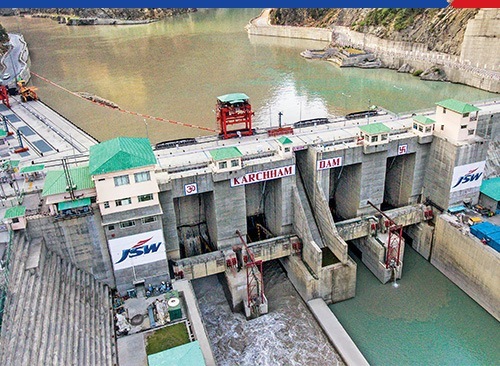
JSW Energy is no longer just a “utility” stock; it has transformed into a high-speed execution machine. In a year where the industry whispered about cooling demand and supply chain bottlenecks, JSW Energy screamed with a record-breaking EBITDA of ₹11,041 crore, marking a staggering 81% YoY growth.
The company is aggressively shedding its “Thermal-only” skin, with Renewable Energy (RE) now making up 58% of its installed capacity. With a massive 32.1 GW locked-in portfolio, the management isn’t just planning for the future; they are buying it, building it, and integrating it with ruthless efficiency. However, this growth comes with a heavy price tag: a debt pile of ₹76,946 crore.
Is this a masterpiece of strategic expansion or a leveraged gamble on India’s energy transition? The numbers tell a story of high-octane ambition paired with a mounting interest burden that would make a conservative auditor break into a cold sweat.
1. At a Glance
JSW Energy isn’t just playing the game; it’s trying to own the stadium. The company has successfully transitioned from a 4.5 GW player in FY21 to a 13.45 GW giant in FY26. This 24% CAGR in capacity has translated into an even more explosive 29% CAGR in EBITDA. The latest results show a company in a hurry, integrating the KSK Mahanadi (1.8 GW) and O2 Power (4.7 GW pipeline) assets faster than the market anticipated.
The Red Flags You Can’t Ignore:
- The Debt Monster: Total borrowings have skyrocketed to ₹76,946 crore. While the management points to a “superior financial profile,” the finance costs have surged to ₹5,816 crore annually. You are essentially watching a company run a marathon while carrying a small mountain on its back.
- The Cash Crunch: Despite massive revenues, the Cash Conversion Cycle stands at 131 days. While improved from 413 days, it still indicates that money is taking its sweet time to hit the bank.
- ROE Stress: For all the billion-dollar talk, the Return on Equity (ROE) remains a measly 7.86%. In plain English, the company is using massive amounts of capital to generate relatively thin returns for shareholders.
Investors are flocking to the “Green Energy” narrative, but the balance sheet remains deeply “Red” with debt. The company’s Interest Coverage Ratio has dipped to 1.35, leaving very little margin for error if interest rates don’t behave.
2. Introduction
JSW Energy, the power arm of the $23 billion JSW Group, is currently the protagonist of India’s private sector power play. It operates a diversified portfolio across Thermal, Hydro, Solar, and Wind, but the “Thermal” part is increasingly becoming the cash cow that feeds the “Green” child.
The company’s strategy is simple but aggressive: Lock in capacity, secure long-term PPAs (85% of capacity), and leverage the JSW Group’s captive demand. This “captive” edge is a secret weapon; JSW Steel alone provides a massive offtake cushion, reducing the risk of selling power in a volatile merchant market.
However, the shift to renewables isn’t just about being “green”; it’s about survival in a world moving away from coal. JSW is building India’s largest Green Hydrogen plant (3.8 KTPA) and a 5 GWh Battery assembly plant. They aren’t just generating power; they are moving into storage and manufacturing, trying to capture the entire value chain.
The question remains: Can they manage the execution risks of 14 GW currently under construction without tripping over their own leverage?
3. Business Model – WTF Do They Even Do?
Think of JSW Energy as a diversified power supermarket. They don’t care how the bulb glows, as long as they are the ones getting paid for the electrons.
- Thermal (The Old Guard): 5.6 GW of coal and lignite power.