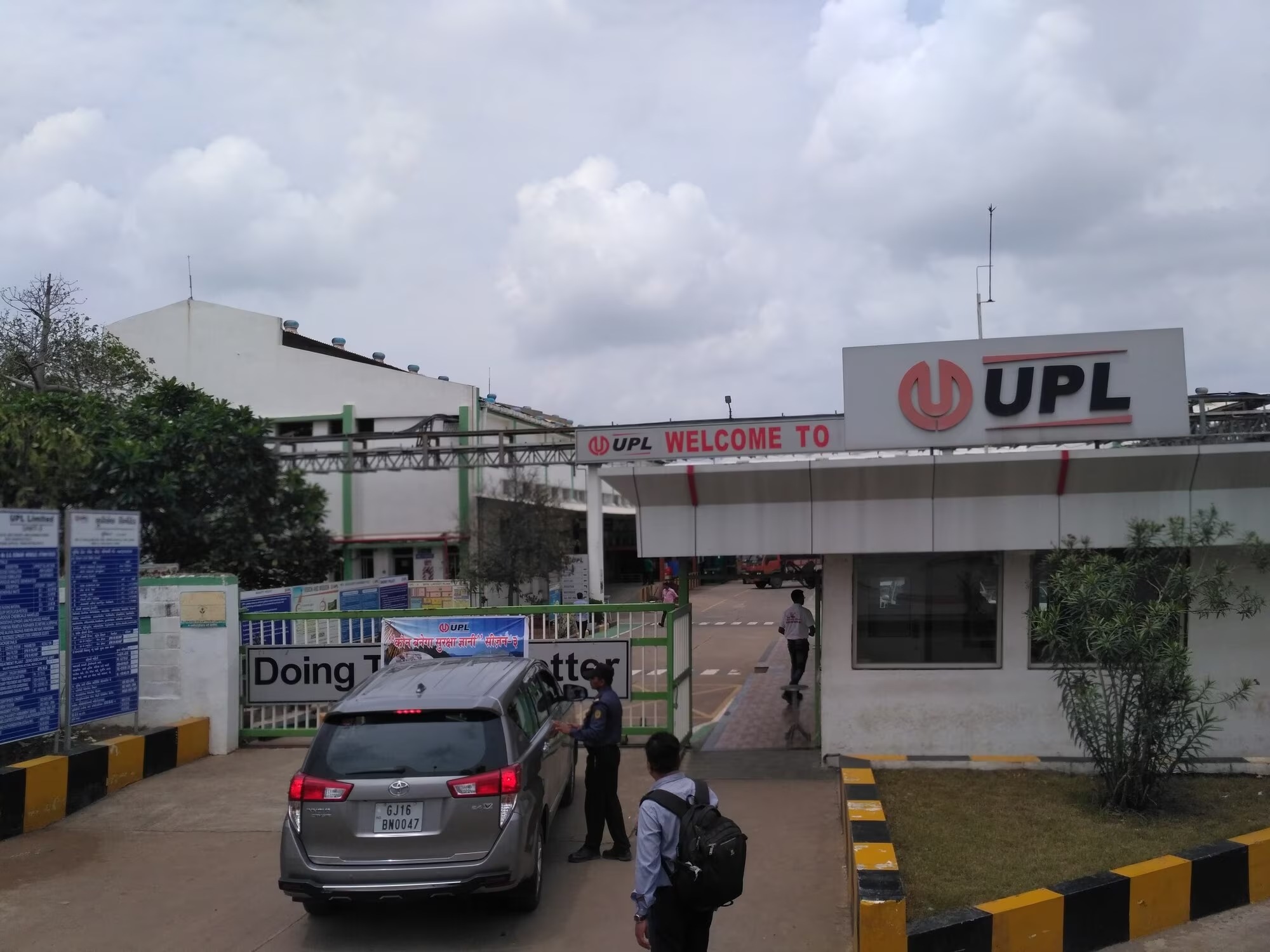
At a Glance – The Debt-Heavy Giant Navigating Global Storms
UPL Ltd is currently a classic case of a global behemoth fighting a war on two fronts: massive legacy debt and extreme commodity price volatility. While the company continues to command a top-tier position in the global agrochemical space—ranking 5th globally—the financial weight it carries is enough to make any auditor sweat. We are looking at a company that is gaining investor attention not because it is a smooth-sailing compounder, but because it is a high-stakes turnaround story involving a complex web of 200+ global entities.
The numbers are staggering. In the latest fiscal year, UPL managed to clock a revenue of ₹51,839 crore, a growth of 11% YoY. However, the shadow of the Arysta acquisition continues to loom large. The group’s Net Debt stands at ₹15,325 crore, and while management touts a reduction, the absolute interest burden remains a significant drain on the bottom line. The company is effectively running on a treadmill—increasing volumes (up 8%) just to stay ahead of the pricing pressure (down 3%) coming from Chinese overcapacity.
The red flags are not subtle. UPL has been flagged for low interest coverage (historically 1.2x in FY24, though improving to ~3x now) and a low Return on Equity (ROE) which has averaged a meager 1.97% over the last three years. This is a capital-intensive business where the cost of capital often threatens to eat the actual returns generated. Furthermore, the company faces U.S. tariff-related uncertainties that could impact EBITDA by upwards of $30 million in a single quarter if unmitigated.
Investors are watching the corporate realignment like hawks. The planned demerger of the India crop protection business and the potential Advanta IPO are desperate—or strategic—moves to unlock value and, more importantly, flush the balance sheet with cash to pay down maturing obligations. With $900 million in debt maturing in late 2026, the margin for error is razor-thin. Can a company with such high leverage truly innovate its way out of a commodity downcycle?
Introduction
UPL Ltd is not just an Indian company; it is a sprawling global infrastructure for agriculture. It operates in over 140 countries, providing everything from seeds to complex crop protection chemicals. If you are eating something today, there is a high statistical probability that a UPL product touched the soil it grew in. But being a global giant comes with global-sized headaches.
The business is divided into several “pure-play” platforms: UPL Corp (Global Crop Protection), UPL SAS (India Crop Protection), Advanta (Seeds), and SUPERFORM (Specialty Chemicals). This structure was designed to attract private equity money—and it did, bringing in heavyweights like ADIA, TPG, and KKR. However, this complexity also makes the consolidated balance sheet a labyrinth of inter-company guarantees and high finance costs.
The recent performance shows a volume-led recovery. While the market is flooded with cheap Chinese technicals, UPL has used its massive distribution reach to push volumes. But volume without pricing power is a dangerous game for a company with ₹22,045 crore in Gross Debt. Every basis point of interest rate movement and every percentage of currency fluctuation in the Brazilian Real or the US Dollar impacts the group’s stability.
The narrative currently being sold to the public is one of “Accelerating Profitable Growth.” Management is pivoting toward “Differentiated and Sustainable” products, aiming for these to contribute 50% of revenue by FY27. This is a move away from low-margin generics toward high-margin proprietary solutions. It sounds great on a PowerPoint slide, but the execution requires massive R&D spending while simultaneously paying down billions in debt.
Is this a resilient market leader or a giant over-leveraged by its own ambition?
Business Model – WTF Do They Even Do?
Think of UPL as the “Amazon + Pfizer” of the farming world. They don’t just sell “bug spray.” They operate across the entire life cycle of a crop.
- Crop Protection (UPL Corp & SAS): This is the bread and butter, accounting for roughly 84% of revenue. They manufacture and market herbicides (weed killers), fungicides (fungus killers), and