The paper industry is notoriously cyclical, but Orient Paper & Industries Ltd (OPIL) seems to be caught in a particularly violent storm. While the C.K. Birla Group backing provides a veneer of stability, the financial statements for the year ended March 31, 2026, reveal a company struggling with operational inefficiency and a legal sword of Damocles hanging over its head.
With a market capitalization of just ₹371 Cr against a book value of ₹69.2, the stock is trading at a staggering discount. However, the market rarely gives away free lunches. The primary red flag isn’t just the net loss of ₹28.8 Cr for the year; it is the mind-numbing ₹3,487 Cr in contingent liabilities. To put that in perspective, the potential legal payouts are nearly 10 times the entire market value of the company.
1. At a Glance
The numbers for FY26 are a stark reminder that legacy doesn’t always translate to profitability. Orient Paper reported a total income of ₹923.4 Cr, yet managed to post a net loss for the year. The company is bleeding at the operational level, with an Operating Profit Margin (OPM) that has slipped into negative territory at -4.22%.
Investors should be deeply concerned by the “Sub-optimal capacity utilization” of the tissue paper plant, which hovers around 70-74%. While the Writing and Printing Paper (WPP) segment is running at over 100% capacity, it hasn’t been enough to offset the rising costs of raw materials like bamboo and wood. The company’s reliance on external wood supplies (close to 55%) makes it a prisoner to price volatility.
The most sensational aspect of this balance sheet is the water tax dispute. The company is contesting a demand of ₹3,147 Cr. While management believes the final outgo won’t be significant, the sheer magnitude of the claim creates a permanent dark cloud over the valuation. If even a fraction of these liabilities crystallize, the current net worth of ₹1,468 Cr could be severely eroded.
Furthermore, the company is using “old machineries bought in the 1960s,” leading to higher power consumption and maintenance costs compared to modern peers. This technological lag is a silent killer of margins. Despite the pedigree of the C.K. Birla Group, the company is currently a “value trap” candidate until it can prove its ability to generate consistent cash from operations, which was a negative ₹27 Cr this year.
2. Introduction
Orient Paper & Industries Limited (OPIL), established in 1936, is a veteran in the Indian paper landscape. As a part of the $2.9-billion C.K. Birla Group, it carries a heavy reputation. The company operates primarily out of its integrated facility in Amlai, Madhya Pradesh, producing both paper and caustic soda.
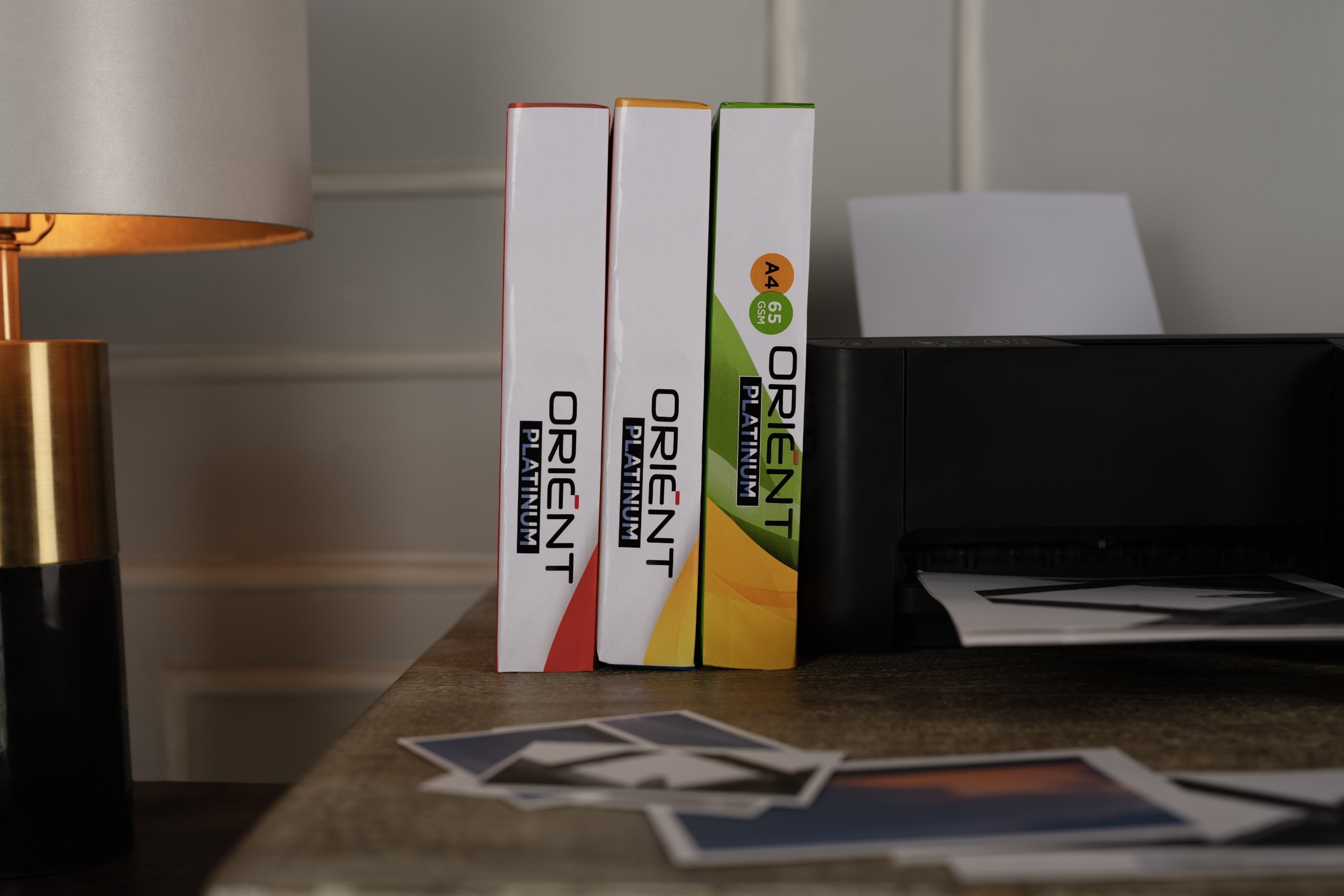
The business is split into two main divisions: Paper & Tissue (contributing ~84% of revenue) and Chemicals (~16%). OPIL was a pioneer in India for high-quality virgin tissue paper, marketing brands like Orient Natura and Orient Platinum.
In the chemical segment, it produces Caustic Soda and Liquid Chlorine, which are essential for industries ranging from textiles to water purification. Despite this diversified product mix, the company has faced a grueling FY26, characterized by management reshuffles, credit rating downgrades, and persistent tax litigation.
3. Business Model – WTF Do They Even Do?
At its core, Orient Paper turns wood and bamboo into things you write on or use to wipe your face. They are “virgin” enthusiasts—meaning they prefer fresh wood pulp over recycled paper to maintain high quality in their tissue and premium writing paper segments.
The Paper Side:
They have a capacity of 1.10 Lac Tonnes Per Annum (TPA). Half of this is dedicated to Writing & Printing Paper (WPP) and