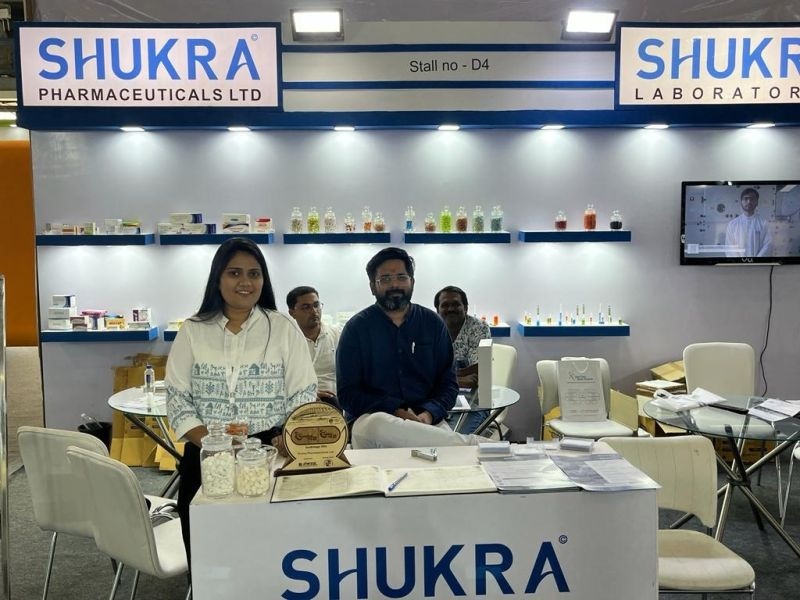
At a Glance
Shukra Pharmaceuticals is currently playing a high-stakes game of financial gymnastics. On one hand, the company has delivered a staggering 130% compounded profit growth over the last year, a number that would make any investor’s head spin. On the other hand, the latest quarterly performance is a cold shower. Revenue for Q4 FY26 crashed by 52.5% YoY, sliding to ₹6.30 crore compared to the same period last year. This isn’t just a slight dip; it’s a vertical drop that raises serious questions about the sustainability of its recent “growth” narrative.
The red flags are waving aggressively. While the bottom line looks healthy on a TTM basis, the debtor days have ballooned from 122 to 148 days. In plain English, the company is selling goods but failing to collect cash effectively. When money gets stuck in the system for nearly five months, it usually signals either a desperate push for sales to questionable clients or a severe lack of bargaining power.
Furthermore, the stock is trading at a staggering 16.35 times its book value. Investors are paying a massive premium for a company that just saw its quarterly net profit swing from a gain to a loss of ₹1.73 crore. The market cap sits at ₹1,469 crore, but with a trailing P/E of 66.6, the valuation feels like it’s built on hope rather than current operational reality. Is this a temporary setback or the beginning of a larger unraveling?
Introduction
Shukra Pharmaceuticals Ltd (SPL), established in 1993, is an integrated pharmaceutical player based out of Gujarat. For decades, it operated in the shadows as a small-scale manufacturer, but the last few years have seen a frantic attempt to reinvent itself. It holds WHO-GMP certification and produces everything from tablets and capsules to small volume parenterals.
The company has recently expanded its horizons by venturing into the “Wellness” space through its arm, Shukra Wellness, focusing on Mouth Dissolving Strips (MDS). It has also aggressively pursued government contracts, securing orders from the Army, Military, and even a ₹24.06 crore order for supplying medicines to Afghanistan via the Ministry of External Affairs.
However, the financial statements tell a story of extreme volatility. The company recently underwent a massive capital restructuring, including a 3:1 bonus issue and a significant increase in authorized share capital. While these moves often project confidence, they can also be used to create liquidity for promoters to exit or to mask a thinning equity base. With a promoter holding of 51%, the skin in the game is there, but so is the pressure to keep the stock price afloat.
Business Model – WTF Do They Even Do?
Think of Shukra as a pharmaceutical “jack of all trades.” They don’t just make one type of pill; they have a massive portfolio ranging from Antibiotics and Anti-fungals to Sedatives and Anti-depressants. They act as a contract manufacturer for other big pharma players while also trying to build their own brand presence in export markets like Uganda, Kenya, and even the UK.
The business is split into two main buckets: Manufacturing and Trading. Interestingly, as of FY23, trading accounted for a whopping 58% of revenue. This means more than half of what they do isn’t actually making drugs—it’s buying and selling them. Trading margins are notoriously thin and volatile, which explains why the company’s operating margins swing more wildly than a pendulum.
They are also trying to pivot into high-tech medical fields. The recent MOU with Borns Medical Robotics to commercialize AI surgical robots in India through “Shukra Robotics” sounds futuristic and cool. But