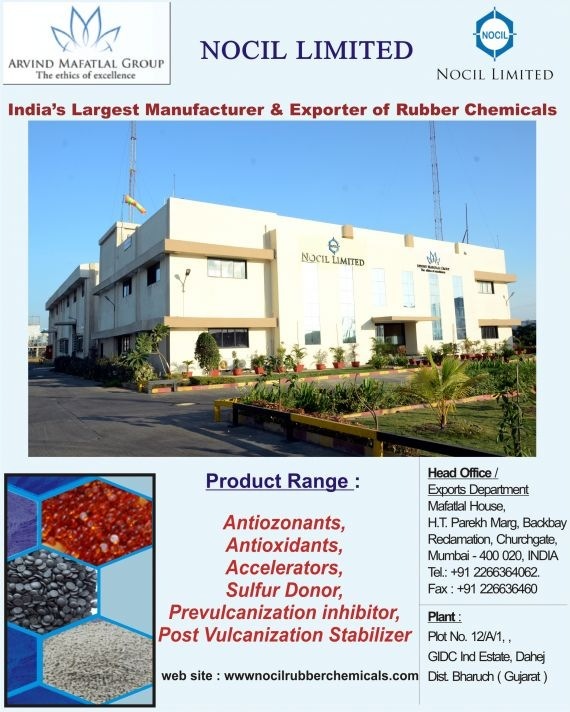
The rubber chemicals industry is currently a war zone, and NOCIL Ltd. is right in the crosshairs. While the company has managed to maintain a dominant 40% market share in India, the financial scoreboard for the full year 2026 tells a story of intense pain.
Despite a desperate push for volumes, which grew 3% for the full year, the bottom line has been decimated. Net Profit fell by a staggering 46% compared to the previous year.
The primary culprit? A relentless onslaught of cheap imports from China, Korea, and the European Union. These players, struggling with their own domestic overcapacity, have turned India into a dumping ground, forcing NOCIL to slash prices just to stay relevant.
1. At a Glance
NOCIL is the undisputed heavyweight champion of the Indian rubber chemicals sector, but even champions bleed. The company produces over 20 varieties of chemicals essential for making tires, acting as a critical cog in the automotive supply chain.
However, the “moat” around this business is being tested by external forces. The latest financial data reveals a dangerous trend: Revenue is down 6%, but Operating EBITDA has collapsed by 27%. This means the company is working harder but earning significantly less for every kilogram sold.
Investors are currently staring at a Stock P/E of 51.2, which is nearly double the industry median. For a company whose profits are shrinking, this valuation suggests the market is pricing in a massive recovery that hasn’t arrived yet.
The biggest red flag remains the dumping pressure. Management has admitted that realizations are under fire. While they are betting big on Anti-Dumping Duties (ADD) to save the day, the timeline for government intervention has been plagued by administrative delays.
Can a 20% capacity expansion at Dahej really fix a problem caused by global pricing wars? Or is NOCIL simply doubling down on a low-margin future?
2. Introduction
NOCIL Ltd., a veteran of the Arvind Mafatlal Group, has been around since 1961. It isn’t just a chemical company; it is the backbone of the Indian tire industry. If you see a tire on an Indian road, there is a high probability that NOCIL’s “Pilcure” or “Pilnox” chemicals helped vulcanize it.
The company operates two main facilities: Navi Mumbai and Dahej. Dahej is the modern, automated powerhouse, while Navi Mumbai handles the legacy precision. Together, they have a capacity of 1,15,000 MTPA.
In the world of specialty chemicals, NOCIL is a rare breed—a non-Chinese player with global scale. This “China + 1” narrative is their primary marketing pitch to global tire majors like Michelin, Bridgestone, and Goodyear.
But narrative doesn’t pay the bills; margins do. And currently, those margins are being squeezed into a corner by rising utility costs and falling product prices.
3. Business Model – WTF Do They Even Do?
Think of NOCIL as the “chef” who provides the secret spices that make rubber usable. Raw rubber is fairly useless on its own—it’s soft and loses shape. NOCIL provides the Accelerators that speed up the “cooking” (vulcanization) process and Anti-degradants that prevent your tires from cracking under the sun.
The business is brutally difficult to enter. You can’t just start a rubber chemical plant and sell to MRF tomorrow. It takes