Vimta Labs is currently operating at a critical juncture where legacy testing services meet high-stakes specialized research. The company has just closed FY26 with a Total Income of ₹4,163 million, a significant jump from ₹3,482 million in the previous year. While the numbers look robust on paper, the underlying story is one of aggressive structural shifts—moving away from low-margin retail diagnostics toward capital-intensive Biologics and Electronics testing.
The market is watching Vimta not just as a laboratory, but as a proxy for India’s growing “Make in India” defense and pharmaceutical R&D story. With a Net Profit of ₹775 million for the full year and a steady EBITDA margin of 35.8%, the company is flexing its operational muscles. However, the pivot to Biologics brings a fresh set of challenges: higher capital employment ahead of revenue and the constant treadmill of technological obsolescence.
The recent 1:1 bonus issue and the divestment of the diagnostic business to Thyrocare signal a management that is done “tinkering” and is now focused on high-entry-barrier contract research. But with employee costs rising and global regulatory scrutiny tightening, the room for execution error is shrinking.
Is the infrastructure expansion enough to justify the current valuation, or is the “deferred revenue” flagged in Q3 a sign of deeper operational bottlenecks?
1. At a Glance
Vimta Labs is no longer the small-scale testing shop it was in the 1980s. Today, it sits on over 600,000 square feet of lab space, handling everything from the purity of the food you eat to the electromagnetic compatibility of the drones flying in our skies. The scale is impressive, but the financial mechanics demand a closer look.
The company reported a Total Income of ₹4,163 million in FY26, maintaining an EBITDA margin of 35.8%. On the surface, these are “gold standard” margins for a service-oriented business. However, investors must look at the Return on Capital Employed (ROCE), which stood at 25.2%. While healthy, it has seen slight compression because the company is pumping money into a new Biologics CDMO venture and adding electronic testing chambers before the revenue fully kicks in.
The Red Flags to Watch
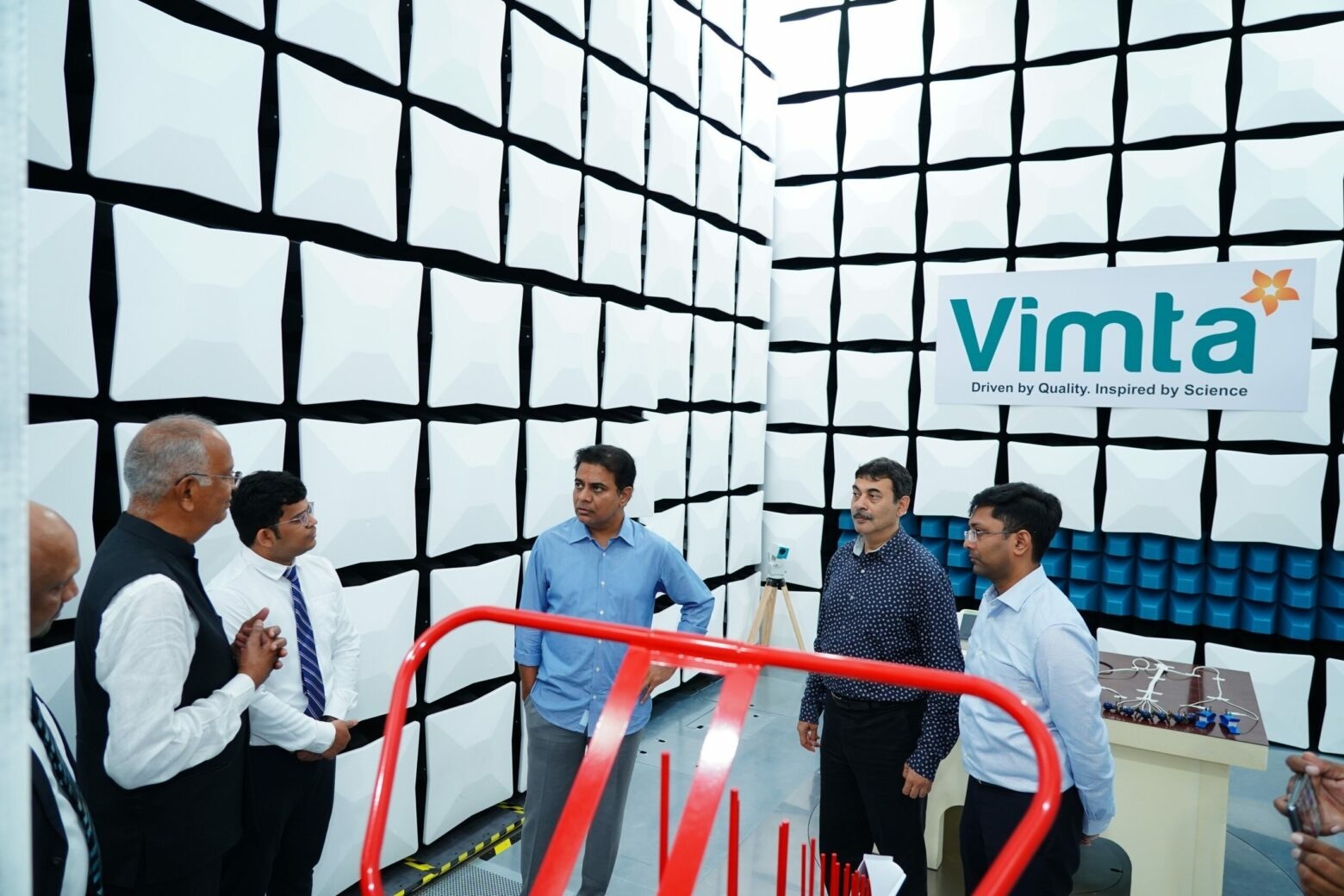
- Capacity Constraints: In the Electronics segment (EMI/EMC), the company admitted to running chambers 24/7 at 80-85% utilization. While this sounds good, it means they are hitting a ceiling. Growth now requires more “brick and mortar” labs, which are expensive and slow to build.
- Deferred Revenue: Management admitted that in Q3 FY26, “unexpected operational challenges” and restructuring caused revenue to be pushed into future quarters. In the high-precision world of CROs (Contract Research Organizations), delays are often a symptom of technical friction or manpower shortages.
- Customer Concentration: While they serve 90% of India’s top 20 pharma firms, the export mix is heavily skewed toward the U.S. (~60% of exports). Any regulatory shift or pricing pressure in the American market hits Vimta directly.
The company is currently net debt-free, which is a rare badge of honor in an industry that usually survives on leverage. They carry a cash balance of ₹650.6 million, providing a cushion for the ₹500 million investment planned for the Biologics space.
Will the move into Biologics—a field where the “sponsor is the customer” and trials take years—dilute the steady cash flows from food testing? Or will it catapult Vimta into the big league of global CROs?
2. Introduction
Vimta Labs stands as one of India’s oldest and most accredited Contract Research and Testing Organizations (CRTO). Unlike typical laboratories that focus on one niche, Vimta has built a “supermarket” of high-end technical services. From drug discovery to Deep-ocean environment studies, their footprint is massive.
The company has successfully transitioned from a founder-led setup to an organized corporate structure, recently reappointing Dr. S. P. Vasireddi as Executive Chairman. This continuity is vital because, in the testing business, your reputation with regulators (USFDA, WHO, MHRA) is your only real asset.
The divestment of the low-margin diagnostic business in 2024 was a masterstroke of focus. It removed the “noise” of retail competition and allowed the management to focus on B2B contracts where pricing power is higher.