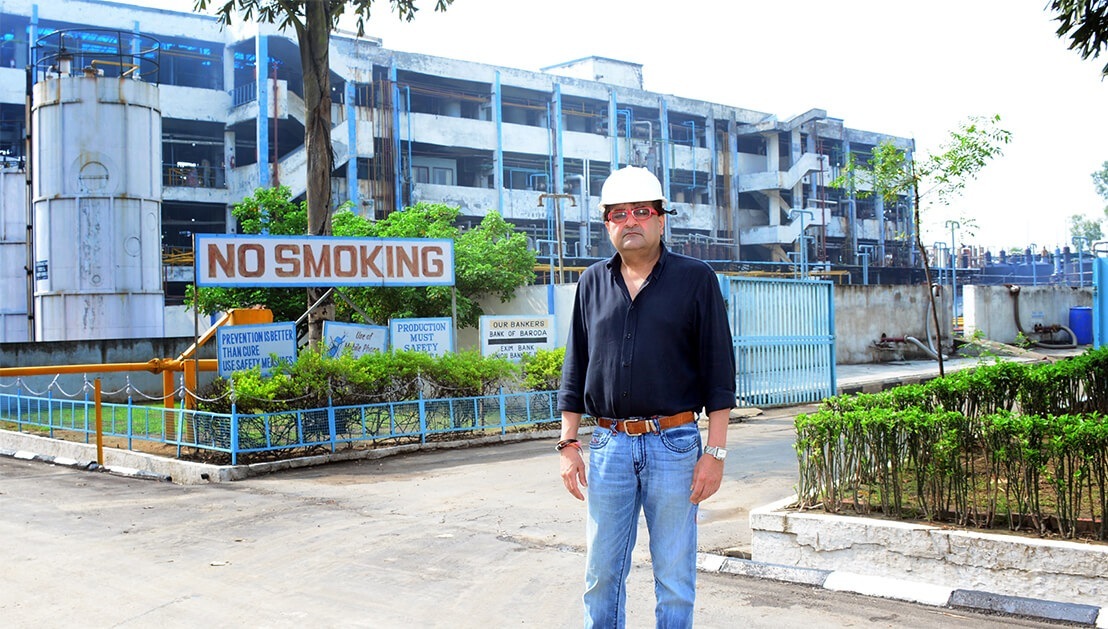
Punjab Chemicals & Crop Protection Ltd Q4 FY26: A Chemistry Lesson in Cash Flows and Contractual Cocktails
1. At a Glance
Punjab Chemicals & Crop Protection Ltd (PCCPL) isn’t your average “backyard pesticide” shop. This is a complex chemistry powerhouse that has transitioned from a legacy agrochemical player into a sophisticated Contract Research and Manufacturing Services (CRAMS) partner. Established in 1975, the company has spent decades mastering the art of “dirty” chemistry—chlorination, bromination, and phosphorus-based reactions—so that global giants like UPL, Bayer, and Corteva don’t have to get their hands as dirty.
The headline for FY26 is a massive recovery in the bottom line. After a slightly wobbly FY25 where margins were squeezed by expensive rice husk (their fuel of choice) and a global supply glut, PCCPL has come roaring back. The Net Profit for FY26 hit ₹64 crore, a sharp jump from the ₹39 crore recorded in FY25. Even more intriguing is the quarterly performance; the company reported a Sales figure of ₹209 crore in Q4 FY26, showing that they are maintaining a steady run rate even as the broader industry faces pricing pressure from Chinese dumping.
What makes this company a “detective’s” delight in the smallcap space is the shift in its revenue mix. Management has been shouting from the rooftops about moving away from low-margin commodities to high-value “new products.” They actually walked the talk: the share of New Products in revenue grew from 12% last year to ~16% in FY26, with a target to hit 20% soon.
Financially, the company is sitting on a Market Cap of ₹1,444 crore, trading at a P/E of 22x. While the industry median P/E is around 25x, Punjab Chemicals is positioning itself as a specialist rather than a generalist. They operate two massive facilities in Derabassi and Lalru (Punjab) and a Pune unit that handles food-grade phosphorus compounds for the likes of Pepsi and Coca-Cola. Yes, the same company that makes herbicides also ensures your soda has the right high-purity phosphates.
The “kick” for investors lies in their CDMO (Contract Development and Manufacturing Organization) pipeline. With 3 MOUs signed for exclusive, high-margin products starting in FY27, the company is preparing for a structural shift in its EBITDA profile. They are currently utilizing about 71% of their Derabassi capacity, leaving enough “juice” for incremental growth without needing a massive, debt-fueled factory build-out immediately.
2. Introduction
Punjab Chemicals is a veteran that has seen the highs and lows of the Indian chemical cycle. For years, it was perceived as a steady but unexciting player. However, the last 24 months have seen a tactical pivot. The company is no longer just selling “technical” grade chemicals to farmers; it is becoming a critical cog in the global supply chain for Life Sciences.
The business is divided into three neat buckets: Agrochemicals, Performance Chemicals, and Industrial Chemicals. While Agrochemicals remain the bread and butter (contributing significantly to the top line), the growth is coming from the Performance segment where they handle multi-step complex chemistries like Butyl-Lithium reactions and Nitration.
One of the most fascinating aspects of PCCPL is its geographical split. In FY25, domestic sales accounted for 61% of revenue, while exports were at 39%. However, management clarified in recent interactions that this is a bit of an accounting illusion. Many of their domestic customers are actually “exporting” the final formulation. So, while PCCPL invoices an Indian address, the product ultimately ends up in a field in Brazil or a lab in Japan.
The management team, led by Shalil Shroff, has been focusing on “de-commoditization.” They aren’t interested in fighting China on price for basic molecules. Instead, they are doubling down on niche products where the global regulatory standards are high and the competition is scarce.
With a debt-to-equity ratio of 0.36, the balance sheet is lean enough to support their upcoming ₹70 crore capex for a new manufacturing block. This isn’t a company burning cash for vanity projects; it’s a calculated play on the “China Plus One” strategy, focusing on high-barrier chemistry that keeps competitors at bay.
3. Business Model – WTF Do They Even Do?
PCCPL is essentially a “Chemistry-as-a-Service” provider. They take complex molecular blueprints from global innovators and turn them into commercial-grade chemicals. They specialize in the stuff that’s hard to handle—phosphorus, bromine, and chlorine.
The Three Musketeers of Revenue:
Agrochemicals/Intermediates: They make herbicides, fungicides, and insecticides. This is where they serve the big boys like UPL and BASF. They don’t just sell generic stuff; they manufacture patented products under long-term agreements.
Performance/Speciality Chemicals: This is the “high-IQ” side of the business. They perform complex, multi-step reactions to create intermediates for APIs (Pharmaceuticals). If you’re taking a medicine from Zydus or Laurus Labs, there’s a non-zero chance Punjab Chemicals provided the “secret sauce” intermediate.
Industrial Chemicals: High-purity phosphorus compounds. This segment is surprisingly steady because it feeds into the food and beverage industry. It’s the ultimate hedge—when the farmers aren’t buying pesticides, people are still drinking Coke.
The CRAMS/CDMO Edge: PCCPL operates a Contract Research and Manufacturing Services model. This is high-stickiness business. Once a client like Nissan Chemical or Sumitomo registers a product with PCCPL as the manufacturer, switching to another supplier is a regulatory nightmare that can take years. This gives Punjab Chemicals significant pricing power over the long term.
The Logistics: They have a subsidiary in Belgium, SD AgChem (Europe) NV, which acts as their marketing arm. This allows them to hold registrations in Europe, making them a “local” supplier to European giants. It’s a smart way to bypass the “outsider” tag in a heavily regulated market.
Are you starting to see how a “boring” chemical company can actually be a high-tech lab in disguise?
4. Financials Overview
The numbers for FY26 show a company that has successfully navigated a period of intense raw material volatility. We have analyzed the Q4 FY26 results (ended March 31, 2026) to see how the year finished.
Financial Comparison Table (Consolidated)Figures in ₹ Crore
Parameter
Q4 FY26 (Latest)
Q4 FY25 (YoY)
Q3 FY26 (QoQ)
Revenue
209
202
247
EBITDA
28
26
30
PAT
11
6
14
EPS (Quarterly)
8.95
5.75
11.26
Annualised EPS
52.16
31.75
45.04
Export to Sheets
Witty Commentary & “Walk the Talk” Analysis: Management promised an EBITDA margin of 11.5% to 12.5% during their earlier concalls. For Q4 FY26, the OPM stood at 13%, and for the full year, they hit exactly what they aimed for.
In Jan 2026, management mentioned they were using rice husk as fuel and that “prices continue to remain high.” Looking at the expense line, they managed to keep “Other Expenses” stable despite the fuel headwind, likely through the product mix shift they’ve been bragging about. They said they would commercialize 5–7 products; they ended up doing exactly that, which supported the margins when the industry was bleeding.
P/E Calculation: With a Current Price of ₹1,178 and an annualised EPS (Full Year) of ₹52.16, the P/E Ratio is 22.58x. This is slightly higher than their historical 5-year average but reflects the improved quality of earnings as they move toward CDMO.
5. Valuation Discussion – Fair Value Range
Valuing a specialty chemical company is like trying to guess the price of a vintage wine—it depends on the “blend” (product mix).
Method 1: P/E Multiple
Trailing 12-Month EPS: ₹52.16
Peer Median P/E: 25x
Discounted P/E for Smallcap/Concentration Risk: 20x
Value: 52.16×20=₹1,043
Method 2: EV/EBITDA
EBITDA (FY26): ₹118 crore
Enterprise Value (Market Cap + Debt – Cash): ₹1,583 crore (approx)
Current EV/EBITDA: 13.4x
Fair EV/EBITDA Range: 11x – 14x
Value Range: ₹960 – ₹1,220
Method 3: DCF (Discounted Cash Flow)
Assuming a 10% growth rate for the next 5 years (conservative given the CDMO pipeline) and a terminal growth rate of 3%.
WACC (Cost of Capital) at 12%.
Calculated Fair Value: ~₹1,150
Fair Value Range: Based on the above, the estimated fair value range for Punjab Chemicals & Crop Protection Ltd is: ₹1,020 — ₹1,250
Disclaimer: This fair value range is for educational purposes only and is not investment advice. Always consult a certified financial advisor before putting your hard-earned money into the market.
6. What’s Cooking – News, Triggers, Drama
The biggest drama in the Punjab Chemicals universe is the “CFO Musical Chairs.” In March 2025, Mr. Ashish Nayak left. He was replaced by Mr. Vikash Khanna, who then resigned in September 2025. Finally, Mr. Devender Gupta took the hot seat in December 2025. While frequent management changes usually smell like a kitchen fire, the