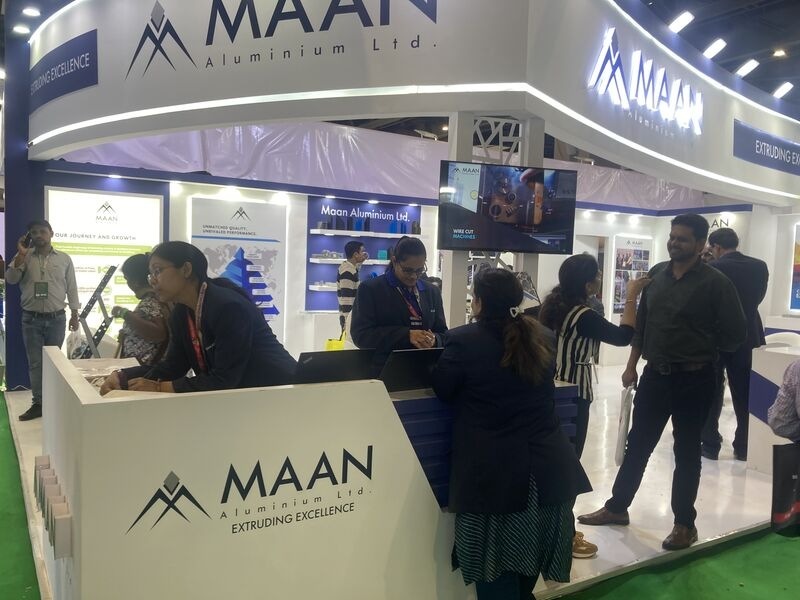
1. At a Glance – The Aluminium Drama You Didn’t Sign Up For
Picture this: a company doing ₹800 Cr revenue… but operating margins thinner than roadside chai… promoter holding slipping… exports collapsing… and yet management is confidently talking about aerospace dreams and ₹190 Cr capex like it’s ordering biryani.
Welcome to Maan Aluminium Ltd — a company that looks like it’s stuck between being a commodity trader and dreaming of becoming India’s aerospace supplier.
Revenue down.
Exports weak.
Margins somehow improving.
Capacity utilization at a painful ~25%.
And still… expansion plans worth ₹190+ Cr.
This is not a normal business transition. This is a full Bollywood-style identity crisis.
Is this a hidden turnaround story… or a classic “future ka sapna, present ka dard”?
Because when a company says, “we are moving away from low-margin trading”, what it really means is:
👉 “Our old business stopped working.”
And when they say, “high value-added manufacturing”, it usually means:
👉 “We hope this works… please wait.”
But here’s the real masala:
They already signed a contract with Tata.
They’re entering aerospace.
They’re building precision tubing (import substitution).
Sounds sexy, right?
Now ask yourself:
Why is the stock still struggling if the future is so bright?
Something isn’t adding up.
2. Introduction – From Aluminium Dukaan to Aerospace Dreams
Let’s break this down like a chai pe charcha.
Maan Aluminium started as a typical aluminium business:
- Buy ingots
- Sell profiles
- Earn razor-thin margins
- Repeat
Basically, a glorified metal shop… but with GST compliance.
Over time, they added:
- Extrusion
- Anodizing
- Fabrication
Nice upgrade… but still not a moat.
Now comes FY26… and suddenly management says:
“We are not traders anymore. We are technology-driven aluminium converters.”
Arre wah.
This is like your local gym trainer suddenly saying he’s now a nutrition scientist.
But credit where due — the shift is real.
From concall:
- Manufacturing growing
- Trading intentionally reduced (-32% YoY)
- Focus on value-added products
Revenue dropped… but EBITDA increased.
That’s like losing weight but gaining muscle.
Sounds good… but only if you survive the process.
Now the big question:
👉 Can they actually execute this transition?
👉 Or will this become another “story stock” with zero delivery?
3. Business Model – WTF Do They Even Do?
Let’s simplify this so even your CA cousin who failed twice understands.
Old Model (Legacy)
- Buy aluminium (from Hindalco, Vedanta, NALCO)
- Sell it
- Earn tiny margins
Basically:
👉 “Buy 100, sell 101, pray to god volume stays high.”
New Model (Fancy Version)
- Take aluminium
- Convert it into specialized products
- Add value through:
- extrusion
- anodizing
- machining
- fabrication
👉 “Buy 100, convert to 140, sell for 200.”
Much better… in theory.
Revenue Mix (9M FY26)
- Manufacturing: 41%
- Trading: 59%