01 — At a Glance
The Solar Pump Company That Doesn’t Need You to Understand Electricity
- 52-Week High / Low₹240 / ₹96
- Q3 FY26 Revenue₹460 Cr
- Q3 FY26 PAT₹58.83 Cr
- TTM EPS₹9.91
- Annualised EPS (9M Avg × 1.33)₹10.73
- Book Value / Share₹38.4
- Price to Book2.64x
- Order Book (Dec 2025)₹803 Cr
- Pumps Installed (9M FY26)43,421
- Market Share PM-KUSUM~13%
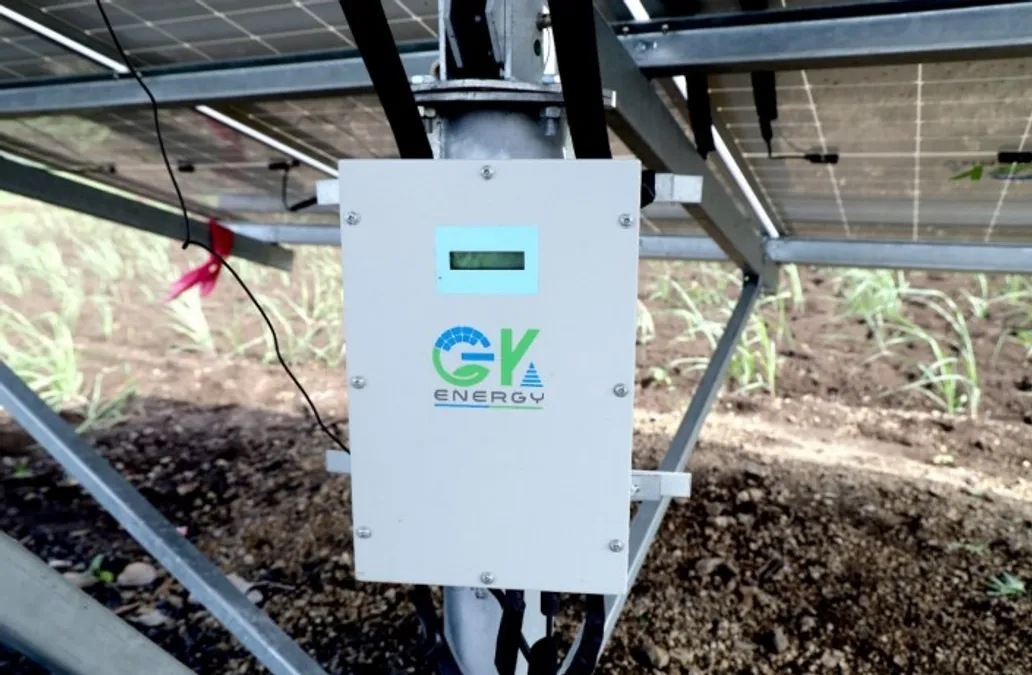
Flash Summary: GK Energy delivered Q3 PAT of ₹58.83 crore — up 57.7% YoY. The company is India’s second-largest solar pump EPC player, with ₹803 crore in order book and 43,421 pumps installed in just 9 months. EBITDA margin hit 20.54%. The stock is at ₹100, down 58% from its ₹240 high, yet trading at just 11x P/E with 101% ROE. Either the market hates agriculture, or someone has not done their homework. Possibly both.
02 — Introduction
When Farmers Meet Solar. When Solar Meets ₹1,000 Crore Revenue.
Let’s be brutally honest: nobody glamorizes solar pump installation. No one writes TED talks about it. No startup conference celebrates the EPC model for agricultural water systems. And yet, GK Energy — a company that literally goes to rural farms and puts solar panels on pumps — just posted its best year ever, IPO’d, and is growing its loan book faster than most fintech startups. The irony is thick enough to cut with a diamond saw.
The context: India has 30 million irrigation pumps. Less than 2% are solar-powered. Farmers are still burning diesel and begging the government for free electricity. The government, in response, created the PM-KUSUM scheme — essentially paying heavily to solarise agriculture. GK Energy, founded in 2008 by Gopal Kabra and Mehul Shah, saw the opportunity and decided to become the engineering, procurement, and construction (EPC) player for this shift. Two decades in, they’ve installed over 1,18,000 solar pump systems and crossed ₹1,000 crore in annual revenue in FY25.
Q3 FY26 was the quarter where the math got too obvious to ignore: ₹460 crore quarterly revenue, 57.7% profit growth, 20.54% EBITDA margin, a ₹803 crore order book, and an IPO that raised ₹500 crore in fresh capital. The company is now listed on both NSE and BSE. The promoters own 79.2% of the stock. And the valuation? 11x P/E. For a company growing at 150% (3-year revenue CAGR), that’s the kind of mispricing that makes auditors lose sleep.
Credit Rating Note (Feb 2026): CARE Ratings assigned CARE BBB+; Stable / CARE A2 to bank facilities. The rating highlights “established market position,” “growing scale of operations,” and “healthy profitability,” but notes “high customer and geographical concentration risk” and “tender-driven nature of operations.” Basically: great company, India-specific risks apply.
03 — Business Model: Sell Solar Pumps. Get Rich. Repeat.
The Unglamorous Business of Making Farmers Not Go Broke.
Members get full access to every article.