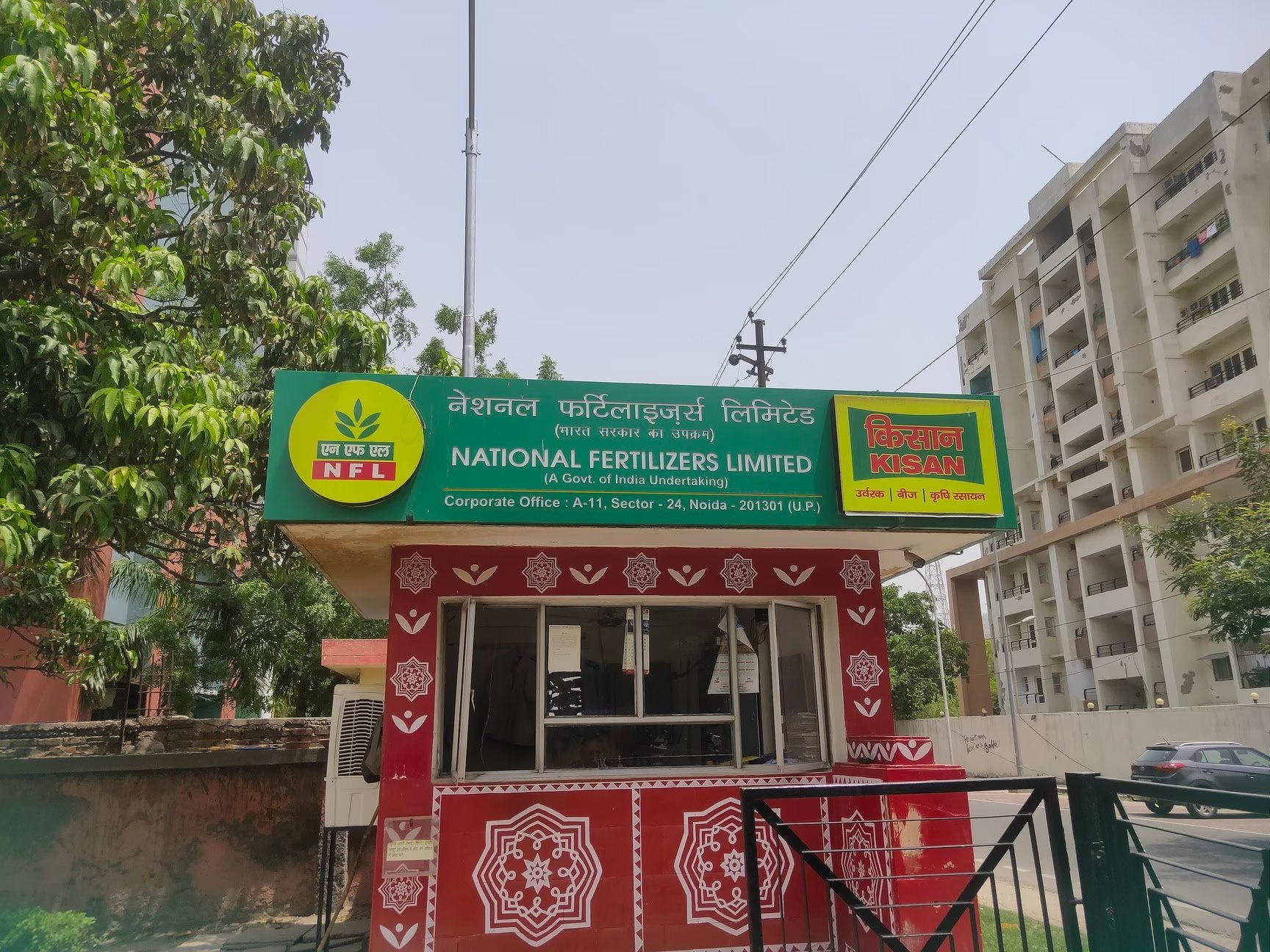
01 — At a Glance
The Subsidy Slot Machine That Runs India’s Farmland
- 52-Week High / Low₹112 / ₹67
- TTM Revenue₹21,624 Cr
- TTM PAT₹195 Cr
- Q3 FY26 EPS₹2.76
- Annualised EPS (Q3×4)₹11.04
- Book Value₹52.3
- Price to Book1.33x
- Dividend Yield2.20%
- Debt / Equity1.77x
- Promoter (GoI)74.71%
The CEO’s Dilemma (Translated): National Fertilizer is India’s 2nd-largest urea producer (12% market share), 74.71% government-owned, 100% dependent on government subsidy reimbursements arriving before bankruptcy comes calling. FY25 was a certified disaster: profit down 24% YTD because urea prices crashed and the FM was too busy with elections to pay the bills. So logically, the stock died (−18.5% in 1 year, −30.7% in 6 months). Welcome to CPSE-roulette, where the house always wins, and you always lose.
02 — Introduction: The Fertilizer Plot Twist Nobody Saw Coming
You Can’t Hire or Fire the Fertilizer Guy When You’re the Government Itself
Let’s start with a fact that would make any private equity firm weep blood: National Fertilizer Limited (NFL) is a CPSE. A Central Public Sector Enterprise. The Government of India owns 74.71% of the stock. The CFO retired on March 1, 2026. A replacement was assigned. New plants worth ₹100+ crores get approved like they’re adding a bathroom to a farmhouse. Democracy in spreadsheet form.
The business: manufacture and sell urea (₹21,624 Cr TTM revenue). Plus tiny bits of industrial chemicals, seeds, and agrochemicals nobody cares about. The core problem: urea is a regulated commodity in a subsidy-dependent market. The government sets prices. If your production cost exceeds the government’s set price, the difference is supposed to come from subsidy. If the subsidy doesn’t arrive, you borrow. If your debt ratio explodes, you pray harder. Some quarters the subsidy arrives. Some quarters it doesn’t. Quarterly EPS swings like a Delhi monsoon — violent, unpredictable, and devastating.
Q3 FY26 (Dec 2025) delivered ₹135 Cr PAT on ₹6,870 Cr revenue. A decent recovery from Q2’s ₹36 Cr loss. Debt is down 50% from FY22’s ₹7,645 Cr to FY25’s ₹2,001 Cr (then rebounded to ₹4,537 Cr in Sep 2025 because subsidy delays resumed). The company is investing ₹572 Cr in a new ammonia-urea plant in Assam. The new Director (Finance) took charge in March 2026. Somewhere in Punjab, a farmer got cheaper urea because of this. Somewhere else, that same farmer got annoyed about something unrelated (weather, politics, inflation). The cycle continues.
ICRA Rating Context (May 2025): ICRA reaffirmed NFL’s [ICRA]AA (Stable) rating, citing “steady demand for urea,” “leadership position,” and “exceptional financial flexibility arising out of NFL’s strategic importance to the Government.” Translation: This company is too-politically-important-to-fail as long as farmers need votes and votes need cheap urea.
03 — Business Model: The Great Subsidy Hostage Negotiation
They Make Urea. The Government Decides If It’s Profitable. This Is Not A Business. This Is Public Service Wearing A Tie.
National Fertilizer operates five gas-based urea plants scattered across Punjab, Haryana, and Madhya Pradesh with combined capacity of 32.33 lakh MT (LMT). Capacity utilization in FY25: 114.95% (yes, they’re literally overworking the plants — squeezing them like a sponge). Total urea production: 37.14 LMT in FY25. Market share: 12% nationally, but much higher in northern India where the plants are located because distribution costs less when you’re next to the customer.
The Nutrient Based Subsidy (NBS) system: the government announces retail prices. Production cost plus approved freight plus margin is calculated. If actual cost exceeds the retail price, the gap comes from subsidy. The company records this as “subsidy receivable” and waits. Sometimes it arrives next quarter. Sometimes next year. In FY25, NFL recognized ₹146,395 lakh in subsidy (audited, but still an IOU from the government). This is not revenue yet. This is “we hope the FM didn’t forget about us.”
Beyond urea, NFL trades imported NPKs (phosphatic fertilizers — low margin, often loss-making when NBS rates are inadequate), operates the Nangal plant making industrial chemicals (nitric acid, ammonium nitrate — quasi-explosives producer, surprisingly resilient), and runs a seed-multiplication program under the brand “Kisan Beej.” Industrial chemicals grew 8% YoY in FY25 and are now 9% of revenue. Seeds programme sold 2.24 lakh quintals in FY24. These are sidebets. Urea is 70%+ of the money.
Urea Market Share12%2nd largest in India
Capex Planned (Assam JV)₹572 Cr48-month timeline
Debt/EBITDA9.2xElevated
New Capex Alert (Feb 2026): Board approved setting up a 25,000 MTPA Bentonite Sulphur (BS) plant at Vijaipur for ₹104.03 Cr. This is speculative — targeting “Urea Gold” nitrogen-efficiency formulations. Also, the Assam JV (with AVFCCL) for a 1.27 MMTPA ammonia-urea plant is real — ₹572.45 Cr equity investment approved (Nov 2025), 48-month timeline, NFL’s equity share 18%. Both are bets on continued subsidy and government support. The former depends on farmer adoption. The latter depends on funding miracles.
04 — Financials Overview: The Q3 FY26 Recovery Story (With All The Caveats)
Quarterly Results — Profit Bounced Back From the Dead, But From What Grave Exactly?
Result Type: Quarterly Results | Q3 FY26 EPS: ₹2.76 | Annualised (Q3×4): ₹11.04 | Full-year FY25 EPS: ₹3.75
| Metric (₹ Cr) |
Q3 FY26
(Dec 2025) |
Q3 FY25
(Dec 2024) |
Q2 FY26
(Sep 2025) |
YoY % |
QoQ % |
| Revenue | 6,870 | 5,856 | 6,763 | +17.3% | +1.6% |
| Operating Profit (EBIT) | 296 | 146 | 103 | +102.7% | +187.4% |
| OPM % | 4.3% | 2.5% | 1.5% | +180 bps | +280 bps |
| PAT | 135 | 46 | -36 | +193.5% | Turnaround from loss |
| EPS (₹) | 2.76 | 0.93 | -0.73 | +196.8% | Loss to profit swing |
Context Matters (Always Does): Q2 FY26 (Sep 2025) was a certified bloodbath — ₹36 Cr loss. Urea prices had bottomed. Subsidy payouts were lagging worse than a Delhi autocrat on his deadlines. Imported DAP trading was bleeding money. Q3 showed dramatic reversal: operating profit jumped 187% QoQ. Why? (1) Urea prices stabilised; (2) subsidy recognition jumped (the government finally paid); (3) industrial chemicals (Nangal plant) recovered. BUT the annualised EPS of ₹11.04 (Q3×4) is aggressive — assumes Q3 repeats every quarter. The safer annualised EPS, based on FY25’s ₹3.75, is ~30% lower. The stock trades at 17.6x P/E on TTM earnings — expensive for a regulated utility, insane for a company whose profit hinges on monsoon risk and government bureaucracy timelines.
05 — Valuation: The CPSE Fair Value Riddle That Has No Answer
How Do You Value A Company That Doesn’t Control Its Own Margins Or Its Own Payment Dates?
Method 1: P/E Based
TTM EPS = ₹3.97. Sector median P/E for fertilizer CPSEs (Coromandel, Chambal, Paradeep) = 14.5x. NFL justified P/E: 14x–18x (subsidy risk already priced in). Fair P/E band: 14x–18x.
Range: ₹56 – ₹71
Method 2: EV/EBITDA Based
TTM EBITDA = ~₹714 Cr (Operating Profit ₹714 Cr + D&A ₹400 Cr from TTM). Enterprise Value = ₹7,900 Cr (Market Cap ₹3,423 Cr + Net Debt ₹4,477 Cr). Current EV/EBITDA = 11.1x. Fertilizer CPSEs trade at 8x–12x. Fair range: 8x–11x.
EBITDA range (8x–11x): ₹5,712 Cr – ₹7,854 Cr → Per share (after net debt):
Range: ₹59 – ₹73
Method 3: Dividend Yield Based (SKIPPED)
Historical dividend payout: 26.8% of earnings (conservative). But subsidy volatility makes earnings unreliable. You can’t apply a stable yield multiple to earnings that swing from +₹150 Cr to −₹50 Cr within two quarters. Dividend yield method fails here.
Skip this method.
Fair Min: ₹56
CMP: ₹69.8
Fair Max: ₹73
⚠️ EduInvesting Fair Value Range: ₹56 – ₹73. CMP ₹69.8 sits near centre, suggesting fair valuation at current levels. However, a bad monsoon or subsidy delay could swing this ±20% overnight. This fair value range is for educational purposes only and is not investment advice. Please consult a SEBI-registered investment advisor before making any financial decision.
06 — What’s Cooking: Management Shuffle, Plant Dreams, Subsidy Nightmares
The Usual CPSE Drama, But With Higher Stakes And Actual Budget Allocations