01 — At a Glance
The Soapy Saga Continues (With Extra Drama)
- 52-Week High / Low₹2,750 / ₹1,753
- FY25 Revenue (Full Year)₹5,079 Cr
- FY25 PAT (Full Year)₹290 Cr
- Q3 FY26 EPS₹16.63
- Annualised EPS (Q3×4)₹66.52
- Book Value₹715
- Price to Book2.51x
- Dividend Yield1.23%
- Debt / Equity0.11x
- CRISIL RatingAA- / Stable
The Plot Twist Nobody Ordered: Galaxy Surfactants delivered Q3 revenue of ₹1,329 Cr (+27.6% YoY) but profits (before exceptions) came in at ₹59 Cr, a 27.3% YoY *decline* from Q3 FY25’s ₹81 Cr. Yes. Revenue UP 27%, profit DOWN 27%. This is not a typo. This is called “input cost inflation” with a side of geopolitical uncertainty and a sprinkle of customer reformulation chaos. Their P/E of 21.9x isn’t cheap. Their story right now? Even less cheap.
02 — Introduction
When Your Supply Chain Becomes a Telenovela
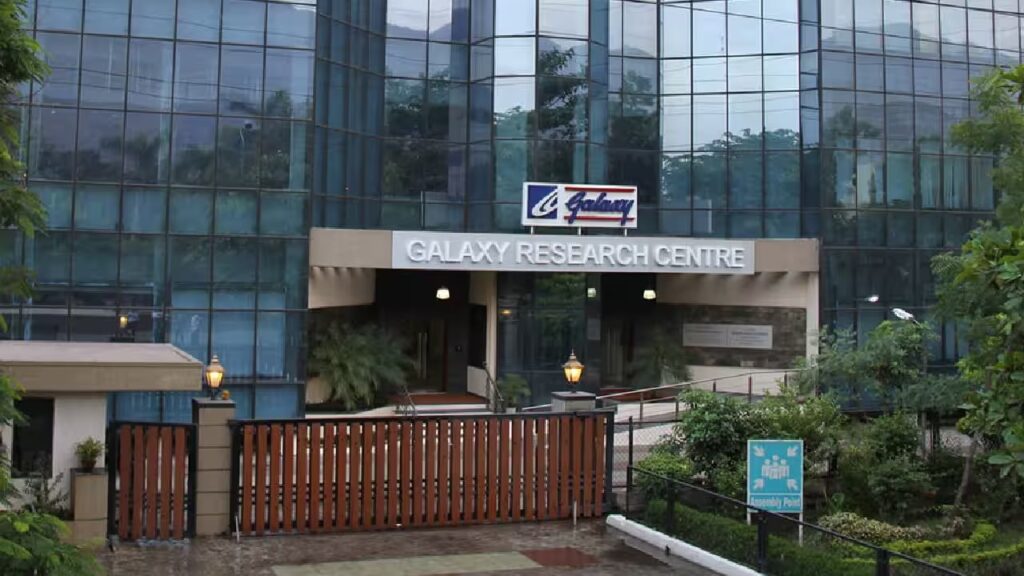
Galaxy Surfactants is India’s largest oleo-chemical surfactant manufacturer. If you’ve ever washed your hair, applied sunscreen, or cleaned a dish with anything other than your bare hands, there’s a decent chance Galaxy’s molecular magic was involved. They make the goop that goes into shampoos, detergents, skincare, cosmetics — essentially the unglamorous but utterly essential ingredients that make your FMCG favourites actually work.
Incorporated in 1986, publicly listed, 1,380+ customers across 80+ countries, 7 manufacturing facilities including one in Egypt and one in the US. Solid infrastructure. Strong relationships with Unilever, Procter & Gamble, L’Oréal, Reckitt Benckiser. The works. Revenue mix: 60% Performance Surfactants (cleansing, foaming stuff), 40% Specialty Care (conditioning, preservatives, UV filters). Geographic spread: 40% India, 24% AMET, 36% Rest of World. Diversified. Sensible.
Then Q3 FY26 happened. And someone spiked the fatty alcohol prices, activated the U.S. tariff hammer, triggered GST rate rationalization chaos, and somehow convinced customers to reformulate their products mid-quarter like they’re running a bakery adjusting sugar ratios. Welcome to the lubricant of human hygiene — which, as it turns out, is not as stable as anyone bargained for.
Management Concall Honesty (Feb 2026): “We are confident that the worst is behind us.” Translation: Things were REALLY bad, and now they’re just bad. Also: “Tariff normalization restores competitiveness.” Translation: American customers finally stopped panicking.
03 — Business Model: The Molecular Middle-Man
They Make the Ingredient. You Never See It. But It’s Everywhere.
Galaxy’s business model is beautifully simple: buy raw materials (predominantly fatty alcohols, ethylene oxide, linear alkyl benzene), blend them at scale across 7 facilities, slap ISO certifications and patent-backed formulations on them, and ship to FMCG giants and regional players. The customer buys, reformulates into consumer-visible products, and sells to the end user who has no idea Galaxy was involved.
Revenue Recognition: Cost-plus contracts dominate 70%+ of business. Raw material costs up → customer invoices up. Theoretically symmetrical. But here’s the kicker: contracts are renegotiated quarterly or half-yearly. So if commodity prices skyrocket between contract periods, Galaxy absorbs the delta. Conversely, if prices crash, they sometimes leave money on the table. It’s a volatility game dressed up as recurring revenue.
The Geographies: India (40% of revenue) is performance surfactants heavy — home care, personal care, mass-market tier. AMET (24%) is getting decimated by local competition and currency devaluation. Rest of World (36%) — primarily North America, Europe, Asia-Pacific — is diversified but sensitive to tariffs. TRI-K Industries (prestige specialty in US) is a jewel asset that’s been uplifting margins lately.
Installed Capacity462,980 MTPA7 Global Plants
Patents Granted111IP Moat Built
Global Clients1,380+80+ Countries
Products Portfolio215+Formulations
The Magic: Galaxy has 50% MNC customer concentration + 50% regional/local distribution. Unlike pure-play commodity suppliers, they’ve built IP moat (111 granted patents, 32 more pending) and customer stickiness via R&D. But that R&D also gets wasted when customers reformulate to escape supplier pricing pressure. It’s a double-edged scalpel.
💬 Real talk: If Galaxy’s cost-plus contracts reset quarterly, why isn’t margin recovery faster when commodity prices stabilize? Drop your theories in the comments!
04 — Financials Overview: The Profit Paradox
Q3 FY26: Revenue Soaring. Profit Skydiving.