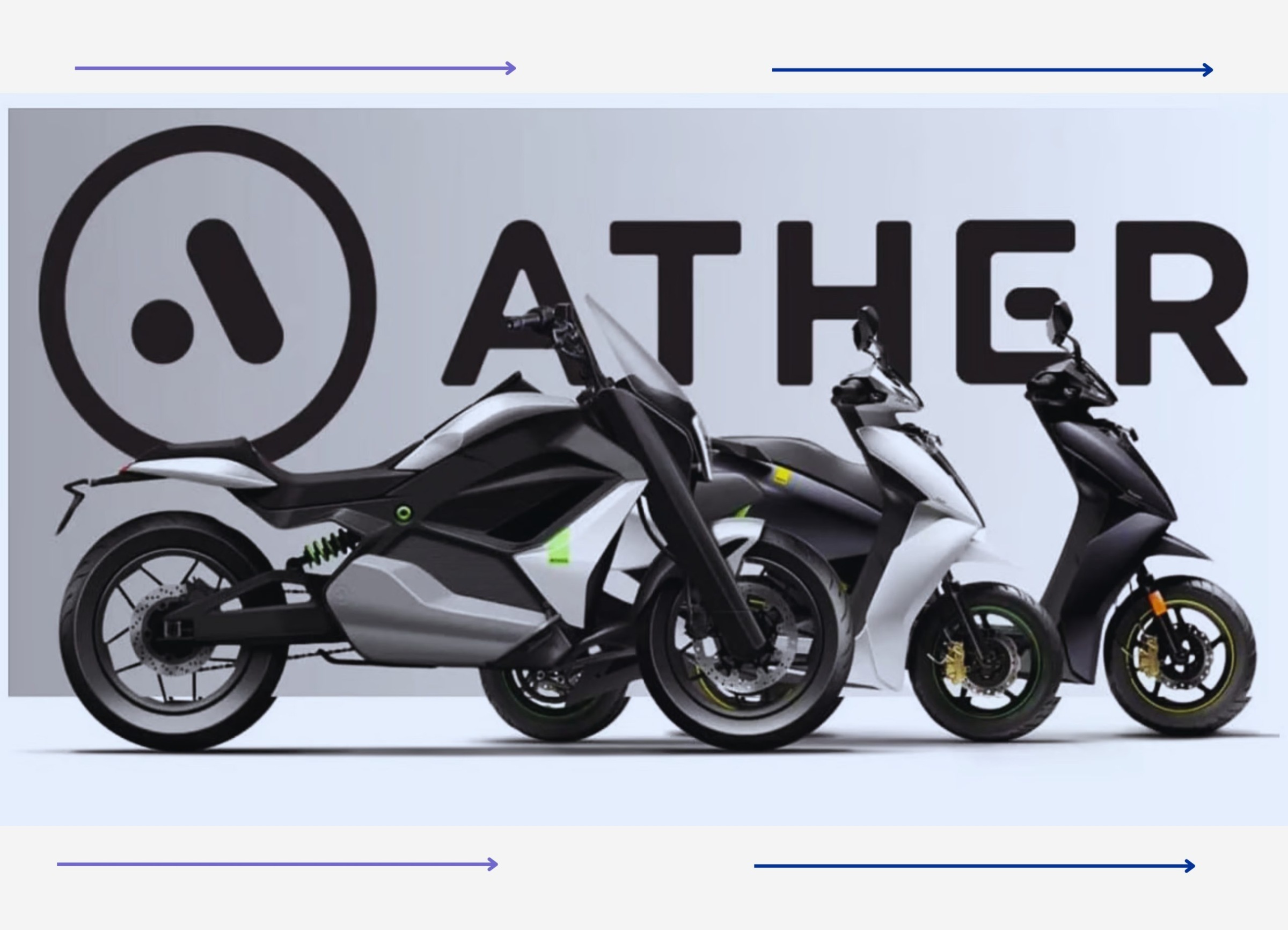
01 — At a Glance
The Electric Scooter Kid on the Profit Cliff
- 52-Week High / Low₹790 / ₹287
- Q3 FY26 Revenue₹954 Cr
- Q3 FY26 PAT-₹79.6 Cr
- Q3 EPS (₹)-2.22
- Annualised EPS (Q3×4)-₹8.88
- Book Value₹71.3
- Price to Book9.57x
- Debt / Equity0.16x
- Units Sold (Q3)68,000
- All-India Share18.8%
The Harsh Reality Check: Ather just completed its most brutal trading quarter post-IPO. Revenue up 50% YoY to ₹995 crore. Units shipped up 50% YoY to 68,000. Gross margin doubled to 25%. And yet, the stock price is being valued on hopes, not fundamentals — because profitability is still negative. P/B at 9.57x. ROCE at -65.7%. Interest coverage at -5.97x. The company is burning cash faster than it’s printing it. Six months post-IPO debut, and investors are betting on a turnaround that management keeps pushing to “later this year.”
02 — Introduction
The Scooter Company That Forgot to Profit
Welcome to Ather Energy — where the code is slick, the scooters are smooth, and the balance sheet is a crime scene. Founded in 2013, Ather spent a decade building electric two-wheelers, fast-charging networks, and software ecosystems while compiling losses like a VC portfolio company that never needed to be profitable.
Then, in May 2025, they went public at ₹738/share and raised ₹2,980 crore. The IPO prospectus was a masterclass in storytelling: “largest E2W fast-charging network,” “18% market share,” “software-defined scooters,” “5 lakh cumulative units sold.” The market ate it up. Stock jumped 20% on listing. Within 6 months, it hit ₹790. And then reality showed up.
Q3 FY26 results landed in February 2026, and the numbers were both astonishing and terrifying. Revenue nearly doubled YoY. Gross margin doubled to 25%. Unit volumes hit a new high of 68,000. And yet, the company lost ₹79.6 crore in a single quarter. The EBITDA margin was -3%. Operating profit was -₹72 crore. The cash from operations was negative. Everything was growing except the bottom line. It was as if someone handed you a Ferrari with no fuel.
But here’s the thing: Ather’s management and the bull case aren’t entirely delusional. The company DID cross five lakh cumulative units sold. Market share of 18.8% is genuinely impressive. Gross margin at 25% is real. The Rizta model (budget scooter) has sold over two lakh units and is now the volume driver. The new EL platform launching “later this year” is supposed to unlock another market segment. And management keeps saying Q4 and FY27 are when the magic happens. They’ve been saying that since Q1. Let’s dissect what’s real and what’s just investor optimism.
Concall Takeaway (Feb 2026): “EBITDA ~(-) ₹29 crores, ~(-)3% margin; improved 1,600 bps YoY.” Management celebrated a 1,600 basis point improvement and called it “progress.” That’s what happens when you start from -46% OPM — anywhere is “up.”
03 — Business Model: Software Meets Scooters (Profitability TBD)
They Sell Electric Bikes. Also Apps. Also Hope.
Ather’s business is vertically integrated. They design in-house. Manufacture in Hosur, Tamil Nadu. Build batteries at the same facility. Operate a proprietary software stack on every vehicle. And run a charging network because the infrastructure didn’t exist. It’s ambitious. It’s capital-intensive. And it explains why they haven’t made money in 12 years.
The product lineup is simple: the 450-series (performance scooters) and the Rizta-series (budget/family scooters). The 450X is their flagship, priced at ₹1.42–₹1.57 lakh depending on battery size. The Rizta undercuts the 450S to capture the mass market at ₹1.12–₹1.48 lakh. Gross margins are ~25% on vehicle sales, with additional revenue from ProPack (₹699–₹999/month for software features like Find My Scooter, live sharing, safety alerts), charging network monetization, and emerging plays like insurance agent status (announced Feb 2026).
The software attachment rate is 91%, meaning 9 out of 10 buyers opt into the monthly subscription. Management claims this is “massive value” because ProPack costs ~6–7% of lifetime ownership cost but is priced to reward upfront purchase (it gets 30% more expensive post-purchase).
Distribution: Ather operates 600 Experience Centres (stores) today, with plans to hit 700 by end of FY26. These aren’t simple dealers — they’re “branded mini-retail outlets” where customers also charge and engage with the software. It’s the Tesla model for a ₹1.2 lakh vehicle. It works, but it requires capital, management bandwidth, and inventory carry.
Market Share18.8%Q3 FY26 High
Units Sold (9M)~195kYoY Growth +50%
Gross Margin25%Doubled YoY
Stores600Expanding to 700
Industry Context: India’s electric two-wheeler market is ~2.5 million units annually as of 2025. Ather is now ~4% of that market by annual run-rate (68k units in Q3 × 4 = 272k annualized, but the real run-rate is lower due to quarterly variance). Hero MotoCorp, their anchor investor, is in the incumbent space. TVS and Bajaj are ramping EV portfolios. The real competition isn’t brand loyalty — it’s who can sustain negative margins the longest.
💬 Question: Do you think software monetization (ProPack at 91% attach) is genuinely durable, or is it a sugar rush before customers demand value pricing?
04 — Financials Overview
Q3 FY26: Where Reality Hits
Result type: Quarterly Results | Q3 FY26 EPS: -₹2.22 | Annualised EPS (Q3×4): -₹8.88 | 9M FY26 Loss: ₹318 Cr
| Metric (₹ Cr) |
Q3 FY26
Dec 2025 |
Q3 FY25
Dec 2024 |
Q2 FY26
Sep 2025 |
YoY % |
QoQ % |
| Revenue | 954 | 635 | 899 | +50.2% | +6.1% |
| Operating Profit | -72 | -141 | -132 | +49.0% | +45.5% |
| OPM % | -8% | -22% | -15% | +1400 bps | +700 bps |
| PAT | -79.6 | -198 | -154 | +60.3% | +48.3% |
| EPS (₹) | -2.22 | -64.21 | -4.05 | +96.5% | +45.0% |
The Loss Improvement Story: Q3 PAT loss of ₹79.6 Cr is “only” 60% better than Q3 FY25’s ₹198 Cr loss. Yes, the direction is right. But the absolute numbers are still brutal. Revenue is up 50%, but the incremental cost structure is eating most of that margin expansion. The story is “we’re losing less,” not “we’re making money.” The market is pricing this stock as if the former automatically leads to the latter within 6–12 months.
05 — Valuation: Fair Value Range Only
Pricing a Negative Earnings Company — The Hard Way
Join 10,000+ investors who read this every week.