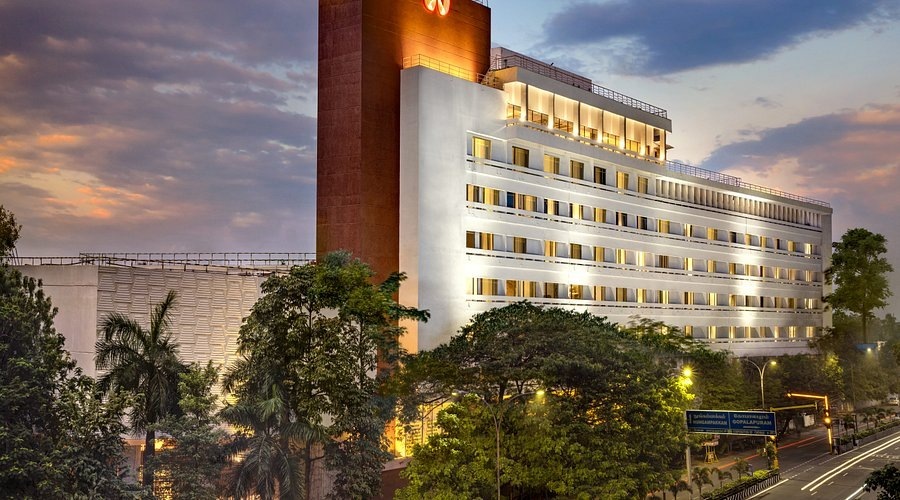
01 — At a Glance
The Hotel Company That Just Became A Billion-Dollar Standalone Business
- 52-Week High / Low₹262 / ₹161
- Q3 FY26 Revenue₹1,231 Cr
- Q3 FY26 PAT (bei)₹307 Cr
- Q3 FY26 EPS (Annualized)₹4.52
- Annualised P/E (Q3×4)35.8x
- Book Value (Latest)₹53.0
- Price to Book3.06x
- Debt / Equity0.01x
- Operating Hotels150+
- Room Keys in Operation14,070
The Plot Twist: ITC Hotels was demerged from ITC Limited exactly 9 months ago (January 2025). Already the company has hit record quarterly revenues (₹1,231 Cr in Q3), signed the most hotel keys in a single calendar year (2,790 keys in CY2025), and won bids for premium land at Yashobhoomi, New Delhi. The stock has tanked 15.9% in three months. Welcome to India’s hotel sector — where excellence gets punished and mediocrity gets rewarded. Also, zero dividend payout. Zero. Cumulative cash is being burned into expansion. That’s not a weakness. That’s strategy.
02 — Introduction
The Hotel Company That Was Hidden Inside ITC’s Conglomerate
ITC Hotels was not born in 2025. The company opened its first hotel in 1975 in Chennai — that’s 50 years ago. For the next five decades, it quietly built a hospitality empire across India, lurking inside ITC Limited’s corporate financials like a Michelin-star restaurant hidden behind a nondescript door.
Then, in August 2023, ITC’s board voted to demerge the hotels business into a separate, publicly listed entity. The scheme sailed through shareholder votes and NCLT approval. On January 1, 2025, the demerger became effective. ITC Hotels Limited began trading on NSE and BSE separately. ITC retained a 40% stake as anchor shareholder. The rest went to ITC’s shareholders proportionally.
Within nine months, the newly independent company did what independent hotel operators typically take years to accomplish: hit record revenue, signed a record number of new hotels, won a strategic land parcel at a prime Delhi location, and convinced Wall Street that a 150-hotel Indian hospitality chain was worth ₹33,000+ crore. Also, it reported zero dividend. That part is important — we’ll get there.
So here’s the deal: a company that’s been around longer than Microsoft was listed, is now operating 150+ hotels across 90+ destinations, has signed expansion commitments that will take it to 220+ hotels by 2030, and is trading at a premium valuation that assumes faster growth than its own management is projecting. Smart opportunity? Overheated exuberance? Let’s read the data and decide.
Key Context Note: ITC Hotels operates under six distinct brands — ITC Hotels (luxury), Welcomhotel (upper upscale), Storii (boutique leisure), Fortune (midscale), Mementos (experiential), and WelcomHeritage (heritage/wellness). Portfolio depth like this is rare. Larger chains (Indian Hotels, Chalet, Lemon Tree) often have a 2-3 brand strategy. ITC has built institutional brand competence across the entire spectrum.
03 — Business Model: WTF Do They Even Do?
They Book Rooms. You Sleep In Them. Capitalism Prevails.
ITC Hotels has two levers for revenue: owned hotels and managed hotels. Owned properties generate room revenue directly (from guests), F&B revenue (food, beverages, bars, catering), and ancillary revenue (spas, events, parking). Managed properties — where ITC doesn’t own the land but operates the hotel — generate management fees, which are typically lower margin but zero capex.
The portfolio currently breaks down as 40% owned (5,641 keys) and 60% managed (7,424+ keys). The company’s strategic direction is to flip this ratio by 2030 toward 33% owned / 67% managed. Why? Because managing a hotel 150 km away is far more capital-efficient than owning it.
Revenue segmentation in Q3 FY26 for owned properties was roughly 52% room revenue, 41% F&B, and 7% others. The F&B mix is unusually high — a testament to ITC’s brand strength and the willingness of guests to dine at their hotels, not just sleep there. Most Indian hotel chains see 45-48% room revenue concentration.
Operating Hotels150+9 Months Post-Demerger
Room Keys14,070Operational
Pipeline Hotels616,152 Keys Signed
Signed in CY20252,790 KeysRecord Year
The pipeline is aggressive but achievable. The company targets 220+ hotels with 20,000+ keys by 2030. That’s roughly 70 additional hotels in the next 5 years — an average of 14 per year. Given they just signed 28 hotels in CY2025 alone, the target looks conservative. Management explicitly states they expect “>1 hotel opening per month for the next 24 months.”
Geographic Strength: The 150+ hotels span 90+ destinations across India and Sri Lanka. Owned portfolio is concentrated in metros and tier-I leisure destinations (Delhi, Mumbai, Goa, Jaipur, Kolkata, Chennai). Managed portfolio is expanding into tier-II and tier-III cities where land costs are lower and OEM partnerships are easier. Sri Lanka (ITC Ratnadipa, opened April 2024) is already EBITDA positive and RevPAR leader in Colombo. Not bad for a hotel launched just last year.
💬 Would you book a hotel based on brand alone, or do you hunt for deals on OTA platforms? That single question explains why ITC Hotels commands premium pricing across all markets.
04 — Financials Overview
Q3 FY26: The Numbers That Made Analysts Nervous
Result type: Quarterly Results | Q3 FY26 EPS: ₹1.13 | Annualised EPS (Q3×4): ₹4.52 | Trailing Twelve Months (TTM) EPS: ₹3.64
| Metric (₹ Cr) |
Q3 FY26
Dec 2025 |
Q3 FY25
Dec 2024 |
Q2 FY26
Sep 2025 |
YoY % |
QoQ % |
| Revenue (Consolidated) | 1,231 | 1,015 | 839 | +21.3% | +46.6% |
| Operating Profit | 467 | 381 | 246 | +22.6% | +89.8% |
| OPM % | 38% | 37% | 29% | +47 bps | +900 bps |
| PAT (Before Exceptional) | 307 | 216 | 133 | +42.1% | +130.8% |
| EPS (₹) | 1.13 | 0.82 | 0.64 | +37.8% | +76.6% |
The Hidden Story: Q3 was exceptional for two reasons. First, the December quarter is historically strong for hospitality (holidays, year-end corporate events, weddings). Second, this was the first full quarter where the newly demerged ITC Hotels was reporting standalone numbers without any consolidated ITC synergies (like CapEx absorption or administrative cost-sharing). Comparability issues exist, but the YoY growth is real. Revenue +21.3%, PAT +42.1%, OPM +47 bps. The annualised EPS of ₹4.52 (Q3×4) would imply a P/E of 35.8x. The stock’s reported P/E of 41.2x (based on TTM EPS of ₹3.64) reflects some premium for growth expectations, but not as aggressive as it might appear.
05 — Valuation: Fair Value Range
What’s A Nine-Month-Old Public Company Actually Worth?
Join 10,000+ investors who read this every week.