01 — At a Glance
The Grid Company That Suddenly Got Interesting
- 52-Week High / Low₹26,160 / ₹10,400
- TTM Revenue₹7,277 Cr
- TTM PAT₹841 Cr
- TTM EPS₹188.74
- Book Value₹1,028
- Price to Book25.2x
- Debt / Equity0.02x
- Order Backlog₹29,872 Cr
- Div Yield0.02%
- Q3 Order Intake₹2,478 Cr
Opening Auditor’s Note: Hitachi Energy India Q3 delivered ₹2,168 crore revenue (+29.6% YoY), PAT of ₹261 crore (+120% YoY), and an all-time order backlog of ₹29,872 crore. But here’s the catch: the stock carries a jaw-dropping P/E of 130.7x while sitting on a 19.4% ROCE. The 1-year return is +98.2%. The price-to-book is 25.2x. Value investors are crying. Growth investors are camping. We’re here to explain why both are partially right.
02 — Introduction
Welcome to Power Grid India: Where Orders Outnumber Skepticism
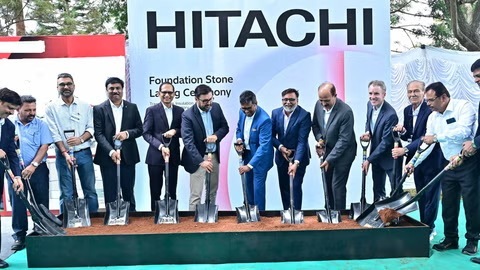
Hitachi Energy India (formerly ABB Power Products & Systems) was spun into existence in 2019. At that time, nobody cared. It was a legacy engineering business with transformer factories and grid automation gear. Boring capital goods. Then — in December 2022, Hitachi Ltd (the 115-year-old Japanese conglomerate with 270,000 employees) acquired 100% ownership. Suddenly, the “ABB hand-me-down” became a Hitachi imperial asset.
Fast-forward to Q3 FY26. India’s power sector is moving money like it’s going out of fashion. Green energy corridors. Railway electrification. Data centre buildouts. Renewable energy auctions doubling every quarter. And Hitachi Energy is positioned exactly where the capex is flowing. Not metaphorically. Literally positioned. They have a ₹29,872 crore order backlog — larger than some Nifty-50 company revenues. The backlog grew 2.5x year-over-year.
Q3 numbers came in hot: ₹2,168 crore revenue (+29.6% YoY), ₹261 crore PAT (after a ₹54 crore hit for Labour Code implementation), and margins of 12.1% in PAT and 15.6% in operational EBITDA. The company has guided for a ₹2,000 crore capex over 4–5 years, just raised ₹2,521 crore via QIP in March 2025, and management is talking about data centres, HVDC, and hybrid vehicles like they own the future.
But the stock? It’s trading at 130.7x P/E. That’s not “premium for quality.” That’s “premium for moonshot outcomes.” Let’s break it down.
Concall Highlight (Feb 2026): Management said order backlog of ₹29,872 crore is “all-time high” and executives explicitly denied any HVDC delays or liquidated damages risk on the Adani Mumbai HVDC project. Translation: we’re not slowing down.
03 — Business Model: Power Grid Engineers Get Boring Rich
We Design, Build & Commission What Keeps The Lights On
Hitachi Energy India operates in four main product clusters: High-Voltage Products (power transformers, reactors, capacitors), Transformers (traction, industrial), Grid Automation (software, sensors, control systems), and Grid Integration Services (EPC-style design-to-commissioning for substations, transmission projects).
Revenue split: 79% from product sales, 16% from execution contracts (EPC), 2% from services, 3% from other sources. Geography: 73% India, 27% rest of world (exports climbing, target 25–30% in coming years). The company operates 19 factories across 8 locations with 2,481 employees. They work with 1,000+ customers — utilities, railways, renewables companies, industrials, and increasingly, data centres.
The business is straightforward: the Indian power sector needs transformers, protection systems, and automation gear. Hitachi Energy is one of three credible large-scale suppliers in India (peers: ABB, Siemens). The moat is manufacturing scale, global tech backing (access to Hitachi Energy Ltd’s R&D in Switzerland), and customer relationships built over decades. New twist: data centres and HVDC became material.
Utilities Mix47%Q3 Orders
Industries Mix43%Q3 Orders
Export Orders29%Bidding Range
Factories19Across 8 States
Q3 Order Composition: The company received ₹2,478 crore in orders. YoY, renewables (wind/solar) and data centres drove growth. Transmission and rail showed YoY softness, attributed to timing and a strong prior-year base. Management emphasized product sales were being deliberately pushed higher as a percentage of the mix — moving away from pure EPC dependency.
💬 Quick question: Would you rather own a power grid transformer company trading at 130x P/E, or a lubricant company at 19x? Drop your reasoning in comments!
04 — Financials Overview
Q3 FY26: The Numbers (And The Noise)
Result type: Quarterly Results | Q3 EPS: ₹58.65 | Annualised EPS (Q3×4): ₹234.6 | TTM EPS: ₹188.74
| Metric (₹ Cr) |
Q3 FY26 Dec 2025 |
Q3 FY25 Dec 2024 |
Q2 FY26 Sep 2025 |
YoY % |
QoQ % |
| Revenue | 2,168 | 1,620 | 1,833 | +29.6% | +18.3% |
| Operating Profit | 338 | 162 | 299 | +108.6% | +13.0% |
| OPM % | 15.6% | 10.1% | 16.3% | +550 bps | -70 bps |
| PBT (before excep.) | 402 | 184 | 353 | +118.4% | +13.9% |
| Exceptional Item | -54 | 0 | 0 | N/A | N/A |
| PAT | 261 | 137 | 264 | +120% | -1.2% |
| EPS (₹) | 58.65 | 32.41 | 59.31 | +80.8% | -1.1% |
Recalculation & Interpretation: TTM EPS is ₹188.74 (latest annual). Current P/E = ₹25,860 ÷ ₹188.74 = 137.0x. Screener shows 130.68x, likely due to rounding. The ₹54 crore exceptional hit (Labour Code implementation) was a one-time event. Core operating profit growth is bonkers: +108.6% YoY on EBITDA and +118.4% on PBT before the labour hit. Annualised Q3 EPS would be ₹234.6 (if sustained), which would put P/E at roughly 110x — still sky-high but less terrifying than 130x. The real question: will this execution trajectory continue? Backlog says yes. Geometry says maybe.
05 — Valuation: The Premium Puzzle
Is ₹25,860 a Bargain or a Bubble?
Join 10,000+ investors who read this every week.