1. At a Glance – The Wadia-Owned Chemical Dinosaur Wakes Up (Sort Of)
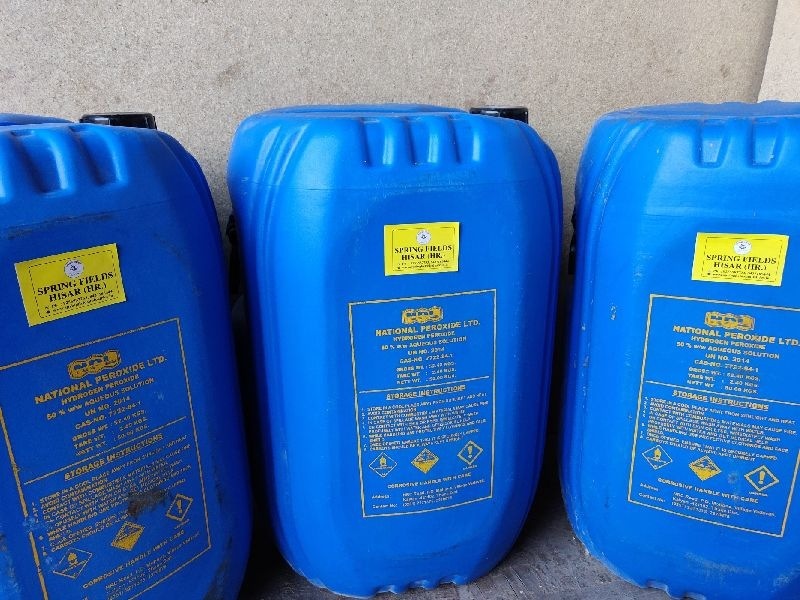
National Peroxide Ltd (NPL) is that one uncle in the chemical industry who has been around since 1954, owns half the market, but still forgets to generate returns. Promoted by the Wadia Group (70.8% holding), this company controls nearly 50% of India’s hydrogen peroxide capacity from a single integrated plant at Kalyan, Maharashtra.
Market cap? A compact ₹244 Cr.
Stock price? ₹424, down ~41% YoY.
Sales (TTM)? ₹278 Cr.
PAT (TTM)? –₹2.82 Cr (yes, still negative).
Debt? Practically pocket change at ₹14 Cr.
ROCE? A majestic 0.20% — competing aggressively with fixed deposits kept under mattresses.
And yet…
Q3 FY26 PAT jumped 257% QoQ and turned positive at ₹1.83 Cr.
So is this a turnaround… or just a quarterly mood swing?
Let’s open the lab report 🧪
2. Introduction – India’s Largest Hydrogen Peroxide Maker, Still Struggling for Oxygen
National Peroxide Ltd should, on paper, be a cash machine.
It dominates a commodity chemical that is used everywhere — textiles, paper, pharma, electronics, water treatment, and even food processing.
It has:
- Scale ✅
- Market share ✅
- Legacy promoter group ✅
- Low debt ✅
And yet…
Over the last 3 years, profits have evaporated faster than hydrogen peroxide left uncapped.
From ₹40 Cr PAT in FY23 → ₹17 Cr in FY24 → loss in FY25 → TTM still negative.
Margins collapsed. ROE vanished. Investors vanished faster.
The irony?
This is not a startup. This is not a cyclical newcomer. This is a 70-year-old monopoly-ish chemical player.
So what went wrong? And more importantly — is something finally changing in FY26?
3. Business Model – WTF Do They Even Do? (Spoiler: One Chemical, Many Uses)
National Peroxide Ltd does not diversify.
It does not experiment.
It does not chase buzzwords.
It makes Hydrogen Peroxide (H₂O₂). Period.
What exactly is hydrogen peroxide?