D-Link India Q3 FY26 — ₹395 Cr Quarterly Sales, 28% ROCE, 5% Dividend Yield… and Yet the Stock Is Down 20%. Market Sleepwalking or Something Else?


1. At a Glance – The Router King Nobody Is Talking About

D-Link India is one of those rare Indian tech companies that quietly prints cash while the market is busy chasing AI buzzwords and loss-making SaaS dreams. As of early Feb 2026, the company sits at a market cap of roughly ₹1,370 Cr, trades around ₹387, and is down ~20% over the last year—despite reporting ₹395 Cr quarterly revenue, ₹26.7 Cr PAT, 28.3% ROCE, and a chunky 5.18% dividend yield.

Let that sink in. This is a debt-light company (Debt ₹11 Cr, D/E 0.02), with a P/E of ~13x, Price to Sales below 1, and Operating Margins close to 9%—in a hardware distribution business where margins are usually allergic to double digits.

Yet the stock behaves like it forgot its own Wi-Fi password. Why? Is the market punishing it for being “boring”? Or is there something beneath the Ethernet cable that investors are missing? Let’s plug in and check.


2. Introduction – When Consistency Becomes a Punishment

In Indian markets, excitement is rewarded, stability is ignored, and boring profitability is sometimes treated like a red flag. D-Link India Ltd falls squarely into that last bucket.

This isn’t a startup. This isn’t a turnaround story. This isn’t a “next big thing.” This is a 25-year-old networking hardware distributor that has survived multiple tech cycles—dial-up, broadband, 3G, 4G, Wi-Fi 6, and now AI-enabled routers—without blowing up shareholder capital.

And yet, despite:

  • Sales CAGR of ~13% over 5 years
  • Profit CAGR of ~25% over 5 years
  • ROE consistently above 20%
  • Zero promoter pledging
  • Promoter holding steady at ~51%

…the stock is treated like yesterday’s LAN cable.

So the real question is not “Is D-Link India a good company?”
The real question is: Why is the market so unimpressed?


3. Business Model – WTF Do They Even Do?

At its core, D-Link India is not a manufacturer. It is a marketing, distribution, and solutions company for networking hardware.

Think of it as
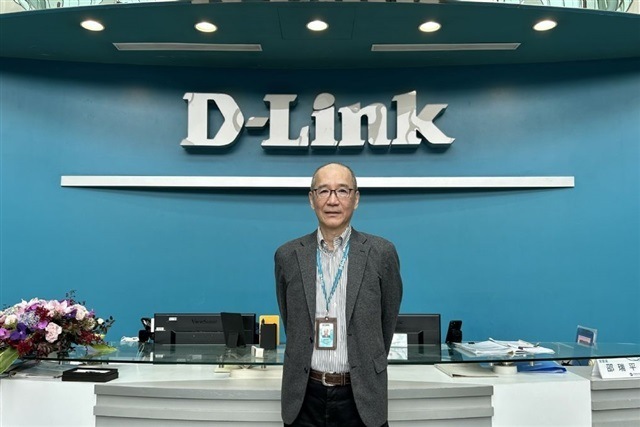
the Flipkart + tech support + brand muscle for routers, switches, access points, surveillance cameras, and structured cabling—minus the discount wars.

What they sell:

  • Networking products (99.2% of FY24 revenue)
    Routers, switches, wireless LAN devices, surveillance systems, structured cabling, enterprise networking gear.
  • Network security software services (0.8%)
    Largely through its wholly owned subsidiary TeamF1 Networks, which develops embedded networking and security software.

Who they sell to:

  • Consumers (home Wi-Fi, mesh routers, extenders)
  • SMEs
  • Enterprises
  • Government & institutional customers

How they sell:

  • 3 national distributors
  • 100+ business distributors
  • 15,000+ resellers and e-tailers
  • Warehouses across Goa, Bengaluru, Mumbai, and Delhi

This is a classic asset-light, working-capital-driven distribution model. Margins aren’t explosive, but scale + brand + reach = steady cash flows.

Now ask yourself: how many Indian homes, offices, colleges, hotels, and SMEs don’t need networking gear? Exactly.


4. Financials Overview – The Numbers Don’t Lie (They Just Bore People)

📊 Quarterly Performance Comparison (Q3 FY26)

MetricLatest Qtr (Dec-25)YoY Qtr (Dec-24)Prev Qtr (Sep-25)YoY %QoQ %
Revenue (₹ Cr)39533137719.3%4.8%
EBITDA (₹ Cr)3533336.1%6.1%
PAT (₹ Cr)2726250.7%8.0%
EPS (₹)7.527.467.150.8%5.2%

Annualised EPS (Q3 rule):
Average of Q1–Q3 FY26 EPS × 4 ≈ ₹29–30, which matches reported TTM EPS of ₹29.3. Clean, boring, accurate.

Commentary:
Revenue is growing faster than profits—classic distribution business trait. Margins are stable, not expanding aggressively. This is not a leverage story; this is a consistency story. Are investors allergic

To Read Full 16 Point ArticleBecome a member
Become a member
To Read Full 16 Point ArticleBecome a member

Leave a Comment

error: Content is protected !!
