1. At a Glance
Vakrangee Ltd is that stock which refuses to follow either gravity or logic. At ₹6.63 per share, a market cap of ~₹718 crore, and a three-month return of –24%, it looks like the market has already filed an FIR. And yet, Q3 FY26 just delivered a 201% YoY jump in PAT and ₹13,433 crore of quarterly GTV.
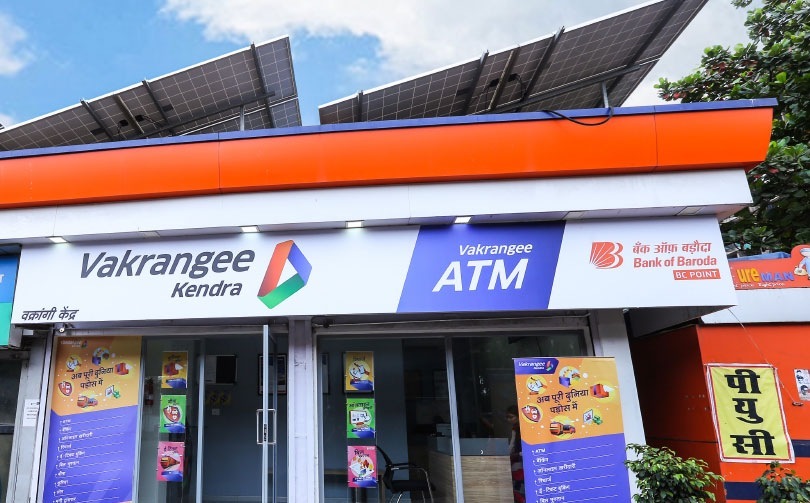
This is a company with 22,986 physical outlets, 83% of them sitting in Tier IV–VI India, pushing banking, ATM, insurance, e-commerce, and whatever else can be sold next to a kirana store. ROE is a sleepy 3.65%, ROCE a modest 5.86%, and P/E a spicy 61×—because nothing says “value” like paying tech-stock multiples for a rural fintech kiosk.
Debt is basically gone (₹4.18 crore), promoters hold 40%, pledges are zero, and cash flows still behave like a rebellious teenager. If curiosity were a stock, this would be it.
2. Introduction
Vakrangee is not a normal company. It is an idea, a network, and occasionally, a case study in investor patience. Born in 1990 as a data digitisation and IT services outfit, it reinvented itself into a last-mile distribution empire long before “last mile” became a VC buzzword.
The pitch is seductive: one standardized store in every PIN code. Banking, ATM, insurance, pensions, shopping, bill payments—India delivered via one counter with CCTV and digital signage. Think of it as Amazon + Bank Mitra + ATM, but with chai breaks.
But history hasn’t been kind. Revenues collapsed post-FY18, ROEs evaporated, and the stock chart looks like a ski slope. Now, after years in the wilderness, Vakrangee claims the turnaround is real. Q3 FY26 numbers certainly look dramatic—but with Vakrangee, numbers always come with footnotes… and popcorn.
3. Business Model – WTF Do They Even Do?
Vakrangee runs a franchisee-based retail infrastructure platform called Vakrangee Kendras. These are exclusive, standardized outlets operated by local entrepreneurs. Vakrangee provides the tech, backend, branding, and partnerships; franchisees do the ground hustle.
Kendra Models