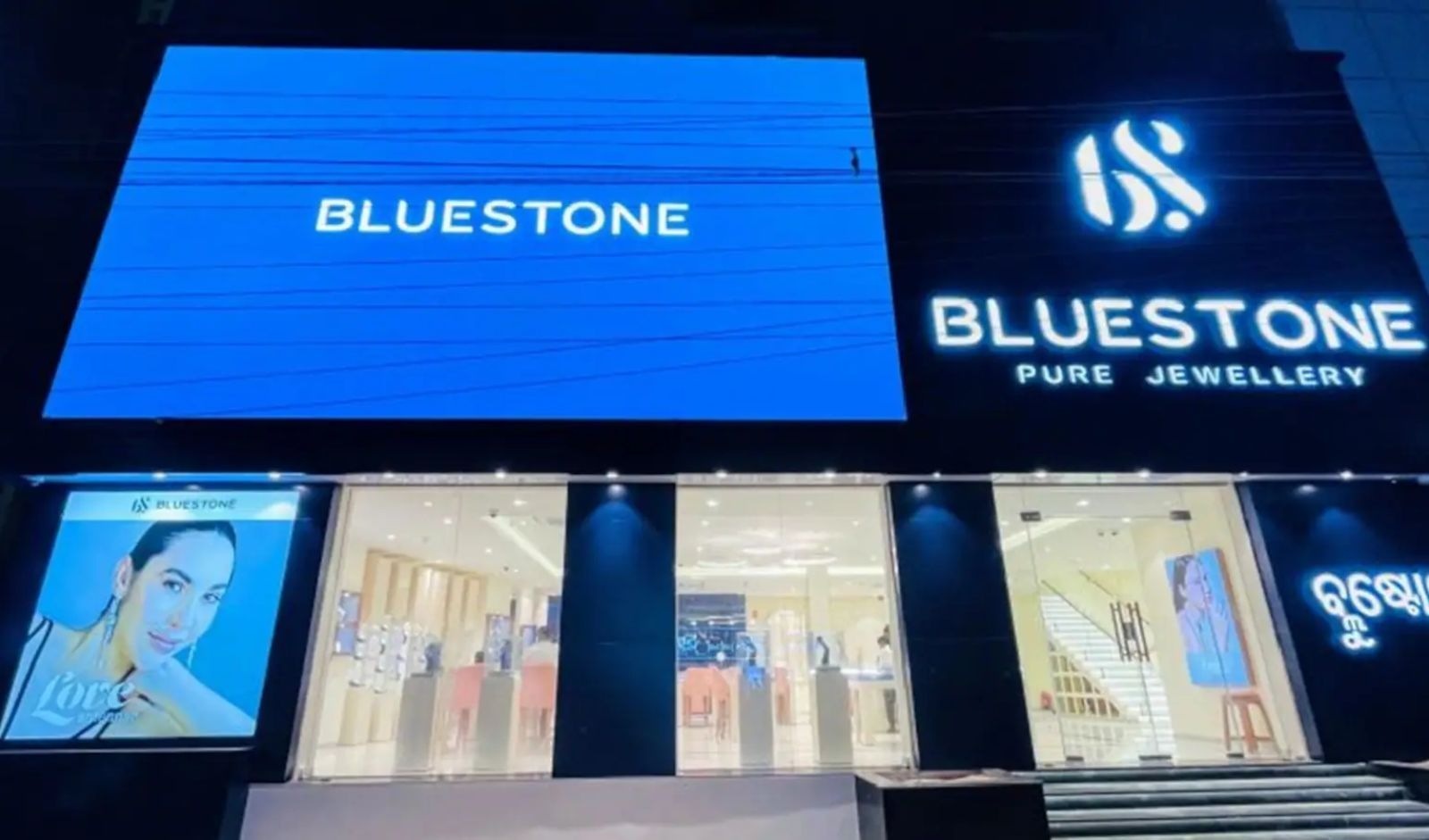
1. At a Glance – Blink and You’ll Miss the Drama
₹7,205 Cr market cap. CMP ₹475. Stock down ~36% in three months. ROE a terrifying -35.8%. Debt-to-equity at 1.12. And yet… Q3 FY26 just dropped a bomb: ₹748 Cr revenue (+27.4% YoY) and ₹71.5 Cr PAT (+366% YoY) – the first profitable quarter in the company’s life.
BlueStone is that startup kid who burned cash like Diwali rockets for a decade, came to the market with a shiny IPO in Aug 2025, and only after listing said, “Guys, btw we can make money too.” Operating margin hit 22% this quarter. EBITDA came in at ₹190.8 Cr. Stores are breaking even in 3 months for 75% of locations. Average mature store clocks ₹7.7 mn per month.
But don’t celebrate yet. Interest coverage is still below 1. Promoters hold just 16.4%, and 37.2% of that is pledged (yes, that’s not a typo). Inventory days have ballooned to 549 days. Cash from operations in FY25 was –₹665 Cr.
So what is BlueStone today?
A growth story? A turnaround? Or a jewellery unicorn with a balance sheet hangover?
Let’s put on our detective hat and start asking uncomfortable questions.
2. Introduction – From “Loss-Making D2C” to “Hey Look, Profit!”
BlueStone entered the public markets in August 2025 with a ₹1,541 Cr IPO, promising scale, omnichannel dominance, and a digital-first jewellery revolution. Investors nodded politely, subscribed, and then watched the stock fall from ₹793 to ₹421 like a gold ring slipping off a soapy finger.
For years, BlueStone did what most VC-backed consumer startups do best:
- Grow revenues fast
- Add stores aggressively
- Burn cash faster than wedding gold melts in resale
From FY20 to FY25, sales grew at a 47% CAGR, touching ₹1,770 Cr in FY25 and ₹2,215 Cr TTM. Sounds sexy. But profits? A consistent horror show. Losses piled up, reserves went from positive to –₹1,837 Cr in FY22 before IPO money revived them.
Then came Q3 FY26. Suddenly, PAT turned positive. Margins exploded. Analysts woke up. Twitter found a new favourite chart.
But seasoned investors know one thing:
One profitable quarter doesn’t make a business. It makes a headline.
So before we start distributing laddoos, let’s understand what BlueStone actually does, how it makes money, and whether this profitability has legs—or is just a one-quarter lehenga.
3. Business Model – WTF Do They Even Do?
At its core, BlueStone is India’s 2nd largest digital-first omnichannel jewellery retailer. Translation:
You browse online, cry at prices, visit a store, cry again, and finally swipe your card.
What makes them different?
- Design-first approach
Over 7,400 active designs, focused heavily on non-wedding, lightweight jewellery. This is not your bua’s 200-gram necklace business. This is daily-wear, office-wear, Instagram-wear jewellery priced mostly between ₹25,000–₹50,000. - Vertically integrated