Gautam Adani’s life story reads like a Bollywood potboiler meets financial thriller – complete with a daring college dropout, astronomical riches, brushes with danger, and a cast of family characters ready to carry his legacy. How else do you describe a man who started sorting diamonds as a teenager, survived both a kidnapping and a terrorist attack, and still shot up to become one of the world’s richest individuals? Adani’s growth has been so unstoppable that even huge setbacks only seem to slow him down momentarily, much like a high-speed train hitting a cow on the tracks – a jolt, then full steam ahead. In this deep dive, we explore Adani’s journey from his modest beginnings to infrastructure kingpin, peek into his personal life (yes, love, family, and all), dissect the bold vision fueling his empire, and speculate with fearless candor on who might inherit the conductor’s cap once this unstoppable Adani Express eventually pulls into the final station. Buckle up; this ride comes with humor, financial wisdom, and bold opinions – exactly what you’d expect from EduInvesting’s lead writer on a mission to make financial news accessible (and fun) for everyone.
Early Life: The Making of a Mogul
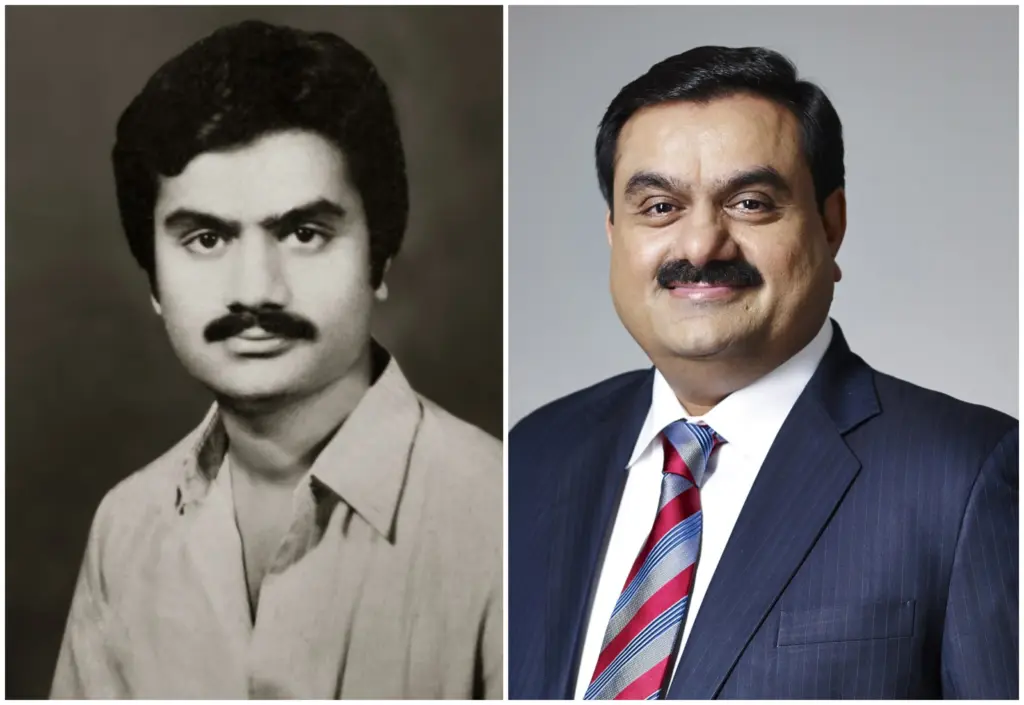
Gautam Shantilal Adani was born on June 24, 1962, into a middle-class Jain family in Ahmedabad, India. One of eight children of Shantilal and Shantaben Adani, young Gautam quickly realized that academics were not his preferred playground. He attended a local school but dropped out at age 16, apparently more interested in real-world business than textbooks. (He would later confess regret at not finishing college – ironic, considering the “school of life” made him a billionaire). Adani’s father was a small textile merchant, but the son had bigger plans than inheriting the modest family biz[5]. In 1978, armed with ambition and the kind of youthful optimism only a teenager can have, Gautam Adani boarded a train to Mumbai with little formal education and big dreams. His first stop? Zaveri Bazaar, the heart of Mumbai’s diamond trade, where he found work as a diamond sorter. Sorting precious gems might not sound glamorous, but for Adani it was a crash course in value: identifying rough stones from polished diamonds – a metaphor, perhaps, for finding opportunities where others don’t.
Adani’s early stint in the diamond market taught him a crucial lesson: business is all about risk-taking and managing uncertainties and turbulence. Here was a teenager with no college degree, elbowing into an industry that rewards sharp eyes and sharper wits. By the early 1980s, he had not only learned the ropes but reportedly even launched his own diamond brokerage and made his first million by age 20. Not bad for a college dropout! This appetite for risk and opportunity would become a hallmark of Adani’s career. As he later put it, “Either you sit on the pile of cash, or you continue to grow.”[10] Clearly, Gautam chose growth.
Building the Empire: From PVC to Ports
Mumbai may have given Adani a start, but it was back home in Gujarat where he laid the foundation of his empire. In 1981, Gautam’s elder brother Mahasukhbhai Adani bought a small plastics factory in Ahmedabad and invited the young go-getter to run it. Gautam jumped at the chance. The venture became his gateway to global trade – he began importing polyvinyl chloride (PVC) granules, essential for manufacturing plastics. This might not sound thrilling, but it was profitably unglamorous. Adani had discovered that controlling a supply chain – sourcing raw materials cheaply and scaling up – was a ticket to the big leagues. By 1985, he was trading in primary polymers (plastics) for India’s small industries. The once-aspiring diamond dealer was now knee-deep in the commodity trade, learning how global markets worked. Little did anyone know, he was just warming up.
1988 was a milestone year: Gautam Adani established Adani Exports (now Adani Enterprises), initially dealing in agricultural and power commodities. He was only 26 – an age when many are figuring out life, Gautam was CEO of his own trading company. The timing was perfect: India’s economy was on the brink of liberalization. When the 1991 economic reforms opened India’s markets, Adani Enterprises surged ahead, expanding into trading anything that could turn a profit – from metals to textiles to food grains. It was as if Adani had a Midas touch for mundane businesses. Where others saw boring commodities, he saw building blocks of an empire.
The 1990s brought Adani his next big break and one of his boldest ventures: ports. In 1994, the government of Gujarat sought private partners to develop the Mundra Port, a remote muddy stretch on the Arabian Sea. While giants might have balked, Adani pounced. He secured the contract in 1995 and set about turning a scrubby coastline into a world-class port. Many thought it was a crazy gamble – what could a trading businessman know about ports? But Adani proved the naysayers wrong. By 1998, Mundra’s first jetty was operational. Fast-forward to today, Mundra Port is India’s largest private port, capable of handling over 210 million tons of cargo a year. It’s a linchpin of Adani’s conglomerate, symbolizing his knack for thinking big and executing bigger. The port business taught Adani the advantage of vertical integration – he now controlled the ships, the storage, and the supply lines. “One of the strengths of Adani is that… we are the cheapest solution provider for end users,” he once explained, crediting control over mines, ships, ports, and logistics for that edge. In other words, why pay middlemen when you can own the whole damn chain?
By the late 90s, Gautam Adani’s ventures spanned trading, infrastructure, and energy. He was diversifying like a man on a mission, following a simple creed: bet on sectors crucial to nation-building. “Infrastructure sector is all about building assets for the country. It is part of nation building,” Adani has said. He wasn’t shy about aligning his business with India’s development priorities – a strategy both patriotic in tone and profitable in practice. Ports led naturally to power plants and energy. In 1996, he founded Adani Power, which over time grew into India’s largest private thermal power producer. By the 2000s, Adani Group was a rising conglomerate, active in coal mining, electricity generation, logistics, and more. He was steadily transforming from a Gujarati businessman into a national industrial titan. And he was about to go global.
Trials by Fire: Danger, Deals, and Determination
No grand saga is complete without some adversity. For Gautam Adani, challenges have come both in boardrooms and outside. Consider 1998: Adani was kidnapped at gunpoint by bandits in a dramatic incident straight out of a crime thriller. He and an associate were abducted and held for ransom, and the ordeal only ended after a hefty payout (according to reports) and their eventual release. The trauma of being held hostage could have shaken anyone, but if it rattled Adani, he never showed it openly. He rarely speaks about the episode. It remains an ominous footnote in his journey – proof that doing business in India can literally be a high-stakes game. Most people would take a long sabbatical after a near-death experience; Adani went back to making deals as if nothing happened. Fearless or just insanely focused? Perhaps both.
Exactly ten years later, in 2008, Adani faced mortal danger again – this time as an incidental victim of terrorism. On 26 November 2008, he was dining at the Taj Mahal Palace Hotel in Mumbai when terrorists struck the city, attacking multiple locations including the hotel. As gunmen stormed the Taj, Adani found himself 15 feet from armed terrorists. He reportedly hid in the hotel’s kitchen and later a washroom, holding his breath (and his phone, presumably) until National Security Guards evacuated the place the next morning. Unharmed but surely changed, Adani emerged alive from one of India’s worst terror attacks. If this were a movie, our protagonist might reevaluate life and step back. But Gautam Adani did the opposite – he stepped on the gas. It’s as if each trial by fire hardened his resolve to grow bigger and faster, as though he figured he was living on bonus time and might as well go for broke.
Speaking of going for broke: Adani’s business style has often been described as high-leverage and high-reward – not unlike dancing on a tightrope with heavy winds blowing. He has never shied away from using debt to fuel expansion. By the 2010s, the Adani Group was raising billions to fund new ventures, from acquiring coal mines in Australia to building renewable energy projects. His risk tolerance is legendary, but so is his ability to manage those risks (or perhaps to convince banks and investors that he can). As he himself noted, the tenacity of an entrepreneur is tested by turbulence. And turbulence he has had aplenty. Yet, time and again, Adani managed to navigate through, often with just-in-time strategic moves or financing that skeptics struggled to understand. This gutsy approach won admirers who saw him as a visionary betting big on India’s future – and critics who warned that his empire was a debt-fueled house of cards.
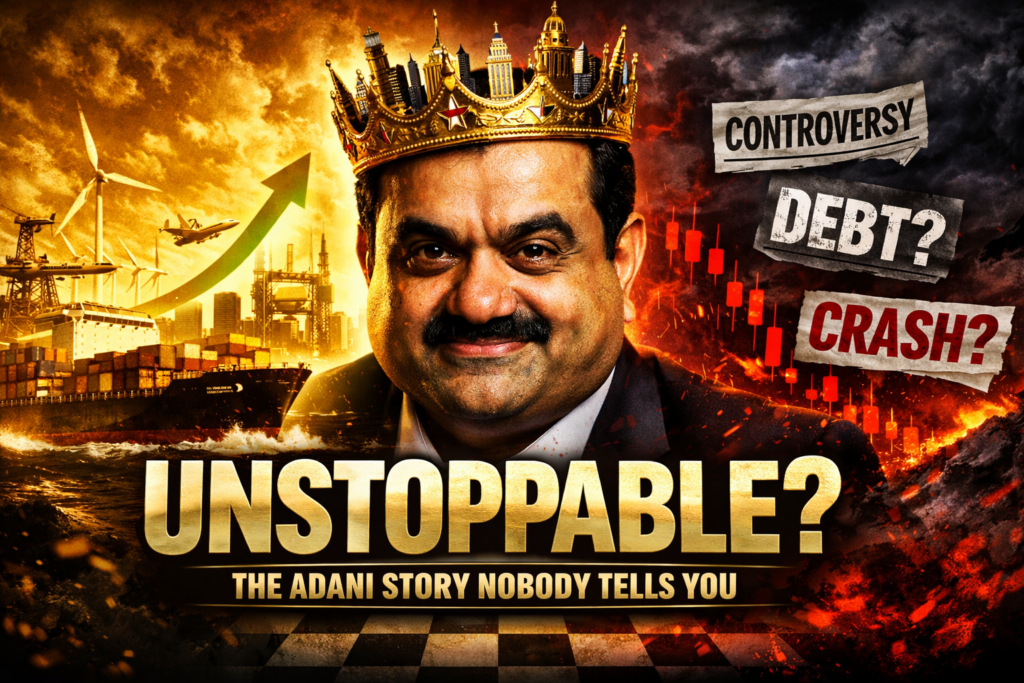
No discussion of Adani’s challenges is complete without mentioning the storm he faced in 2023. After years of seemingly inexorable rise, Gautam Adani was slammed by a U.S.-based short-seller, Hindenburg Research, which accused his conglomerate of stock manipulation and accounting fraud[1]. The allegations (which the Adani Group vehemently denied) triggered a brutal market reaction: Adani Group stocks lost nearly $45 billion in value in days, and Gautam’s personal net worth plunged enough to knock him from the world’s 3rd richest person down to 20-something on the rich list[1]. For a man who had added more wealth than anyone else on the planet in 2022, this was a humbling crash back to earth. The Economist dubbed it “the humbling of Gautam Adani,” and many wondered if the “unstoppable” Adani train had finally hit a wall. But in typical fashion, he treated this setback as another bump on the journey. By 2024, Adani had staged a comeback of sorts – undertaking damage control, prepaying some loans, courting investors from the Middle East, and focusing on cash flow in core businesses. India’s Supreme Court even dismissed calls for a government probe into the affair in early 2024, giving Adani a bit of respite. And soon enough, he was back to business as usual – announcing massive new projects and investments. In fact, by mid-2025, at the group’s annual meeting, Gautam Adani was outlining plans to spend an eye-popping $15–20 billion a year in capital investments over the next five years. If the Hindenburg episode was meant to scare him into slowing down, it failed spectacularly. The message from Adani was clear: Full steam ahead. The Adani Express might have braked briefly, but now it was chugging along with renewed might. As of late 2025, Gautam Adani was still sitting atop a fortune of roughly $64 billion (making him the second-richest in India)– a far cry from the $150+ billion peak, but hardly a picture of defeat. Like a true empire-builder, he seems determined to regain lost ground, perhaps quietly muttering his own version of “I’ll be back.”
Meteoric Rise: Skyrocketing to the Top (of the World)
To understand why Adani’s growth story is often termed “unstoppable,” just look at the numbers – they are as bold as the man’s ambitions. At the start of 2020, Gautam Adani’s net worth was around $10 billion. Fast forward to just two and a half years later, and by August 2022 he had hit $137 billion, briefly becoming the 3rd richest person on the planet. That’s right – in the thick of a global pandemic, a time when most businesses were hunkering down, Adani’s wealth grew nearly 14-fold. He leapfrogged past India’s longtime richest man Mukesh Ambani and even outpaced international titans like Bill Gates and Bernard Arnault for a shining moment. In 2022 alone, Adani added about $61 billion to his fortune – five times more than anyone else in the world that year. It was as if the man had a personal rocket strapped to his back (or perhaps a fleet of rocket-fueled businesses under him).
So, what propelled this explosive growth? A combination of strategic expansion, investor exuberance, and a bit of market magic. The Adani Group, once a modest trading firm, by 2022 comprised seven publicly listed companies spanning ports, power, green energy, gas distribution, mining, food oil (Adani Wilmar), and even media. Global investors were betting big on Adani’s companies, seeing them as proxies for India’s economic boom and infrastructure push. Shares of Adani’s firms went on a tear: some stocks surged over 1,000% in just two years. For instance, Adani Green Energy and Adani Total Gas – both riding on the renewable energy wave – skyrocketed more than tenfold from 2020 to 2022. Adani Enterprises, the flagship, jumped over 1,400% in that period. Keep in mind, the broader stock market rose only ~40% in that timeframe. This was Adani mania, and it turned early believers into millionaires and catapulted Gautam Adani into the stratosphere of wealth.
Bold expansion moves underpinned this meteoric rise. Adani went on an acquisition spree. He bought up ports and airports – by 2022, Adani was India’s largest private operator of both ports and airports simultaneously. Think about that: if you took a flight in India or shipped something by sea, chances were decent an Adani company handled it. He also grabbed India’s largest city gas distributor, massive coal mines (including the controversial Carmichael mine in Australia), and then pivoted hard into green energy, pledging $70 billion to become the world’s biggest renewable energy producer. Skeptics were baffled – coal and solar, gas and green hydrogen, airports and data centers, and now media? Yes, even media. In late 2022, Adani surprised the nation by snapping up a nearly 30% stake in NDTV, a prominent news network, in a stealthy stock deal. The media foray raised eyebrows (and some hackles about editorial independence, given Adani’s perceived closeness to the government), but it underscored a point: Adani wanted to be everywhere. From powering your home, fueling your car, flying you on vacation, to perhaps influencing the news you watch – Adani’s empire was touching every aspect of daily life. It’s little wonder that by 2022, the Hurun Rich List noted Gautam was the only Indian to ever build not one, but five companies each worth over $13 billion. Talk about diversification!
During this ascent, Gautam Adani gained a reputation as a man with a grand vision. He often framed his businesses as aligned with India’s growth. Ports and power for him weren’t just profit centers; they were nation-building. “My investment strategy, which is to focus on sectors that are a national priority for India, hasn’t changed,” Adani said, highlighting how he picks industries like infrastructure, energy, and defense that sync with the country’s needs. This strategic alignment, combined with political savvy, arguably helped his companies win key projects and approvals. Adani became known as someone who could execute mega-projects at breakneck speed – be it constructing a port in record time or scaling solar power capacity. By early 2022, that strategy paid off in spades as global investors like France’s TotalEnergies and Abu Dhabi’s IHC plowed billions into Adani’s ventures, seeking a share of the India growth story. In the process, Adani’s net worth graph looked less like a curve and more like a vertical line shooting upward. If there was ever an “unstoppable growth” narrative on Dalal Street (Mumbai’s Wall Street), Adani embodied it.
Of course, as we noted, 2023’s Hindenburg saga clipped his wings a bit. The stock rallies reversed sharply, reminding everyone that trees don’t grow to the sky. But even after a large correction, Adani’s wealth today remains colossal, and his companies continue to report robust revenues and profits. In FY2025, the Adani Group posted consolidated revenues of ₹2.72 lakh crore (~$33 billion) – a 7% growth over the previous year – and healthy profits to match. Adani Ports handled a record 450 million tons of cargo that year, and Adani’s power business generated over 100 billion units of electricity, more than any other private player in India. In short, the fundamentals of his empire still appear solid. Gautam Adani’s rise might have hit turbulence, but it certainly hasn’t been derailed. The man’s journey from $10 billion to $137 billion, down to $50-60 billion and potentially back up again, is a rollercoaster unlike any other – and he seems to rather enjoy the ride.
Personal Life: Love, Family, and the House of Adani
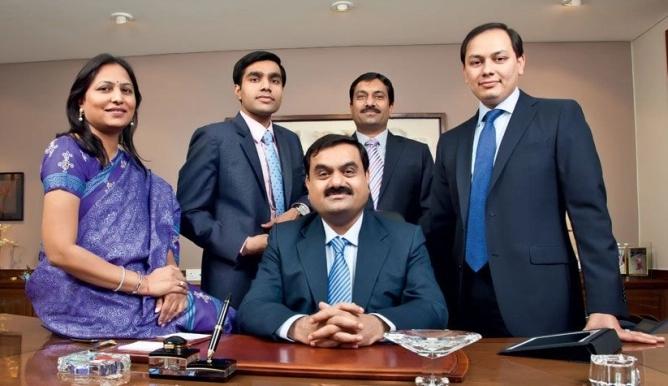
Behind the billionaire business headlines lies a more private Gautam Adani – a family man with a relatively low-key personal life (save for the occasional humorous sound bite). In a world where tycoons flaunt lifestyles, Adani’s home life has been, by most accounts, stable and grounded. He married Priti Vora (now Priti Adani) in 1986, long before the billions and the fame. Priti, a qualified dentist, eventually traded drilling teeth for drilling sense into the Adani Foundation – she chairs the conglomerate’s charitable arm, overseeing education and community initiatives. By all appearances, she has been a steadfast partner through Adani’s tumultuous journey, even if she likely sees less of him than she’d like (more on that in a second). The couple has two sons, Karan Adani (born 1987) and Jeet Adani (born circa 1997), who we’ll talk about in the next section as they are poised to carry the Adani torch forward.
Interestingly, Gautam Adani, known to be media-shy and an introvert by nature, revealed a glimpse of his sense of humor recently. In late 2024, when India’s corporate world was debating work-life balance (after Infosys founder Narayana Murthy suggested young folks should work 70-hour weeks), Adani offered a cheeky take from his own life. He quipped in Hindi, “Aath ghanta family ke saath bitayega tohbiwi bhaag jaayegi,” meaning “If you spend eight hours with your family, your wife will run away”. The tongue-in-cheek remark had both execs and the public chuckling, as it came from a man known for marathon workdays. Adani used the moment to emphasize that work-life balance is personal – for him, enjoying work is key, and one shouldn’t impose their idea of balance on others.





So its all good and righteous with the ADANI ? Isn’t it in an advantageous position as far thte current govt. is concerned !