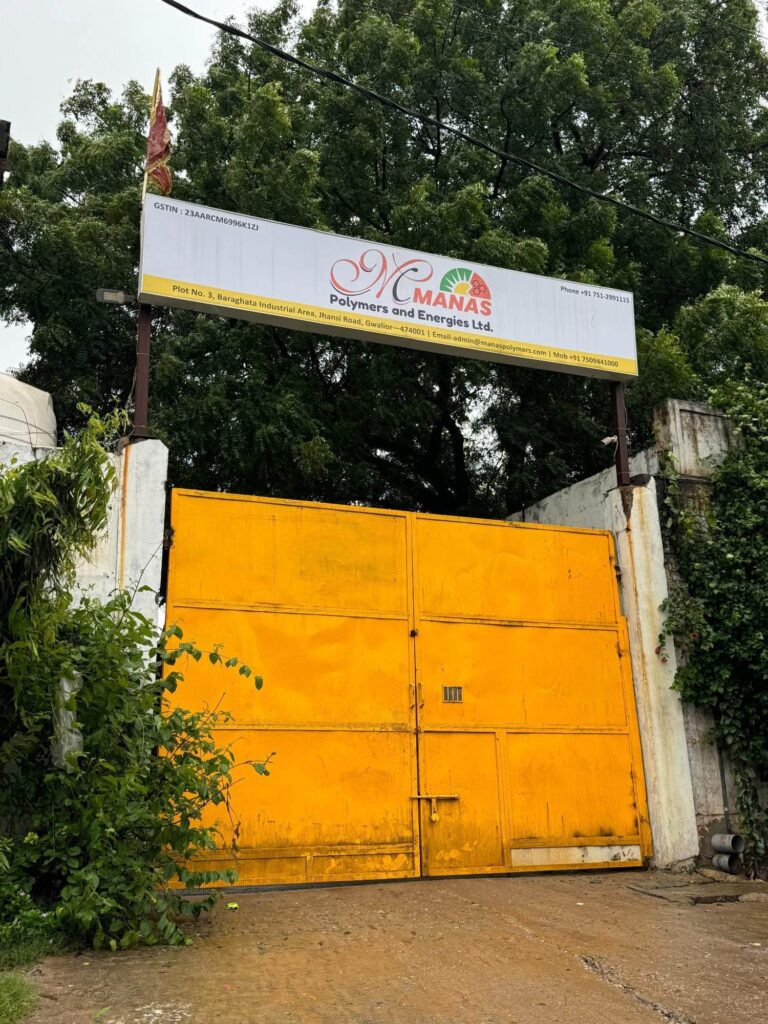
₹70 crore market cap. ₹90 stock price. ROE north of 53%. ROCE chilling at 32.5%. And all this from a company that was literally incorporated in January 2024. If corporate India were a classroom, Manas Polymers & Energies would be that kid who joined mid-year and topped the finals while seniors are still asking for internal marks grace.
Latest H1 FY26 numbers look like they were typed by an overexcited intern: ₹21.5 crore sales, ₹4.44 crore PAT, 31.7% operating margin, EPS of ₹9.11 for half-year. No dividend, no nostalgia, just pure industrial hustle. The stock trades at a P/E of ~16, below industry average, while boasting balance-sheet ratios that scream “gym freak” more than “SME struggler”.
But don’t get carried away yet. Promoter holding dropped sharply post-IPO. Debt exists. Cash flows are moody. And this thing is still a toddler wearing an adult-sized ROE suit. Is it genius, luck, or IPO adrenaline? Let’s open the hood and roast responsibly.
2. Introduction – Born Yesterday, Flexing Today
Manas Polymers & Energies is what happens when manufacturing meets ambition and decides to sprint before learning to jog. Incorporated in January 2024, listed in October 2025, and already reporting numbers that make decade-old SMEs uncomfortable at industry conferences.
The company operates in food-grade PET packaging—preforms, bottles, jars, HDPE containers, caps—the kind of stuff that touches your water bottle before your lips do. Add a dash of solar power generation, and suddenly it sounds like an ESG-friendly industrial smoothie.
Now here’s the fun part: this isn’t some asset-light “we outsource everything and call it strategy” setup. Manas actually manufactures, trades, and generates power. It has factories, machines, kilowatt-hours, and debtor days that dramatically improved faster than most people improve their credit scores.
But early success is dangerous. Young companies often confuse one good half-year with divine destiny. So the job here is not to clap blindly, but to inspect line-by-line, machine-by-machine, rupee-by-rupee. Ready? Helmet on.
3. Business Model – WTF Do They Even Do?
Imagine explaining Manas Polymers to your lazy but smart cousin:
“They make the plastic things that make other plastic things usable.”
That’s it. That’s the business.
Manas manufactures PET preforms (the test-tube looking things that later become bottles), PET bottles, PET jars, HDPE containers, and closure caps. These go into food & beverages, pharma, edible oils, sauces, household products—basically anything liquid that doesn’t want to spill on your shirt.
On top of manufacturing, they trade PET preforms and caps sourced from third parties. Translation: when machines are full or margins make sense, they flip inventory like sensible hustlers.
Then comes the surprise side-quest: renewable energy. The company runs a ~1 MW solar plant in Ujjain and has plans for a 5 MW expansion in Shajapur. Electricity generation contributes just 3% of revenue, but it helps cut power costs and improves ESG optics—investors love sunlight when it hits EBITDA.
Two manufacturing units in Madhya Pradesh (Gwalior + Ujjain). High capacity utilisation across products. No fancy brand story, no emotional marketing. Just plastic, power, and patience.
Simple business? Yes. Commodity? Partially. Execution-heavy? Absolutely. And execution is where most SMEs trip. So far, Manas hasn’t.
4. Financials Overview – The Numbers Are Doing Push-Ups
Result Type Lock: This is HALF-YEARLY RESULTS (H1 FY26). EPS will be annualised accordingly.
Performance Comparison Table (₹ Crores)
Metric
Latest H1 FY26
H1 FY25
H2 FY25
YoY %
QoQ %
Revenue
21.50
4.76
15.78
Massive
36%+
EBITDA
6.81
0.89
4.87
Wild
40%+
PAT
4.44
0.75
3.54
Nuclear
25%+
EPS (₹)
9.11
1.54
7.27
Face-melting
25%+
Annualised EPS (Half-Yearly): ₹9.11 × 2 = ₹18.22
Let’s pause. A company that barely existed last year just posted ₹18+ annualised EPS. Either management knows something, or someone accidentally left the margin tap open.
Operating margins jumped to 31.7% in H1 FY26, up from ~18% last year. Debtor days collapsed from 448 days to 65 days—that alone deserves a separate TED Talk.