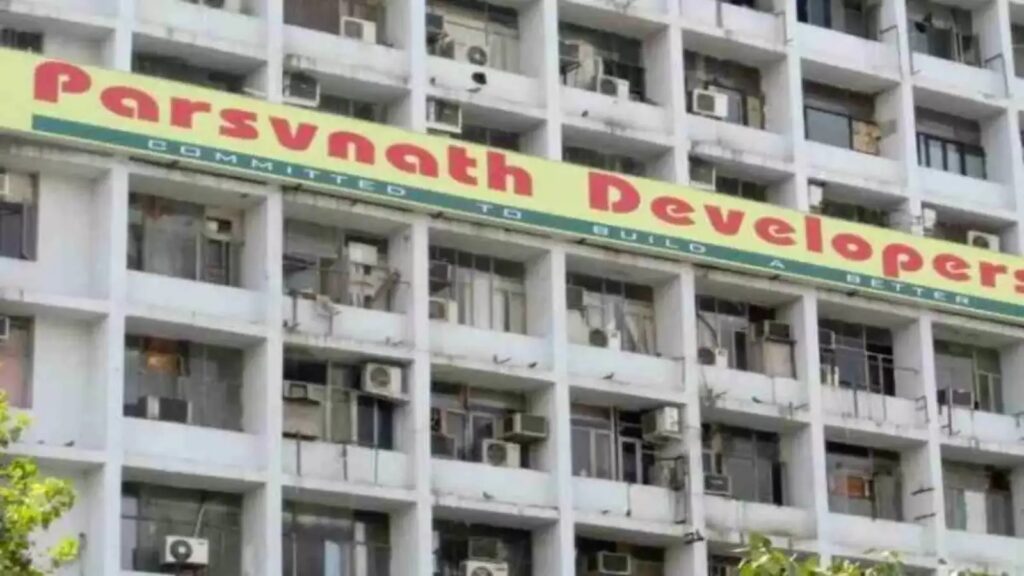
Parsvnath Developers Ltd (PDL) is trading at ₹11.2, down 26.1% in three months and a brutal 53.4% over one year, which is impressive consistency—just unfortunately in the wrong direction. The market cap stands at ₹488 crore, while total debt sits at ₹3,300 crore, which means lenders own more emotional stake in this company than equity shareholders. The latest quarterly sales came in at ₹54 crore, up 14.7% YoY, and yet the quarterly loss widened to ₹154 crore. Yes, revenue went up, losses said “cute” and doubled down anyway. ROCE is -0.98%, operating margin -14.2%, book value negative ₹51.8, and interest coverage -0.07—a ratio that politely suggests even interest expense has stopped believing in recovery. Promoters hold 50.09%, with 31.8% pledged, which is basically the corporate equivalent of pawning family jewellery to pay the electricity bill. This is not a sleepy real estate stock. This is a full-volume Bollywood courtroom drama, with auditors, lenders, arbitrations, fines, and liquidity warnings all shouting at once. Curious yet?
2. Introduction – Welcome to India’s Longest Real Estate Soap Opera
Founded in 1990, Parsvnath Developers was once a poster child of Indian real estate ambition. It expanded across 37 cities in 13 states, delivered 1.78 crore sq ft across 68 projects, and dreamed of townships, malls, hotels, IT parks, and everything in between. Somewhere along that journey, the balance sheet fell into a ditch and never really climbed out.
Fast forward to today, and PDL is a company with continuous losses, eroded net worth, qualified audit opinions, legal disputes, liquidity stress, and CRISIL D rating—which in credit-rating language roughly translates to “don’t lend unless you enjoy adrenaline.”
Yet, the company is still operational. Projects exist. Sales happen. Cash flows appear and disappear like Delhi winters. The question is no longer about growth or dominance. It’s about survival, resolution, and whether the remaining assets can outlast the liabilities. Think of Parsvnath less like a growth story and more like a detective novel where every chapter reveals a new clue about how things went wrong. Are you reading this as an investor, or as a true-crime enthusiast?
3. Business Model – WTF Do They Even Do?
At its core, Parsvnath Developers does real estate development and construction. Residential group housing, commercial complexes, IT parks, integrated townships—if it involved concrete, glass, and long approvals, Parsvnath wanted in.
The company claims ISO 9001, 14001, and OHSAS 18001 certifications—ironically making it more certified than profitable. Revenue historically came from sale of properties (~73%), services (~18%), interest income (~3%), and the occasional provision write-back (~6%), which is accounting’s version of “found money under the sofa.”
The project portfolio still includes 39 ongoing projects spanning 3.59 crore sq ft, heavily concentrated in Delhi NCR—projects like Parsvnath Exotica (Gurugram), La Tropicana (Delhi), Edens (Greater Noida), and Planet (Lucknow). Integrated townships exist on paper and partially on land.
But here’s the catch: real estate is a working-capital monster. You need cash before cash. Parsvnath has the land and half-built dreams—but not enough liquidity. So the business model today looks less like development and more like asset monetisation, dispute resolution, and damage control. Would you rather own land or peace of mind?
4. Financials Overview – Numbers That Need Therapy
Result type lock: The latest official announcement clearly states “Unaudited Financial Results for the Quarter and Half Year Ended September 30, 2025.” EPS treatment locked as QUARTERLY RESULTS → Annualised EPS = latest EPS × 4.
Quarterly Performance Comparison (₹ crore)
Metric
Latest Qtr (Sep’25)
YoY Qtr (Sep’24)
Prev Qtr (Jun’25)
YoY %
QoQ %
Revenue
54
47
63
14.9%
-14.3%
EBITDA
-24
-10
5
NA
NA
PAT
-154
-128
-59
-20.3%
-161%
EPS (₹)
-3.53
-2.94
-1.36
-20.1%
-159%
Annualised EPS = ₹ -14.12.
Commentary: Revenue growth is trying. Profitability is not. EBITDA keeps swinging between “slightly bad” and “call the auditor.” Losses accelerate faster than sales, which is the opposite of operating leverage. If this were a gym workout, Parsvnath is skipping leg day every quarter. Do you trust revenue growth without margin discipline?
5. Valuation Discussion – Fair Value Range (Purely Academic)
Let’s be clear: valuation here is educational, not aspirational.