1. At a Glance – Fast Scooter, Faster Numbers, Faster Hype
Supertech EV Ltd is that new kid on the EV block who entered the party in 2022, borrowed a scooter, slapped a lithium battery on it, raised money from the market, and said “bhaiya, future yahin hai.” With a market capitalisation of roughly ₹92 crore and a current price hovering around ₹74.5, this BSE SME-listed EV manufacturer has already delivered a spicy 54.9% return in the last three months. Not bad for a company that didn’t exist when COVID memes were trending.
Latest half-year numbers show sales of ₹42.55 crore and PAT of ₹3.44 crore. ROCE is a juicy 41.3% and ROE is even more muscular at 46.6%. Debt sits quietly at ₹3.66 crore, looking almost embarrassed to be there. Stock P/E stands around 14, which is hilariously low compared to EV unicorns that burn cash like incense sticks. Capacity utilisation is ~33%, which means factories are mostly chilling, sipping chai, waiting for demand to knock harder.
But here’s the twist: this company operates in one of the most hyped, crowded, and brutally competitive spaces in India — electric mobility. Scooters, rickshaws, loaders, cargo vehicles, you name it. So the real question is: is Supertech EV a sleeper hit, or just another EV startup riding government subsidies and investor optimism? Curious already? Good. Let’s peel this onion.
2. Introduction – EV Hai, Emotion Hai, Execution Dekhna Hai
India’s EV story is like a Bollywood trailer: lots of noise, dramatic promises, government subsidies playing background music, and everyone claiming they’ll be the next Tesla (but ending up as a local auto-rickshaw union leader). Supertech EV Ltd was incorporated in 2022, right when EVs became the hottest buzzword after “AI” and “influencer.”
The company manufactures and sells electric two-wheelers and e-rickshaws. Simple enough. But unlike some flashy EV startups that only sell PowerPoint decks, Supertech actually manufactures and assembles vehicles from its facilities in Bahadurgarh, Haryana. It acquired the business of Supertech Inc. in April 2023, instantly inheriting e-rickshaw manufacturing capabilities. Shortcut? Yes. Smart? Also yes.
Within a very short operating history, the company has scaled revenue from ₹2.38 crore in FY23 to ₹74.94 crore in FY25. That’s not growth — that’s a growth spurt after drinking Complan mixed with Red Bull. Profits followed, PAT hitting ₹6.17 crore in FY25. Most EV companies are still explaining losses using words like “investment phase” and “long-term vision,” while Supertech is already counting cash.
But before we get carried away, remember: EV manufacturing in India is part assembly, part sourcing, part jugaad. Execution matters more than dreams. Distribution, working capital, component sourcing (especially China dependency), and brand stickiness decide who survives. So let’s understand what Supertech actually does.
3. Business Model – WTF Do They Even Do?
Supertech EV Ltd operates a fairly straightforward, no-nonsense EV business model. No moonshots. No flying taxis. No metaverse scooters.
First, products. The company manufactures and assembles:
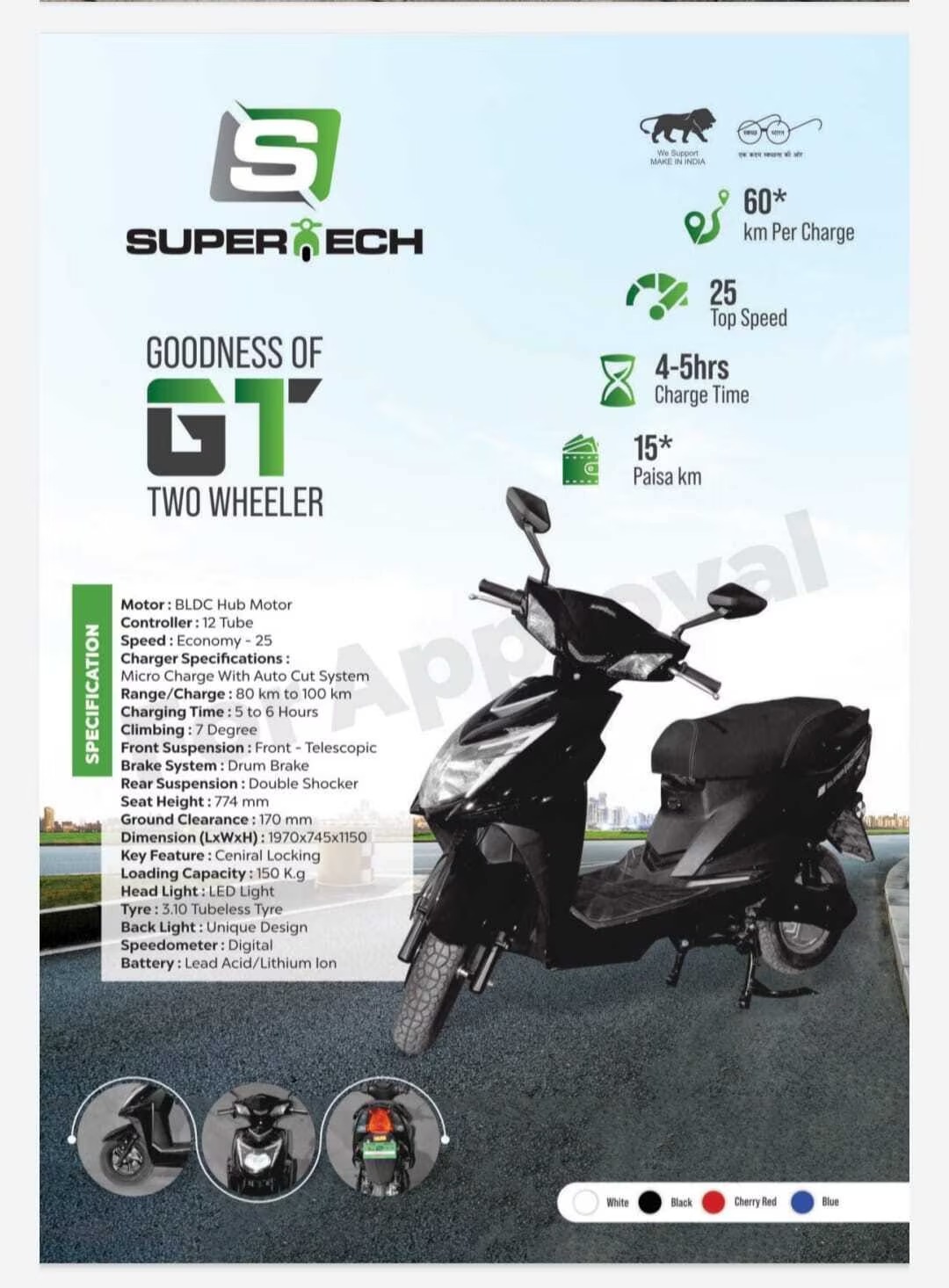
- Electric two-wheelers: Models like S-PRO, V-PRO, U-PRO, Tiger, Power, Active, GT, and Zapster Pro. High-speed and low-speed scooters, aimed at budget-conscious and semi-urban consumers.
- E-rickshaws and EV loaders: Pilot DLX, Passenger Max, Cargo Max, Garbage rickshaws — basically vehicles that actually make money for drivers, not just look cool on Instagram.
Second, manufacturing. Two facilities in Bahadurgarh, Haryana, with a combined installed capacity of ~10,500 units annually. FY25 production was ~3,454 units, translating to ~32.9% capacity utilisation. Translation: plenty of room to grow without spending fresh capex.
Third, sourcing. E-rickshaw components are largely sourced domestically — motors, controllers, brakes, axles, tyres. Two-wheelers? Mostly imported from China in CKD form and assembled locally. This keeps costs low but introduces geopolitical and supply-chain risks. If China sneezes, margins can catch a cold.
Fourth, distribution. Around 445 distributors across 19 states. That’s not small. Revenue