From steel bars to electric cars — Azad India Mobility Ltd (AIML) is the kind of transformation story that makes even Elon Musk raise an eyebrow and say, “Wait, they were what before?”
Incorporated back in 1960 as a steel bar manufacturer, the company has now completely rebranded itself as a player in the electric mobility space. And oh boy, what a ride it has been. With a market cap of ₹764 crore, the stock currently trades at ₹140 per share, boasting a P/E ratio of — brace yourself — 4,495x. Yes, that’s not a typo; that’s a spiritual number, not a valuation metric.
Despite negligible revenue till FY24, the company has recently reported Q2 FY26 consolidated sales of ₹19.81 crore and a PAT of ₹0.23 crore, showing a profit growth of 76.9%. But the underlying numbers tell a fascinating tale of a legacy steel bar maker suddenly deciding to roll electric buses out of its new Mysore Road facility in Bengaluru.
No debt, an equity capital that ballooned from ₹24 crore to ₹54 crore in just 18 months, and a promoter shareholding that looks like a rollercoaster — this is not your typical steel company anymore.
Let’s dig in, because this is “Azad India Mobility”, and its financials are as wild as its name.
2. Introduction
Once upon a time, there was a modest steel company named Indian Bright Steel. It rolled, forged, and polished its way through decades, minding its own business. Then one day in 2024, it woke up, looked around, saw Tesla memes, and said, “Bas! Hum bhi EV banaenge.”
Thus began the metamorphosis into Azad India Mobility Ltd, a name that sounds like a patriotic scooter brand from the future. The company dumped its steel rods and picked up electric motors. The Board approved the name change, the business shift, and even a few preferential allotments that made the balance sheet look like a startup pitch deck on steroids.
In just 12 months, the firm went from “no revenue” to rolling out 12 luxury EV buses with a “strong 24-month order book.” Whether that order book is from actual clients or just overenthusiastic press releases is open for debate, but the ambition is undeniable.
Today, AIML stands as an early-stage EV manufacturer, freshly funded, freshly branded, and freshly scrutinized. The irony? It’s still being compared on Screener with APL Apollo Tubes and Shyam Metalics — because technically, it still has “steel” DNA in its filings.
But does this Azadi come with profitability, or just poetic branding? Time to investigate.
3. Business Model – WTF Do They Even Do?
AIML’s official description now reads like the Indian version of a Silicon Valley pivot story:
“To manufacture, assemble, and trade various electric vehicles including electric buses, cars, rickshaws, carts, vans, cycles, scooters, and other battery-powered vehicles.”
In short — they want to build everything that moves on wheels except maybe roller skates.
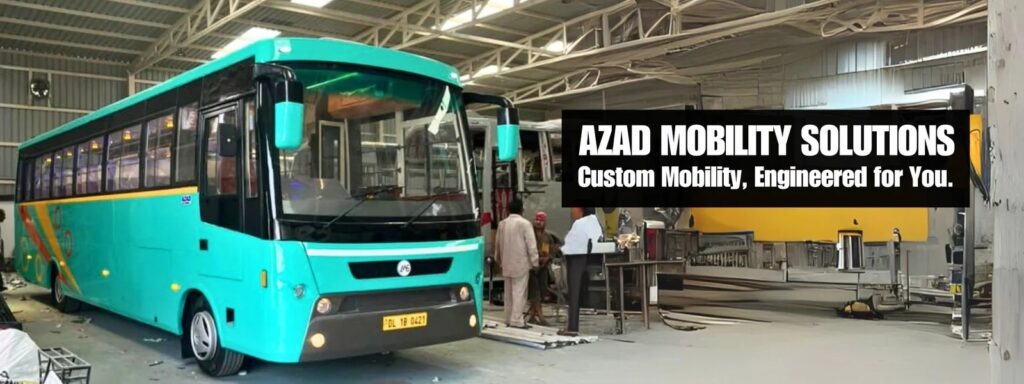
The company’s big bet is electric buses through its majority-owned subsidiary NAE Mobility Private Ltd, in which it now holds 100% stake (after acquiring the remaining 29% in March 2025). These buses are the flagship product, manufactured at their newly leased Mysore Road facility, which they’re renting for ₹25.5 lakh per month.
What’s fascinating is the pace of their pivot:
FY24: No sales. Only interest income on fixed deposits.
FY25: ₹9 crore in sales.
Q2 FY26 (TTM): ₹36.5 crore in sales.
That’s a 4,000%+ jump in operating revenue in barely a year.
However, operating margins are still in the red (-1%), and ROCE stands at –0.28%, meaning the company is spending more energy charging itself than its vehicles.
Essentially, AIML wants to be India’s next EV disruptor — but right now, it’s more of a steel-bodied startup figuring out how to drive.
4. Financials Overview
Let’s line up the latest quarterly fireworks:
Metric (₹ Cr)
Sep 2025 (Latest Qtr)
Sep 2024 (YoY Qtr)
Jun 2025 (Prev Qtr)
YoY %
QoQ %
Revenue
19.81
0.00
7.69
—
157.6%
EBITDA
0.05
-0.39
-0.08
—
Turnaround
PAT
0.23
0.13
0.07
76.9%
228.6%
EPS (₹)
0.04
0.04
0.02
0%
100%
Witty Take: The numbers are small, but at least they’re positive. The company has gone from “other income” to “actual income,” which is spiritual progress in corporate reincarnation. However, with such thin margins, even a tyre burst could knock out quarterly profits.
Annualised EPS = ₹0.04 × 4 = ₹0.16. At a CMP of ₹140, that gives us a P/E of 875x (not the 4,495x shown — which probably includes a decimal panic attack).
5. Valuation Discussion – Fair Value Range Only
Method 1: P/E Valuation Industry P/E (Iron & Steel): ~21x Annualised EPS: ₹0.16 Fair Value Range (EPS × P/E): → ₹3.3 – ₹4.2 per share
Method 2: EV/EBITDA EV = ₹732 Cr, EBITDA (TTM) = ₹0.36 Cr → EV/EBITDA ≈ 2,034x Fair Range assuming industry multiple 15–25x → ₹5–₹8
Method 3: DCF (Desi Common Sense Flow) If AIML manages to ramp sales 5x in 3 years with 8% margin, fair value may justify ₹30–₹40 zone.
Disclaimer: This fair value range is for educational purposes only and is not investment advice.
6. What’s Cooking – News, Triggers, Drama
2025 was basically AIML’s EV Season 1. Here’s the highlight