Scoobee Day Garments (India) Ltd, the Anna-Kitex group’s lesser-known cousin who moonlights as both a garment maker and a roofing sheets seller, is currently stitching together survival threads at ₹78.6 a share. With a market cap of ₹133 crore, this smallcap wonder is balancing a textile business and a metal roofing line like an overworked tailor holding an umbrella in a storm.
The latest quarterly numbers aren’t runway-ready: Sales for Q2FY26 stood at ₹4.84 crore, down 26.8% QoQ, and a net loss of ₹2.31 crore, deepening the financial wrinkles. A P/E ratio of 1,208 screams “fashionably overvalued,” while the Book Value of ₹1.93 suggests the stock is priced like Gucci, delivering like Gokaldas.
Despite its gloomy cash flow chic, Scoobee is attempting a glow-up — a new knitting unit at Karur, a rights issue worth ₹40.5 crore, and even a new shareholder in Kitex Ltd (6.04%) joining the party. But with Debt-to-Equity at 15x and ROCE at 5.55%, one wonders: is this the comeback couture collection or a clearance sale?
2. Introduction
Picture this: a textile company that also sells aluminium roofing sheets. Scoobee Day Garments sounds like that kid in school who signed up for every club — dance, debate, and cricket — but forgot to pass math.
Founded in 1995, Scoobee started as a modest garment maker but, somewhere between stitching uniforms and kidswear, decided, “Let’s cover roofs too!” Today, it operates in two segments — apparel and roofing solutions — because why not be vertically and horizontally integrated, literally?
The company’s financial wardrobe is full of interesting pieces: 87% of revenue still comes from garments, about 10% from roofing, and 3% from “other income” (the corporate equivalent of finding ₹10 in your old jeans). The Anna-Kitex lineage adds brand recall, but the numbers on the ramp are turning heads for the wrong reasons.
Scoobee’s stock has seen better days — down 27% in six months and -15.9% over the year — but the company continues to make moves: land deals, trial runs for new knitting units, and export ambitions. The big question remains — will this fashion-meets-fabric experiment ever walk the profitability ramp confidently again?
3. Business Model – WTF Do They Even Do?
Scoobee Day Garments’ business model is like a stitched-together patchwork quilt — functional, colourful, but occasionally frayed at the edges.
On one hand, it’s a garment manufacturer producing readymade clothes for men, women, and kids under “Baby ScooBee” and other labels. It even dabbles in school bags, travel bags, and undergarments — basically everything except financial comfort.
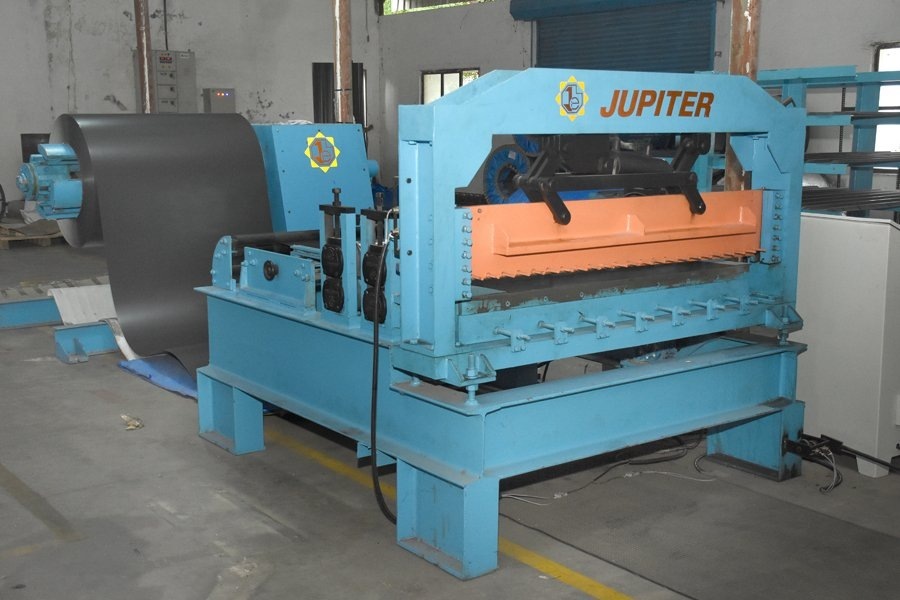
On the other hand, it sells roofing sheets and accessories, offering solutions in aluminium and galvanized iron roofing. Yes, you read that right — one company covers your head and your body, quite literally.
Facilities include:
A textile unit at Karur, Tamil Nadu, spread over 32 acres with 6 lakh sq. ft of built-up space and 3.5 lakh sq. ft of production area.
A roofing unit in Palakkad, Kerala, with a 7,500 TPA capacity.
And now, a brand-new knitting unit at Karur, churning out 3.2 tons of fabric daily.
Revenue-wise, garments dominate the picture, while roofing remains the side hustle. The company has also started dipping its toes in exports — with its first export invoice in FY22 worth ₹35 lakh — and aims to scale that segment.
But diversification is both its charm and curse. Scoobee is running two businesses that share almost no synergy except for the word “fabrication.”
4. Financials Overview
Quarterly Financials (₹ crore)
Metric
Q2 FY26 (Sep 2025)
Q2 FY25 (Sep 2024)
Q1 FY26 (Jun 2025)
YoY %
QoQ %
Revenue
4.84
6.61
15.54
-26.8%
-68.8%
EBITDA
-2.11
-0.26
2.22
—
—
PAT
-2.31
0.14
0.87
—
—
EPS (₹)
-1.28
0.08
0.48
—
—
Let’s be real — these numbers are uglier than an unfinished hemline. Revenue shrunk almost 69% QoQ, while profits fell off the catwalk into negative territory. Annualising that EPS (-1.28 × 4 = -₹5.12) gives us a clear picture: Scoobee is losing fabric faster than it can stitch.
Even at a tiny ₹52 crore annual revenue, Scoobee’s P/E of 1,208 and EV/EBITDA of 34x make it a poster child for “valuation mismatch.”
5. Valuation Discussion – Fair Value Range (Educational Only)
Let’s crunch the numbers, just for fun:
Method 1: P/E Method
Industry average P/E: ~28
Scoobee’s EPS (TTM): ₹0.06
Fair Value Range = 0.06 × (25–30) = ₹1.5 – ₹1.8 per share
Method 2: EV/EBITDA
EV: ₹185 Cr
EBITDA (TTM): ₹5.4 Cr
EV/EBITDA = ~34x (already!) Even assuming a fair 12–18x multiple, fair EV = ₹65–₹95 Cr → Fair Price = ₹27–₹40 per share
Method 3: DCF (simplified) If we assume ₹4 Cr free cash flow growing 5% p.a., discounted at 12%, fair value = ₹45–₹50
🎯 Educational Fair Value Range: ₹27 – ₹50 per share
Disclaimer: This range is for educational purposes only and not investment advice.
6. What’s Cooking – News, Triggers, Drama
2025 was eventful for Scoobee. Between rights issues, new units, and a surprise investor, the company’s corporate diary looked like a soap opera.
Rights Issue 2025: Scoobee raised ₹40.5 crore through a rights issue (45 lakh shares @ ₹90). Paid-up capital increased to ₹16.92 crore. The funds are presumably for working capital and debt repayment, though management didn’t clarify if they’re knitting fabric or patching financial holes.
Kitex Ltd Acquires 6.04% Stake: Big brother Kitex swooped in like a Bollywood cameo. Now Scoobee’s shareholder list reads like