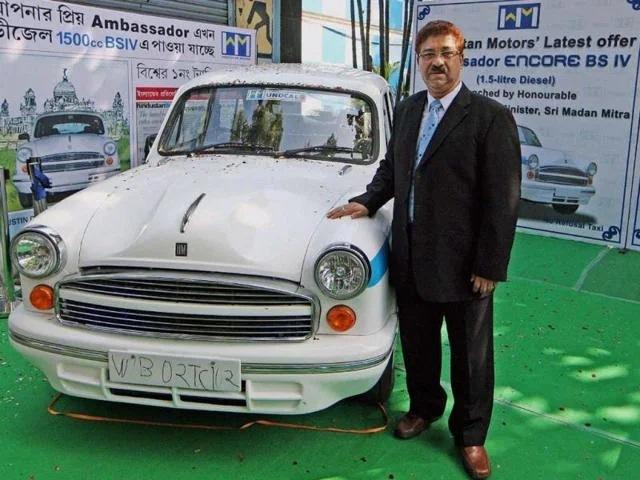
Hindustan Motors Ltd H1 FY26 – The Zombie Car Company That Refuses to Die, Still Shifting Gears in Courtrooms Instead of Roads
1. At a Glance
Ladies and gentlemen, presenting India’s most nostalgic automobile ghost—Hindustan Motors Ltd, the ex-maker of the iconic Ambassador, the car that once ferried netas, babus, and baraatis with equal pride. Fast forward to FY26, the only thing being ferried is paperwork between courtrooms and government offices. The stock currently trades at ₹18.0, with a market cap of ₹376 crore, a P/E ratio of 55.1, and an ROE of 4.02%—yes, it’s making profits on paper mostly through “Other Income”, not through selling cars.
The Uttarpara plant in West Bengal, once India’s Detroit, is now more like a haunted museum of industrial history—officially under government possession since July 2025 after the Supreme Court dismissed HML’s petition. With no vehicle sales, zero meaningful operations, and revenues almost extinct (₹0.59 crore), HML somehow posted a net profit of ₹6.83 crore in FY25, thanks to asset sales and interest income.
So what keeps investors still interested? Probably nostalgia, speculative land value, and the eternal Indian hope that “shaayad kuchh ho jaaye.”
2. Introduction
Let’s start with a fact: Hindustan Motors is older than independent India’s first general elections. Founded in 1948, it was once a badge of national pride. The Ambassador was the face of Indian roads, politicians, and bureaucrats. Every government convoy had at least one. Then came globalization, better cars, and competition—Maruti brought affordability, Hyundai brought reliability, and Hindustan Motors brought… excuses.
By 2014, the company shut down its Uttarpara plant citing low productivity, growing indiscipline, and lack of funds. That’s corporate-speak for “humse nahi ho payega.” Since then, HML has been living off its land bank, scraps, and divine intervention (aka other income).
The financial statements are less about automobiles and more about asset management. The operating margins have been negative for over a decade, and yet the company survives. Why? Because every few years, rumors of “EV tie-ups” or “land monetization” rekindle interest.
But in FY26, things have turned grim. The West Bengal government resumed 395 acres of the Uttarpara factory land, officially ending HML’s long legal fight. The Supreme Court’s July 2025 dismissal sealed the fate of that prized asset.
Yet somehow, the company still posted a H1 FY26 profit of ₹4.2 crore, mostly due to non-operational income. In the world of Indian smallcaps, that’s not performance—it’s persistence.
3. Business Model – WTF Do They Even Do?
At this point, “business model” feels like a euphemism. Once upon a time, Hindustan Motors built cars, commercial vehicles, and automotive components. Now, it’s essentially a real estate story disguised as an automobile company.
Here’s how it goes:
Vehicle Manufacturing? Suspended since 2014.
Component Division (Accu Cast & Accu Forge)? Technically still exists, but output is microscopic.
Revenue Source? 90% “Other Income,” mostly from asset sales, rent, or interest on deposits.
Product Line? Ambassador (RIP), Winner mini-truck (double RIP), and a long-forgotten plan for EVs that never left the PowerPoint slide.
The management keeps scouting for “strategic tie-ups,” but the only major partnerships in recent years involve selling scrap for ₹65.5 crore (FY24) or transferring the Contessa brand to S.G. Corporate Mobility (2022).
In essence, this is a legacy shell that occasionally sells a piece of its past to fund its future.
Question for the readers: If a car company makes no cars, can it still be called a car company—or should we rename it Hindustan Memories Ltd?
4. Financials Overview
Let’s talk numbers, not nostalgia. Hindustan Motors’ Half-Yearly FY26 Results (H1 FY26) are our primary reference lock.
Metric (₹ Cr)
H1 FY26
H1 FY25
H2 FY25
YoY %
HoH %
Revenue
0.00
0.59
0.00
-100%
0%
EBITDA
-0.77
-0.74
-1.91
4%
59%
PAT
4.20
3.34
-0.71
25.7%
690%
EPS (₹)
0.20
0.16
-0.03
25%
767%
Witty Commentary: They say “profit is the reward for taking risk.” In Hindustan Motors’ case, profit is the reward for not taking any risk at all—just sitting on fixed deposits. The company literally made ₹4.2 crore profit without selling a single car. The operating margin? Still a cosmic joke at -735% TTM.
5. Valuation Discussion – Fair Value Range Only
Let’s humor ourselves with some valuation math.
P/E Method: EPS = ₹0.33 Industry PE = 33.7 Fair Value Range = ₹0.33 × (30–60) = ₹9.9 – ₹19.8
EV/EBITDA Method: EV = ₹351 Cr EBITDA = ₹8.5 Cr (approx, from non-operating sources mostly) EV/EBITDA = 41x → way above sanity. Fair EV/EBITDA range for auto sector = 10–20x → fair EV = ₹85–₹170 Cr Implied Fair