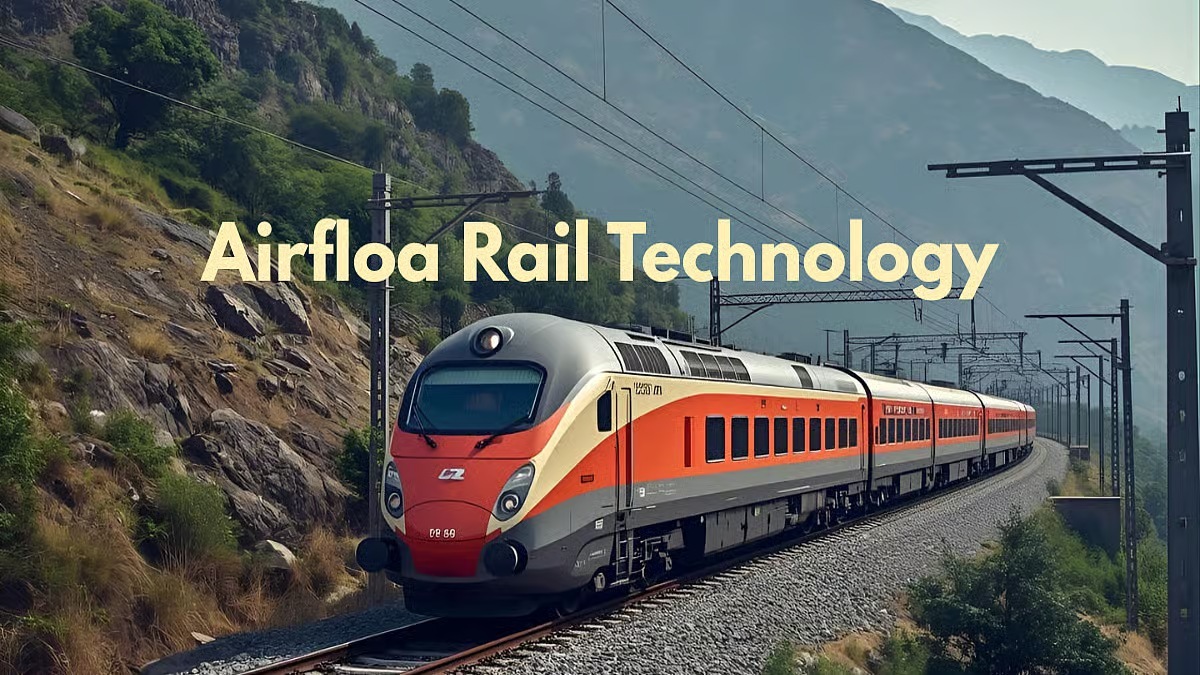
Airfloa Rail Technology Ltd Q2 FY26 – ₹91 Cr Sales, ₹12 Cr PAT, and ₹455 Cr Orderbook: The Railway Coach Whisperer Riding the Vande Bharat Express of Profits
1. At a Glance
Imagine a coach factory so efficient that even the Vande Bharat would blush. That’s Airfloa Rail Technology Ltd (BSE: 544516) — the unsung component supplier powering India’s high-speed dreams. At ₹359 per share, the company sports a market cap of ₹860 crore and a stock P/E of 30.9x, slightly below the industry average of 34x — so not cheap, but at least not absurdly delusional either.
Its latest half-yearly results for H1 FY26 scream momentum — revenue of ₹90.98 crore and PAT of ₹12.09 crore, representing 6.4% QoQ sales growth and 24% QoQ profit growth. With an order book of ₹455 crore, an ROE of 31%, and ROCE of 32%, Airfloa looks like the class topper in an otherwise slow-moving Indian engineering batch.
But of course, there’s always some drama — debt of ₹57 crore, debtors who apparently pay after watching all IPL seasons twice (242 debtor days!), and a company that refuses to pay dividends despite back-to-back profits.
Still, in a market where every second SME stock dreams of becoming the next “defence+railway multibagger,” Airfloa seems to actually be doing the work — not just tweeting about it.
2. Introduction
Every few months, Dalal Street finds a new sector to romanticize. Last year it was drones, then EV charging, and this year? Railways — the spiritual home of every Indian investor’s nostalgia. And right at the junction of ambition and aluminium panels stands Airfloa Rail Technology Ltd, quietly supplying the nose cones, doors, and driver seats of our most glamorous trains.
Born in 1998 — back when coach interiors were still steel-grey and “Make in India” was just a dream — Airfloa has evolved into a full-fledged component integrator for Indian Railways, Metros, and even a few international projects. The company has its fingerprints on everything from Vande Bharat to Agra-Kanpur Metro, RRTS, Vistadome, and export coaches to Sri Lanka and Mozambique.
So, what makes this Tamil Nadu-based SME stand out? Well, for one, its order book is more loaded than an IRCTC tatkal server — ₹455 crore worth as of October 2025. And after its ₹86.5 crore IPO listing in September 2025, it’s been busy stacking new orders faster than ticket collectors shout “Check tickets please!”.
Now, before we board this financial express, let’s find out what Airfloa really makes — and why it’s quietly becoming the darling of India’s new-age rolling stock renaissance.
3. Business Model – WTF Do They Even Do?
If you think “rail component manufacturing” sounds boring, Airfloa’s catalogue could change your mind. These guys are essentially the IKEA of Indian trains, assembling everything from luxurious seats to aerodynamic coach noses — except you can’t just build it wrong and blame the manual.
Their business splits neatly into two high-octane sectors:
Railway Rolling Stock (64.5%) – Everything a train wears or uses, from Train-18 seats, roof panels, sidewalls, doors, and driver cabins, to underframes and toilets (yes, even the humble flush).
Aerospace & Defence (35.5%) – Where their engineering finesse meets fighter jets and simulators. This segment includes hydrogen train components, aviation simulator bodies, and various forged precision parts.
Think of them as the cross between BEML’s craftsmanship and HAL’s precision, wrapped in an SME market cap. They handle design, tooling, assembly, and commissioning, and if a coach rolls out from ICF looking shiny — there’s a good chance Airfloa’s fingerprints are on it.
In FY25, ICF alone contributed 53.5% of revenue, while the top ten customers made up 92.5%. Translation? They’re basically married to Indian Railways — but it’s a solid, loyal marriage, not one of those speculative SME affairs.
Their manufacturing units in Sriperumbudur and Kilkattalai churn out 6,220 units annually with 85% utilization — the industrial equivalent of a cricket player hitting 50 in every match. And their focus areas ahead? Automation, FRP and Aluminium interiors, and backward integration — because apparently, even coach panel suppliers want vertical control now.
Commentary: Revenue growth may not be explosive this half, but profitability sure is. The company maintained 25%+ OPM while trimming interest expenses from ₹5 Cr to ₹4 Cr — a subtle flex for a capex-heavy manufacturer. However, EPS dropped slightly because of expanded equity post-IPO.
Who knew building train interiors could have better margins than building actual trains?
5. Valuation Discussion – Fair Value Range (Educational)
Let’s break down the math before hype takes the train off track.
a) P/E Method: Industry median P/E = 34x EPS (annualised) = ₹10.08 → Fair value