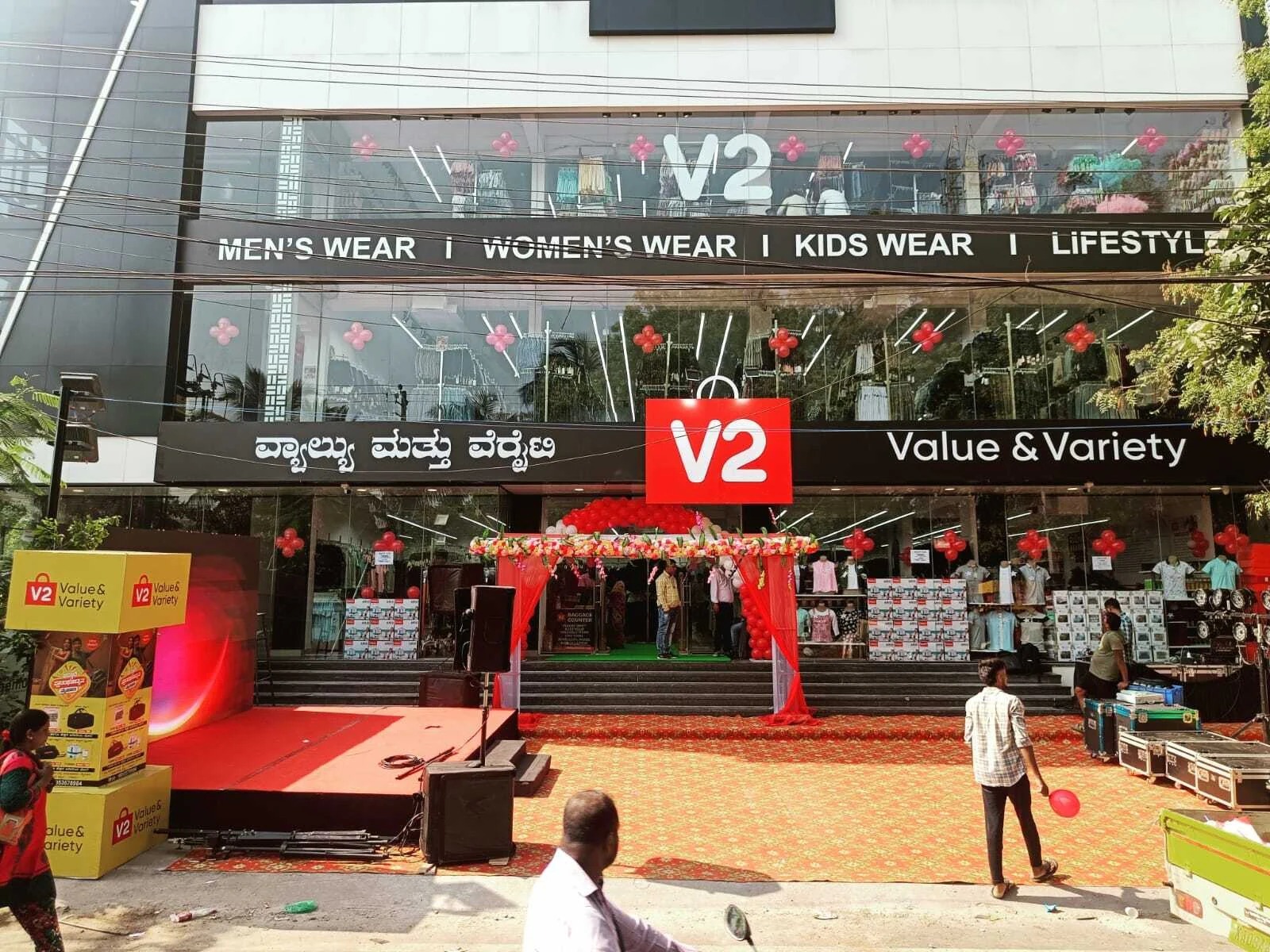
V2 Retail Ltd just turned its Tier-II and Tier-III empire into a profit-making catwalk. In Q2FY26, this budget-fashion warrior clocked ₹708.6 crore in revenue (+86% YoY) and a PAT of ₹17.2 crore, marking a mind-blowing 993% jump. The company’s EBITDA strutted up to ₹85.4 crore, as if retail therapy was suddenly India’s favourite national sport. The stock now trades at ₹2,332, giving it a market cap of ₹8,503 crore and a P/E of 85.4x — because apparently, affordability at the store doesn’t mean affordability on the stock market.
Operating with 189 stores across 18 states and 130 cities, V2 is a small-town superstar with big ambitions — adding 75 new stores in just nine months while quietly dropping two underperformers (RIP small-town outlet dreams). ROE stands at 23.3%, ROCE at 16.9%, and debt has ballooned to ₹1,312 crore, which means they’re dressing India in EMIs. But credit where it’s due — the company raised ₹400 crore via QIP at ₹2,134 per share in November 2025, proving that even mutual funds love a good kurta story.
2. Introduction
Remember “Vishal Megamart”? The giant that catered to the middle-class masses before collapsing under its own weight of discount tags? Well, it reincarnated as V2 Retail Ltd, and this time it’s doing better, leaner, and sassier. Incorporated in 2001, the company reinvented itself post-2011 after selling the Vishal brand, now proudly serving India’s ‘neo-middle class’ — basically, everyone who thinks Zara is aspirational but Flipkart sale is practical.
V2’s transformation isn’t just about cheap shirts and festive kurtas. It’s a turnaround saga of grit, inventory wizardry, and massive expansion into Tier-II and Tier-III cities — because that’s where Bharat really shops. The CEO might have quit in April 2025 (apparently, leading 189 stores isn’t for the faint-hearted), but the company didn’t skip a beat.
What drives this retail resurgence? A mix of smart merchandising, private labels, and strategic pricing that turns volume into victory. And yes, they still don’t pay dividends — because why share profits when you can open 100 more stores next year?
3. Business Model – WTF Do They Even Do?
In short, V2 Retail sells fashion for everyone — men, women, kids, and the occasional fashion-confused uncle. It’s India’s small-town version of Reliance Trends, where affordability meets ambition. Their store network covers 20.27 lakh sq. ft., and each store looks like a colourful battlefield of jeans, kurtas, and “Buy 1 Get 2” chaos.
Product Mix (9MFY25):
Men’s Wear: 39%
Ladies Wear: 27%
Kids Wear: 25%
Lifestyle Products: 9%
Translation? The men are spending the most, and kids are the real profit centers — because Indian parents never say no to one more frock.
The company’s private labels (Ebellia, Herrlich, Glamora, Godspeed, Honey Brats) account for 35% of sales, with a target of hitting 80% by FY26. Think of it as their version of “house brands,” except more stylish than Big Bazaar’s days.
And let’s not forget logistics: they’ve got their own warehouses in Gurgaon, manufacturing units in Noida and Bihar, and weekly restocking vehicles zipping across India — turning fashion supply into a well-oiled machine.
In short: V2 Retail doesn’t just sell apparel. It sells aspiration on a budget.
Commentary: When your revenue doubles but profits grow 10x, you know the pricing department deserves a raise. Q2FY26 was a blockbuster — festive season, better pricing, higher MRP sales (91% of total), and tighter cost control. QoQ decline in profit is more of a breather after Q1’s blowout — even Bollywood sequels need pacing.
5. Valuation Discussion – Fair Value Range
Let’s play valuation bingo.
a) P/E Method:
EPS (TTM): ₹28.8 Industry P/E: 38.4 Current P/E: 85.4