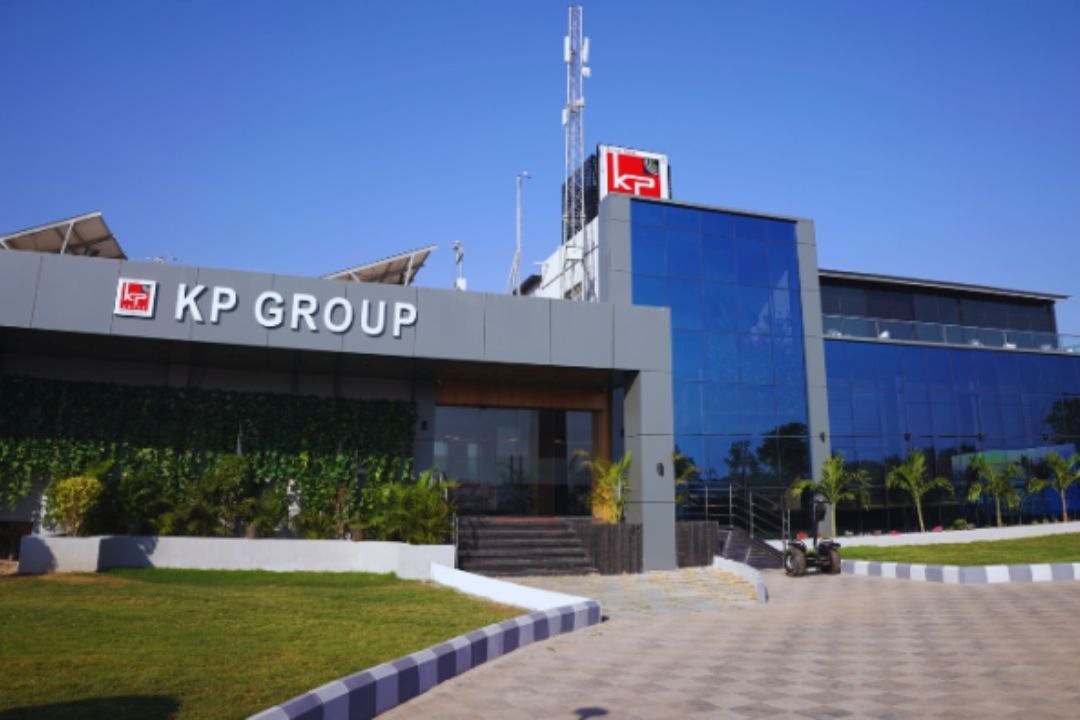
1. At a Glance
Ladies and gentlemen, welcome to the land of Solarism — where sunlight meets spreadsheets, and even the clouds sign MoUs. KPI Green Energy Ltd, the renewable powerhouse of KP Group, just clocked another electrifying quarter with Q2FY26 consolidated revenue of ₹634 crore and PAT of ₹109 crore, up a juicy 76.4% YoY and 54.5% YoY respectively. The stock closed at ₹503 (as of Nov 7, 2025), valuing the company at a respectable ₹9,920 crore market cap, running a P/E of 25x with a Book Value of ₹134/share and ROE of 19.7%.
Sales growth for the last 5 years stands at a sunburn-inducing 96.6% CAGR, while profit growth strutted in at 118% CAGR — not bad for a company that started with just ₹34 crore sales in FY19 and now books ₹2,265 crore.
But before you light your solar panels in celebration, here’s a twist: 45.5% of promoter holdings are pledged. Yes, even the sun needs collateral sometimes.
KPI is now juggling ₹2,533 crore in debt, a decent ROCE of 17.5%, and a pipeline so full it could power half of Gujarat. If Gujarat had an official renewable mascot, it would probably be Dr. Faruk Patel with a hard hat and a solar panel cape.
2. Introduction
Let’s rewind a bit. In 2008, while most people were still buying petrol cars and Nokia phones, KPI Green Energy decided to bet on the sun. Today, they’ve built one of India’s fastest-growing renewable portfolios — part solar, part wind, part pure Gujarati ambition.
The company operates under the Solarism brand, and if you’re wondering what that means — imagine a religion where photons are God, and your electricity bill is the prayer receipt.
KPI Green Energy is no small fry. It has 336+ MW in CPP (Captive Power Producer) projects, 171+ MW in IPP (Independent Power Producer) projects, and a total order book of 2,409 MW+, split neatly between IPP (52%) and CPP (48%).
Their land bank? A casual 3,071 acres, all baking under the Gujarat sun waiting for solar panels. Their target? A cool 10,000 MW by 2030 — because if Adani can dream big, why not KP Group?
But the real glow-up is recent: multiple PPAs, green bonds, and MoUs worth thousands of crores. You’d think they were opening solar outlets instead of power plants.
3. Business Model – WTF Do They Even Do?
Here’s the KPI formula:
Sun + Wind + Gujarati Engineering + Excel Sheet = Profit.
KPI Green Energy operates two main verticals:
1️ Captive Power Producer (CPP) – The bread and butter. It accounts for 88% of H1 FY25 revenue. KPI sets up solar plants for industrial customers who’d rather generate their own clean power than overpay the DISCOMs. Think of it as BYO Electricity for factories.
They do everything — from finding land, getting permits, installing panels, to maintaining the system. It’s a full-stack renewable service. As of H1 FY25, they’ve installed 336+ MW under CPP.
2️ Independent Power Producer (IPP) – The fun cousin who makes passive income. KPI sets up solar and hybrid projects and sells power directly to companies under long-term PPAs. As of H1 FY25, it has 171+ MW of IPP capacity generating 11.1 crore units