1. At a Glance
Ladies and gentlemen, grease your portfolio — Gulf Oil Lubricants India Ltd (GOLIL) just delivered another quarter that smells like petrol and profit. For Q2FY26, the company clocked ₹957 Cr in revenue, up 12.65% YoY, and ₹87 Cr in PAT, growing 3.19% YoY. Not bad for an old-school lubricant firm trying to stay slick in an electric world.
With a market cap of ₹6,235 Cr and ROE at 25.5%, Gulf Oil continues to prove that while vehicles may go electric, engines still run on relationships, distribution, and brand power. The stock trades at ₹1,264, yielding a solid 3.8% dividend, making it the kind of old reliable that still beats new-age unicorns in actual cash returns.
Meanwhile, the board doubled down on EV bets, acquiring another 14.18% stake in Tirex Transmission (now owning 65.18%) for ₹38 Cr. That’s Gulf’s version of saying — “We can lubricate your future, even if it doesn’t have a piston.”
2. Introduction
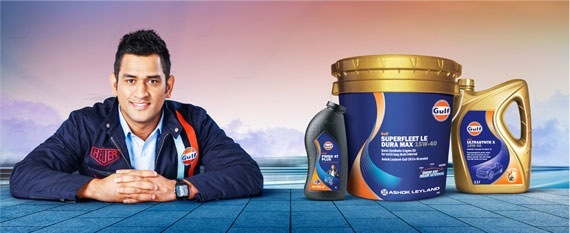
Gulf Oil Lubricants is that guy in every college reunion who still looks fit, has upgraded his wardrobe, and somehow made crypto profits without touching crypto. Founded as a traditional oil lubricant maker, the company has gracefully slipped into modern markets — launching EV fluids, partnering with charging firms, and still throwing money behind M.S. Dhoni, Hardik Pandya, and Smriti Mandhana — the holy trinity of Indian cool endorsements.
It’s among India’s top three private lubricant players, fighting shoulder to shoulder with Castrol and Veedol, while holding a tight 16.7x P/E — cheaper than your neighborhood SUV’s engine service.
And the results? For FY25, the company’s sales hit ₹3,773 Cr and PAT ₹374 Cr, with margins holding firm around 13%. It’s the kind of consistency that’d make even your mutual fund jealous. Gulf’s core B2C-B2B mix (60:40) ensures that whether your machine is a two-wheeler or a massive dumper truck, there’s a Gulf product quietly doing its job — without any Twitter drama.
But can an oil company stay relevant in an EV future? Gulf’s management thinks so. Between EV fluids, Tirex chargers, and AdBlue solutions, they’re positioning themselves as India’s “transition lubricant.” Because if India’s engines stop running, it won’t be due to lack of lube.
3. Business Model – WTF Do They Even Do?
In one sentence: Gulf Oil Lubricants makes and sells all things slippery (legally speaking).
Their empire revolves around three main products:
- Automotive lubricants – the bread and butter, contributing over half of revenue.
- Industrial lubricants and specialty oils – where factories and machines need to stay oiled, literally.
- EV fluids and AdBlue – their ticket to staying relevant when cars stop guzzling diesel.
The product mix for FY24 says it all:
- Diesel Engine Oils: 39%
- Personal Mobility: 20%
- Industrial: 20%
- Others (gear oil, geysers, marine lubes, etc.): 21%
So yes, whether it’s a Maruti, Mahindra, or mining truck, Gulf probably has something to pour inside.
Their manufacturing muscle includes two large facilities — one at Silvassa and another in Chennai, with a 140,000 KL lubricant capacity and a 38,000 KL AdBlue line, operating at a near-perfect 95% capacity utilization. You know they’re serious when their machines are working harder than your