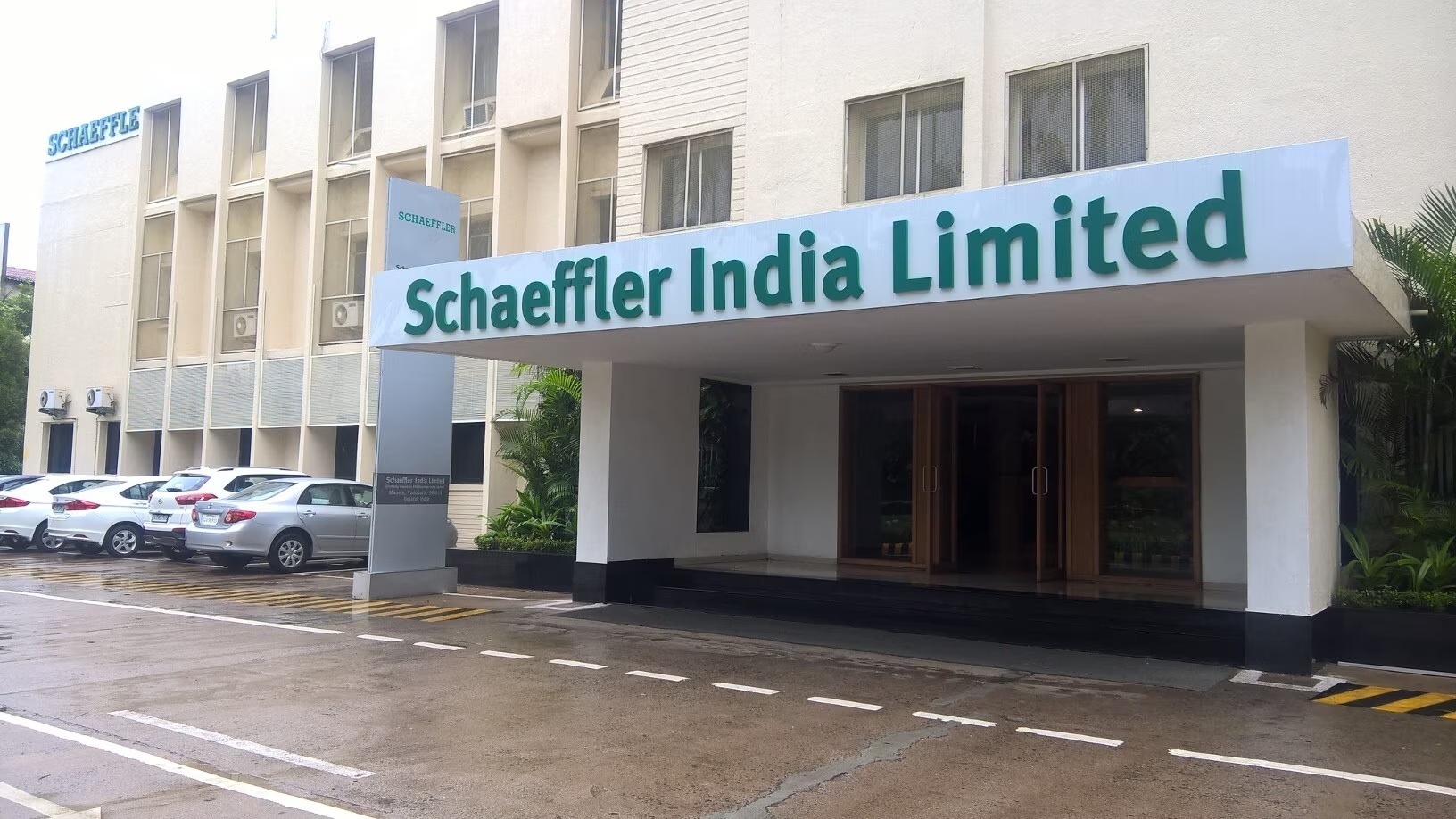
1. At a Glance
Welcome to Schaeffler India Ltd (NSE: SCHAEFFLER) — the company that makes your car run smoother, your industrial machinery whisper quieter, and your portfolio look smarter. The stock trades at ₹4,021, up 17% in the past year, with a market cap of ₹62,903 crore and a P/E of a nose-bleeding 56x — basically, the Ferrari of auto-component valuations.
In Q3FY26 (Sep’25), the company reported revenue of ₹2,360 crore (+13.9% YoY) and PAT of ₹307 crore (+24.1% YoY). Operating margins? A solid 20%, because Schaeffler seems to print precision like Apple prints cash. Debt? Just ₹39 crore. ROCE? 25.7%. ROE? 19.2%.
With four manufacturing plants, two R&D centres, and a German parent with 26,000 patents, Schaeffler India is what happens when “Make in India” gets a PhD in engineering.
And just when the market thought ball bearings couldn’t get sexier — they opened a ₹1,700 crore hybrid-powertrain plant in Tamil Nadu. Move over, Tesla; Vadodara’s got torque.
2. Introduction
There are boring auto-component makers, and then there’s Schaeffler — the company that treats metal like poetry. Founded over 70 years ago, it started by rolling bearings but now rolls out transmission systems for hybrids, smart industrial sensors, and even planetary gear systems for EVs.
While most auto companies still argue whether EVs will kill their engine business, Schaeffler quietly supplies to both sides. The company’s DNA is diversification — serving everything from tractors to Teslas, railways to robots, OEMs to aftermarket garages.
And the best part? Its parent, Schaeffler AG of Germany, isn’t stingy with technology. They’ve dropped everything from AI-driven diagnostics to low-cost IoT sensors (like OPTIME) straight into India’s product line.
So, if you’re wondering why a bearing company trades like a software stock — it’s because Schaeffler isn’t just manufacturing components anymore; it’s engineering the future of motion.
3. Business Model – WTF Do They Even Do?
Let’s decode this precision powerhouse into desi terms:
- Automotive Technologies (41% of revenue)
Makes transmission and engine systems, hybrid drives, clutch systems, and chassis components. Supplies to OEMs like Maruti, Tata, Mahindra, and global giants that don’t even let suppliers sneeze without ISO certification. - Industrial (37%)
The silent workhorse. Supplies bearings for railways, automation, wind energy, and industrial machinery. Includes mechatronics, maintenance tools, and smart sensors. Basically, if it moves and earns money, Schaeffler’s probably inside it. - Automotive Aftermarket (10%)
Think of it as the “spares & repair” division — selling replacement parts and repair kits under LUK, INA,