Kaycee Industries Ltd Q2FY26: From Rotary Switches to EV Chargers — A 1942 Veteran Trying to Rewire Its Future
1. At a Glance
Kaycee Industries Ltd, the 83-year-old veteran of India’s electrical switchboard, is having quite the midlife transformation. Once famous for rotary switches and mechanical counters, the company now wants to plug into EV charging, solar panels, and digital-age circuits — basically, from rotary to recharged.
At ₹1,145/share (as of 29 Oct 2025), Kaycee’s market cap stands at ₹363 crore, a tiny yet feisty smallcap in the electrical equipment space. Despite the mini size, its metrics scream ambition: ROE 22.2%, ROCE 30.6%, and debt-to-equity a negligible 0.11x. But the real voltage drop comes with a P/E of 63.3x and Price-to-Book of 11.6x — yes, investors are paying for future sparks, not past currents.
Revenue for Q2FY26 was ₹14.91 crore (up 11.8% YoY), with PAT at ₹1.5 crore (down 2.6% YoY). Annual revenue now sits at ₹56 crore with ₹5.74 crore net profit, giving a decent net margin of 10.2%. A ₹3.38 crore debt on books means the balance sheet is clean enough to eat off of.
So what’s the story? The “Switch Raja” of the 1940s has been reborn under Salzer Electronics, is betting on EV charging, and is chasing the new India energy boom. The old man of industrial switches might finally be catching the current — literally.
2. Introduction – The Vintage Brand Trying to Go Viral
Imagine a company born during World War II still shipping switches in the age of Tesla. That’s Kaycee Industries for you — a heritage brand that’s managed to stay switched on for eight decades.
Founded in 1942, it was the first Indian manufacturer of rotary switches, the kind your grandfather probably used to operate ceiling fans or industrial motors. Today, it’s a part of Salzer Electronics, a larger electrical conglomerate that owns 71.7% stake and provides it both a legacy and a lifeline.
Kaycee’s business isn’t glamorous — no shiny app or AI chatbots here. It makes the backbone of electrical control: toggle switches, counters, limit switches, connectors, and other gear that keep machines and grids humming quietly in the background. But what’s interesting is how this old-school manufacturer is reinventing itself.
In October 2024, Kaycee acquired 30% in Ultrafast Chargers Pvt Ltd, a Bengaluru-based EV fast-charging company. That’s like your grandfather investing in a startup making hoverboards — bold, unexpected, and probably sponsored by his grandkids.
The company’s margins have quietly improved — operating margins are now 15.2%, up from 7–8% five years ago. ROCE and ROE have doubled in the same period. The company has shown 31% CAGR in profits over 5 years and 22% sales CAGR over 3 years.
Yet, the stock is down 68% over the last year, after a 4:1 bonus issue in FY25 and a sharp valuation reset. From its ₹3,400 peak, it has fallen to nearly ₹1,100 — proving that even strong current can trip the circuit if the fuse (valuation) overheats.
3. Business Model – WTF Do They Even Do?
Kaycee operates in two segments — one grounded in hardware, another in trade margins. Both small, both strategic.
1) Manufacturing (72% of Q2FY25 revenue)
This is Kaycee’s beating heart. It manufactures a range of electrical components:
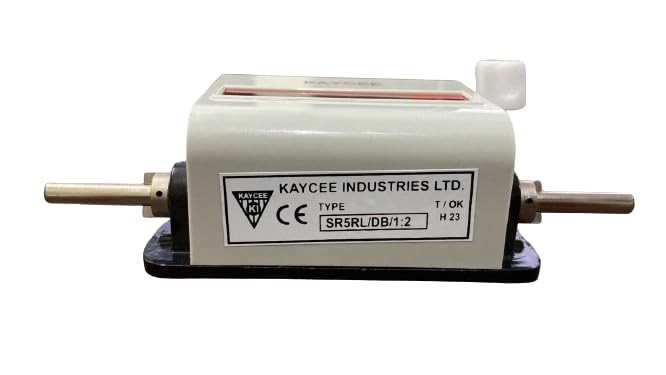
Rotary switches (their OG product), toggle and cam switches
Limit switches and timers for automation
Counters, monitoring devices, auxiliary and selector switches
Industrial connectors and custom control panels
Basically, everything that ensures power doesn’t misbehave once it’s inside your factory.
The manufacturing segment grew 56% between FY22–FY24, and with improved product mix, it now delivers higher margins. The facility at Vapi, Gujarat, has a smelting and assembly capacity of 500 tons per month, enough to electrify an industrial town.
2) Trading (28% of revenue)
Here, Kaycee acts as the friendly distributor for its parent — Salzer Electronics. It trades cables, wiring accessories, and control devices. It’s low margin (think 5–8%), but provides working capital rotation and customer stickiness.
Together, the company has served 10,000+ customers across 20+ states, including Indian Railways, BHEL, IOCL, ABB, Siemens, Tata, and the Indian Navy. Basically, everyone from oil rigs to submarines buys something from Kaycee.
So yes, the product might be small — but the network is vast, and the relationships, older than most analysts covering it.
4. Financials Overview
Metric
Latest Qtr (Sep’25)
YoY Qtr (Sep’24)
Prev Qtr (Jun’25)
YoY %
QoQ %
Revenue
14.91
13.34
13.90
11.8%
7.3%
EBITDA
2.22
2.15
2.03
3.3%
9.4%
PAT
1.50
1.54
1.40
-2.6%
7.1%
EPS (₹)
4.73
4.85
4.41
-2.5%
7.3%
Margins have stayed steady at ~15%, and the minor PAT dip YoY is due to bonus dilution and rising input costs. QoQ improvement shows operations stabilizing post bonus and acquisition phase.
5. Valuation Discussion – Fair Value Range Only
Let’s plug in some logic to this high-voltage valuation.
✅ Fair Value Range (Educational Purpose Only): ₹500 – ₹700/share
(Disclaimer: For educational use. No investment advice, no fuse-blowing.)
6. What’s Cooking – News, Triggers, Drama
The last 12 months have been spicy for a company that usually just made switches.
⚡ Acquisition Alert: In Oct 2024, Kaycee bought 30% in Ultrafast Chargers Pvt Ltd for ₹8 crore — its entry into EV DC fast-charging infrastructure. This could electrify growth (literally), as India targets 30% EV penetration by 2030.
🌞 Solar Push: Installed a rooftop solar plant at its Vapi facility in FY24 to cut power costs — the PSU-style “green energy for green margins.”
🏭 Bonus Bonanza: Announced 4:1 bonus shares in FY25 — because what’s better than paying dividends? Giving people more paper to hold.
🧍♂️ New Management: Appointed Raman Krishnamoorthy as Whole-Time Director in Aug 2025, hinting at professionalization.
💡 New Factory: Commercial production began at a new factory in July 2023, increasing capacity and efficiency.
💰 Steady Dividends: Paid ₹2/share in FY25 and maintained a consistent payout