1. At a Glance
The Indian auto world just witnessed a garage takeover worthy of a Netflix docuseries.
Mahindra & Mahindra rolled up to Punjab, said “Arigato,” and bought 58.96% of SML Isuzu Ltd, turning the once-Japanese JV into its newest desi subsidiary, soon to be renamed SML Mahindra Ltd.
For the quarter ended September 2025, SML reported revenue ₹555 crore and PAT ₹21 crore, basically holding steady during an ownership handover. Annual revenue stands at ₹2,504 crore, profit ₹141 crore, and ROE a jaw-dropping 36.4% — higher than Ashok Leyland’s truck suspension.
Market cap ₹4,275 crore. P/E 30×. EV/EBITDA 17×. Debt just ₹254 crore (D/E 0.57×).
This is the story of how a small, honest LCV-MCV maker from Nawanshahr — once under Japanese tutelage — got adopted by India’s SUV king.
2. Introduction
Let’s rewind to 1983: a collaboration between Punjab Tractors and Mazda birthed Swaraj Vehicles Ltd. Fast forward forty years, and we’ve got the corporate version of a family drama — Mazda exited, Isuzu and Sumitomo took over, then both waved sayonara in 2025.
Enter Mahindra & Mahindra, which bought nearly 59% at ₹1,554.60 per share, instantly valuing the company at over ₹4,000 crore. The new parent has promised a stronger product pipeline, electric ambitions, and a much-needed sales revamp.
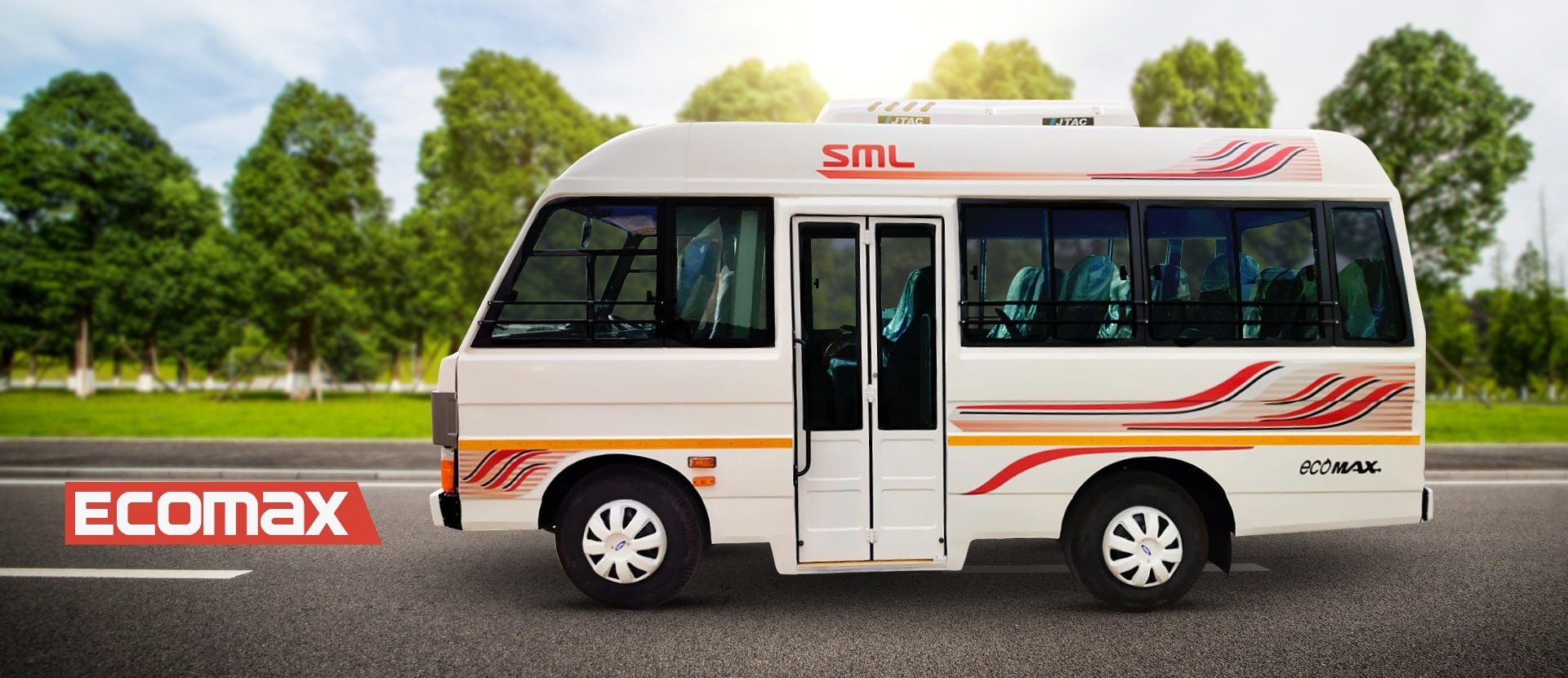
SML Isuzu isn’t your flashy automotive brand; it’s that dependable school bus idling outside every convent in North India. Buses contribute 67% of revenue, cargo trucks about 26%, and spare parts 6%. In FY25, it earned ₹141 crore on ₹2,500 crore revenue — not bad for a company that once made loss-making mini-buses for a living.
So yes, the Japanese left quietly. But they left behind a company now running like a diesel engine at full torque.
3. Business Model — WTF Do They Even Do?
SML Isuzu lives and breathes commercial vehicles — the small and mid-size trucks and buses that carry students, cement, and chaos across Indian highways.
- Buses (67%) — school, staff, intercity, and deluxe variants, all built at Nawanshahr, Punjab.