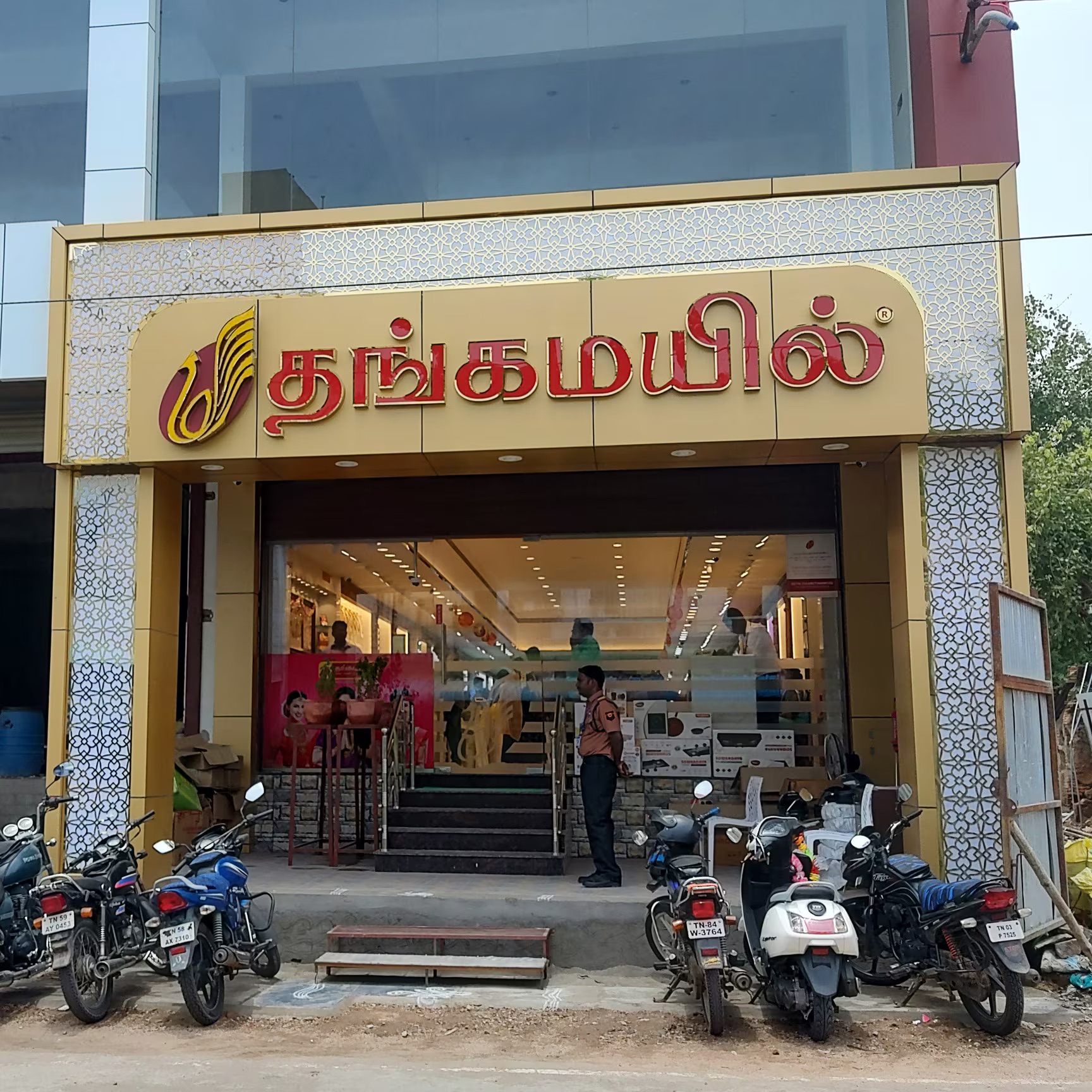
1. At a Glance
Welcome to the only jewellery company that runs like your neighborhood auditor’s worst nightmare — inventory full of shiny stones, zero geographical diversification, and expansion dreams that scream “Anna, Chennai la oru flagship store pottu poda vendiyadhu da!”
Thangamayil Jewellery Ltd (TMJL) sits at a market cap of ₹6,267 crore with a current price of ₹2,016. In the last 3 months, it’s up 8.3%, but over 1 year it’s down 14% (gold didn’t lose shine, but investors lost patience). With a stock P/E of 58x and a ROE of ~15%, this is not a stock — it’s basically a gold chain with an EMI plan.
Operating margin? 4%. PAT margin? 2.4%. For context: one badly managed wedding in Tamil Nadu has higher margins than this.
2. Introduction
If Titan is the suave Bengaluru CEO with a global vision, Thangamayil is the local Madurai uncle who knows everyone’s kudumbam and sells you gold bangles on credit, backed by blessings and a prayer.
The company runs 58 stores, all within Tamil Nadu — a state that alone hogs 40% of India’s gold appetite. Instead of conquering India, TMJL decided to double down on Madurai & nearby towns. Forget “pan-India expansion,” these guys are like that IT employee who buys a flat just one street away from his office.
On paper, it looks clean: strong sales growth (28% YoY in FY25), hedging policies at 89%, and an efficient manufacturing setup. But peel the layers like an auditor cross-examining bank vouchers, and you find quirks: rights issues every year like your cousin asking for dowry installments, margins thinner than hospital sambar, and inventory cycles that would make even pawn brokers nervous.
Question for you: would you trust a jewellery company that reports 1.81 Cr per employee in sales but still makes less than ₹35 EPS annually?
3. Business Model – WTF Do They Even Do?
Simple answer: they sell shiny things to emotional Tamilians.
Product lines:
- Gold jewellery (75% of revenue, the bread, butter, and biryani).
- Silver, diamond, platinum (the cousins nobody invites to family functions but still show up).
- Gift items & MRPs (because someone’s nephew wanted a side hustle).
They also run four manufacturing units with in-house goldsmiths. Utilization rate ~75% in FY24, which sounds efficient — but in jewellery, in-house production = less outsourcing cost, more control over designs. Translation: they make money whether it’s a wedding chain or a baby’s “thali.”
Their USP? Regional dominance. Think of it like A2B in Tamil Nadu food — if you’re from TN, you trust it