1. At a Glance
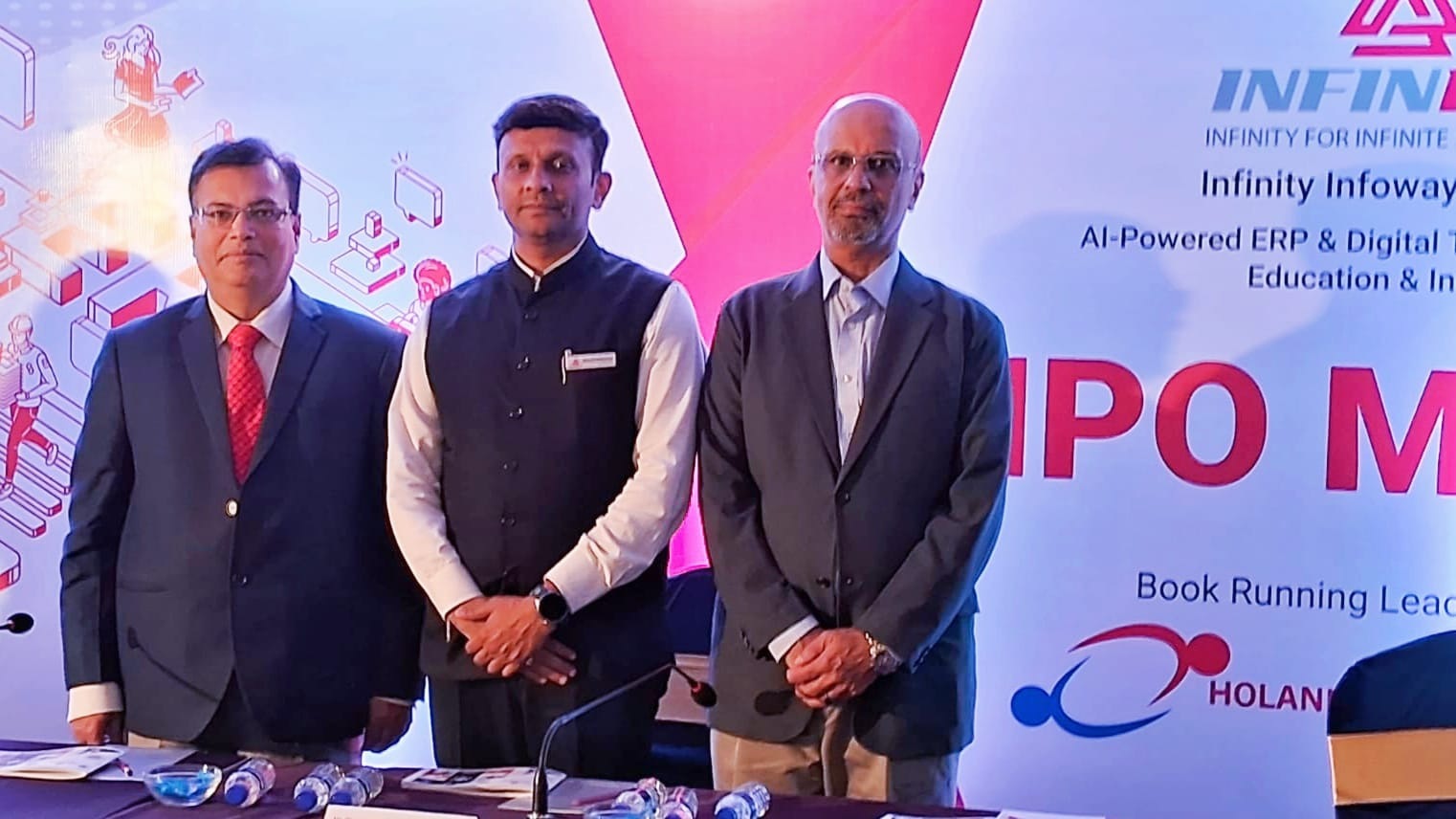
Rajkot-based Infinity Infoway Ltd is rolling into Dalal Street with a ₹24.42 crore SME IPO on BSE SME, opening Sep 30 – Oct 3, 2025. Price band? ₹147–155. Lot size? 800 shares. Minimum retail ticket? A heart-burning ₹2.48 lakh – because clearly, stock market entry is the new “premium club membership.”
Current market cap at the upper end sits around ₹82.3 crore, with eye-popping FY25 margins – EBITDA 46.7% and PAT 31.7%. On a post-issue basis, EPS shrinks from ₹11.22 to ₹7.89, pushing P/E up to 19.6x. And because no SME IPO is complete without anchors, Infinity Infoway has roped in ₹6.32 crore from them with lock-ins stretching to Jan 2026.
In short: Infinity’s financials look like a SaaS unicorn cosplaying in Rajkot, but the IPO ticket price is desi-Netflix-premium-level. Would you pay ₹2.5 lakh to watch this show?
2. Introduction
Imagine an ERP startup from Rajkot deciding one fine morning – “Bhai, Bangalore startups toh sab IPO kar rahe hai, why not us?” That’s basically the Infinity Infoway storyline. Founded in 2008, the company went from building customized ERP for universities and industries to now selling you the dream of “ZEROTOUCH Device-as-a-Service” – because adding “as-a-Service” makes anything sound like Silicon Valley magic.
Their pitch deck is neat: clients include Nirma University, Saurashtra University, Shivaji University, IISER, Hibond Cement, Davat Beverages, and even “Kich – Steel for Life” (which sounds like a superhero tagline). Add 26 universities running their ERP and 13 industrial deployments – suddenly Rajkot feels like the new Palo Alto.
Financially, Infinity has cracked something rare for SMEs – consistent revenue growth (₹13.48 Cr in FY25 vs ₹10.35 Cr in FY24) with juicy PAT margins north of 30%. And debt? Negligible. Net worth more than doubled in a year. Basically, their balance sheet looks like it drank protein shake while running a marathon.
But here’s the twist – IPO sizing is small at ₹24.4 Cr, retail ticket size is huge, and anchor investors are locked till January. Which means only the brave (or the bored with spare cash) will ride this SaaS rath.
Question for you: do you think Rajkot ka ERP SaaS player can compete with the Infys and SAPs of the world, or is this more of a Tier-2 domination story?
3. Business Model – WTF Do They Even Do?
Infinity Infoway is basically the IT tuition teacher of universities and mid-sized companies. Their business model is split into:
- Education ERP – Campus Management System running at 26 universities. Handles everything from attendance to exam results. Think of it as a desi SAP for colleges that ensures your proxy attendance doesn’t slip through.
- Industrial ERP – For sectors like cement, beverages, and steel. Covers sales, GST, CRM, SCM – basically every corporate headache packed into a single dashboard.
- Custom ERP Development – For clients who think they’re special snowflakes.
- Digital Learning Platforms & Exam Portals – Because Indian exams are more scalable than Indian cricket.
- Manpower Outsourcing & Consulting – Fancy term for “we’ll also send our boys to fix your ERP if