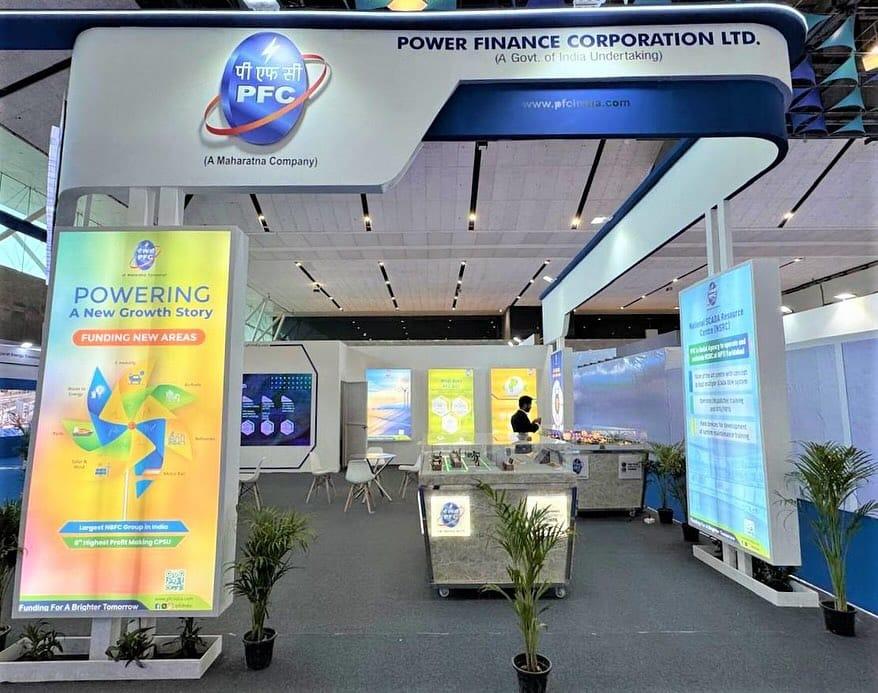
Power Finance Corporation (PFC) is basically India’s official moneylender for the power sector. With a loan book of nearly ₹9 lakh crore, it’s the guy every state electricity board owes money to. The government owns 56%, the dividend yield is 4%, the P/E is just 5.3, and the NPAs are shrinking faster than your internet data after watching a cricket match in 4K.
2. Introduction
Imagine being the “Maharatna” NBFC that finances everything from mega power plants to renewable projects, yet trades cheaper than your neighbourhood chaiwala’s debt book. That’s PFC.
The company is systemically important, which is financial jargon for “too big to fail, too boring to ignore.” Nearly 82% of its loans go to government-backed entities, meaning default risk is as low as your chances of getting free Wi-Fi in a train.
Its portfolio breakdown shows the India energy transition story in one balance sheet: 39% conventional generation, 47% transmission & distribution, and 12% renewable energy. If India installs a solar panel, chances are PFC has already cut the cheque.
But here’s the irony: while it funds 25% of India’s renewable capacity, its own debt-to-equity ratio is 8.25x. PFC is basically running on the philosophy: “Beta, tum power lagao, hum power ka paisa lagate hain, aur khud ko bijli ke tarah high-voltage leverage pe chalaate hain.”
3. Business Model – WTF Do They Even Do?
Think of PFC as the power sector’s ATM machine.
Fund-Based Lending: Project loans, equipment lease financing, refinancing, etc.
Non-Fund Based: Guarantees, letters of comfort—basically giving states IOUs with fancy letterheads.
Subsidiaries & JVs: Owns REC (52.6%), runs PFC Consulting, PFC Projects, and even has a finance company in GIFT City.
Green Push: Financing wind, solar, and hydro. Nearly 25% of India’s installed renewable base has PFC’s fingerprints.
So when you flip a switch in your house, remember: it’s not just the DISCOM behind it—it’s also PFC’s loan book keeping the lights on.
Question: If PFC funds the lights, and you forget to pay your electricity bill, are you indirectly defaulting on PFC?
4. Financials Overview
Quarterly Snapshot (₹ Cr)
Metric
Latest Qtr (Jun’25)
YoY Qtr (Jun’24)
Prev Qtr (Mar’25)
YoY %
QoQ %
Revenue
28,539
24,717
29,265
15.5%
-2.5%
Financing Profit
11,123
8,886
10,550
25.1%
5.4%
PAT
8,981
7,182
8,358
25.1%
7.5%
EPS (₹)
20.8
16.8
19.1
23.8%
8.9%
Commentary: EPS is rising like electricity bills in summer. But the P/E is 5.3, meaning investors are still treating PFC like a boring PSU stock rather than a dividend ATM.
DCF: FCF is messy (negative due to high lending cycle), but assume ₹25,000 cr PAT, 10% growth, 12% cost of equity → ₹400–₹500.
Fair Value Educational Range: ₹370–₹550 Disclaimer: For educational purposes only. Not investment advice. If stock falls, blame electricity theft in UP, not this article.
6. What’s Cooking – News, Triggers, Drama
Transmission SPVs: PFC is birthing subsidiaries like Bollywood star kids, only to auction them off to Adani, Sterlite, or Tata Power.
Green Push: Financing renewables, GIFT City financing arm, and even international forays. Next stop: maybe lending to Elon Musk for solar roofs.
Maharatna Power: Since 2021, PFC has greater autonomy—think of it as going from “strict Indian dad” to “cool